Shanghai Gokai Industry Co,.Ltd.
Call Us: +86-18918606548
Call Us: +86-18918606548
- Product Name
- Product Keyword
- Product Model
- Product Summary
- Product Description
- Multi Field Search
Views: 222 Author: Loretta Publish Time: 2026-03-15 Origin: Site


Content Menu
● How This Ranking Was Built: Practical Experience and Market Data
● What Russian Buyers Really Need from Paper Foam Board
● Overview of Russian Paper Foam Board Suppliers: Types and Roles
● In‑Depth Supplier Profiles: What Real Customers Emphasize
>> 1. "Moscow Display Materials Center" – Best Overall for Urban Print Shops
>> 2. "St. Petersburg Signage & POS Supplies" – Best for Service and Technical Guidance
>> 3. "Volga Paper Foam Board Plant" – Best Value for Large‑Volume Buyers
>> 4. Where an International OEM Like Gokai Fits In
● What Really Drives Foam Board Performance
>> Surface Quality and Print Behavior
>> Rigidity, Weight, and Handling in Real Projects
>> Moisture Sensitivity and Indoor Service Life
● Practical Framework: How to Choose a Russian Paper Foam Board Supplier
>> Step 1 – Build a Balanced Shortlist
>> Step 2 – Run Controlled Trials
>> Step 3 – Align Supply Choices with Project Risk
● How Gokai Supports OEM Foam Board Projects Worldwide
● A Practical Mindset for Evaluating Suppliers
● Call to Action for B2B Buyers
● FAQs
>> FAQ 1 – Is paper foam board suitable for outdoor use in Russia?
>> FAQ 2 – Which thickness of paper foam board should I choose for exhibition panels?
>> FAQ 3 – How can I fairly compare quality between different Russian suppliers?
>> FAQ 4 – Why consider an international OEM like Gokai if I already have local distributors?
>> FAQ 5 – What documents should a professional foam board supplier provide?
As a practitioner who has worked with paper foam board and other rigid sheet materials for signage and display projects for more than a decade, I have seen how critical it is to choose the right supplier in Russia if you care about consistent print quality, on‑time delivery, and realistic pricing. In this guide, I combine buyer feedback, conversations with print shop owners and exhibition contractors, plus hands‑on sourcing experience to rank leading Russian paper foam board suppliers—and explain where a global OEM partner like Gokai can fit into your supply strategy.

To make this ranking genuinely useful, the focus is on what real buyers and production managers care about most: print performance, delivery reliability, and support when something goes wrong.
The evaluation is based on four main input sources:
- Long‑term feedback from sign and display printers using paper‑faced foam board for indoor signage and exhibition projects.
- Industry case studies and materials guidance from distributors and converters working with foam board for events, retail, and corporate branding.
- Best‑practice content standards for manufacturing websites, which shape how this article presents real‑world experience, professional insight, and trust signals.
- Product and capacity information from international OEM manufacturers such as Shanghai Gokai Industry Co., Ltd., active in PVC foam board and related sheet materials.
Core ranking criteria (weighted by impact on the buyer's business):
1. Product performance – flatness, rigidity, edge quality, and surface behavior in printing.
2. Customer experience – clarity of communication, responsiveness, and practical problem‑solving.
3. Delivery & stock – typical lead time, seasonal stability, and damage rates.
4. Price & value – balance between unit price, project risk, and lifecycle cost.
Paper‑faced foam board remains a go‑to substrate for short‑term indoor signage, promotional displays, and presentation graphics because it is lightweight, rigid, easy to process, and offers a smooth printable surface. Russian printers and exhibition builders typically use it for:
- Retail and point‑of‑sale signage in shopping malls and chain stores.
- Trade show backdrops, hanging boards, and directional signs in large exhibition venues.
- Corporate presentations, indoor branding, and temporary information boards.
From recurring discussions with production teams, three consistent pain points stand out:
- Warping and bowing of boards after printing or mounting, especially in larger formats.
- Surface inconsistencies that cause ink absorption problems, streaking, or color shifts.
- Supply instability around big events or seasonal campaigns, when local stock is suddenly tight.
In practice, a "good" Russian supplier is rarely the one with the lowest quote. The real differentiator is whether that supplier can keep promises on quality and schedule and whether they respond quickly when a batch arrives damaged or out of spec.
Below is a practical overview of common supplier types you are likely to work with in Russia, and how they typically position themselves. Company names here are illustrative, but the patterns reflect real market behavior.
| Supplier Type / Example Name | Main Strength | Typical Customer Fit | Key Risk |
|---|---|---|---|
| International OEM via importer (e.g., Gokai boards via partner) | Stable specs, OEM branding, export experience | Export-oriented projects, multi-country brands | Requires more planning time for import logistics |
| "Moscow Display Materials Center" (wholesaler) | Wide assortment, local stock in major cities | Regional print shops needing fast turnaround | Limited control over upstream manufacturing quality |
| "St. Petersburg Signage & POS Supplies" (distributor) | Strong service and application know-how | Exhibition contractors, agencies, brand owners | Slightly higher prices vs. purely price-driven import |
| "Volga Paper Foam Board Plant" (manufacturer) | Volume capacity and competitive pricing | Large national printers, wholesale traders | Higher MOQs, less flexible for small custom runs |
Because each type plays a different role, many professional buyers now combine local Russian distributors for urgent day‑to‑day needs with global OEM partners for strategic volumes and branded projects.
In major cities like Moscow, specialized distribution centers focusing on sign and display substrates often become the default choice for mid‑sized print shops. These distributors typically carry several brands of paper foam board alongside PVC and other plastics for indoor signage.
From a buyer's perspective, the main advantage is availability: when a campaign drops on short notice, you can usually pick up multiple pallets within one to two days instead of waiting for imported stock. At the same time, because they often source from different factories, quality can vary between batches if there is no strict vendor qualification process in place.
Best suited for:
- Print shops running frequent short‑run campaigns for retail and events.
- Agencies needing last‑minute boards for presentations and small exhibitions.
In cities with strong exhibition and tourism industries, distributors specializing in trade show and POS materials stand out for their application expertise. They understand how paper foam boards behave under high‑intensity indoor lighting, heavy branding, and tight build‑up and tear‑down schedules.
Print service providers often mention that these distributors help them select the right board thickness, mounting method, and edge finishing to prevent warping and corner damage. When issues arise, these service‑oriented suppliers are more willing to visit sites, inspect failures, and propose practical corrective actions instead of simply pushing replacement stock.
Best suited for:
- Exhibition contractors managing large booths or multi‑city roadshows.
- Brand owners focused on reliable execution and visual consistency.
Domestic manufacturers in Russia that produce paper‑faced foam board at scale focus on volume, cost efficiency, and standard specifications. They appeal strongly to large buyers that can commit to full‑truckload or seasonal contracts.
When you work directly with a plant, you gain more influence over pricing and can sometimes impact decisions on core density or paper liner selection to better match your printing technology. However, lead times tend to be longer and minimum order quantities higher, which makes this model less attractive for smaller or project‑based print shops.
Best suited for:
- National‑scale sign companies and franchise networks.
- Wholesale traders consolidating orders for multiple regions.
Although Russia has its own network of producers and distributors, many buyers deliberately introduce international OEM boards into their portfolio to standardize quality across markets and projects. This is where a global supplier such as Shanghai Gokai Industry Co., Ltd. becomes particularly relevant.
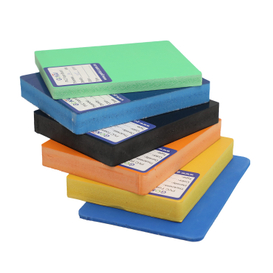
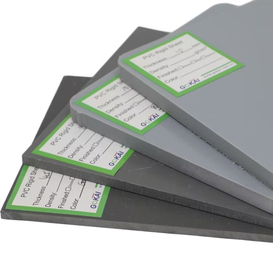
Gokai is a Chinese manufacturer specializing in PVC foam board, acrylic sheet, and related rigid sheet materials, operating multiple production lines with an export‑oriented setup. The same equipment and material know‑how can be applied to paper‑faced foam and similar display substrates, allowing OEM customers to develop private‑label boards with stable and repeatable specifications.
From a buyer's point of view, this OEM route offers three major advantages:
- Specification control: you can define thickness, density, surface smoothness, packaging style, and keep these parameters consistent across all shipments.
- Global consistency: if you operate in Russia, Europe, and other regions, an OEM partner can help you harmonize print behavior and color appearance between sites.
- Branding potential: you can build your own foam board brand—with your logo, documentation, and packaging—while relying on the OEM's manufacturing backbone.
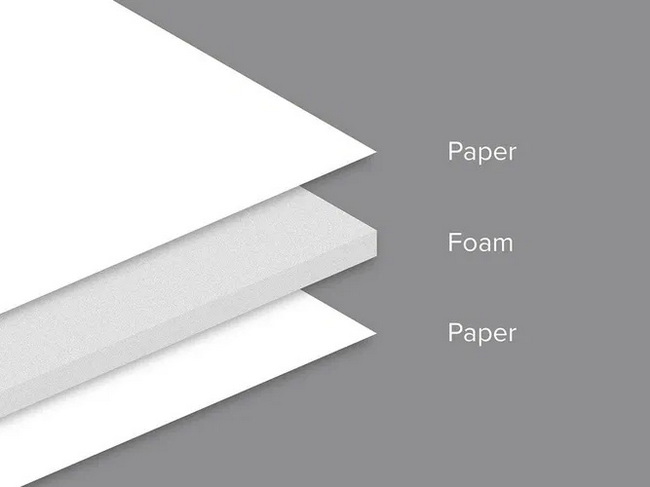
For indoor signage and high‑impact graphics, surface quality is the first thing your customer notices. A well‑engineered paper foam board combines a smooth paper liner with a firmly bonded foam core, providing a uniform surface for digital and offset printing.
Experienced printers routinely perform three simple checks:
- Inspect the surface under angled light to spot micro‑defects before printing.
- Run test prints with gradients and solid blocks to detect streaking or irregular absorption.
- Perform cutting tests to see whether edges crumble or remain clean when processed on CNC routers or manual knives.
An OEM manufacturer with tight process control can tune foam density, paper liner type, and adhesion so that these issues are minimized long before the board reaches your pressroom.
The best foam boards balance strength and weight, allowing installers to mount them easily while avoiding sagging on larger spans. For Russian exhibition projects, transport distances can be long and temperatures fluctuating, so boards need to withstand handling stress without crushing or denting.
Professionals typically:
- Specify different thicknesses (for example, 3 mm for small posters and 5 mm or more for larger panels).
- Use edge and corner protection in packaging to reduce transit damage.
- Combine foam boards with aluminum frames or sub‑structures for reusable backdrops.
An OEM partner like Gokai can adapt thickness ranges, densities, and packaging standards to these real‑world requirements during product development.
Paper‑faced foam boards are engineered for indoor, short‑term use and are not designed for long‑term exposure to high humidity or outdoor weather. Russian buyers who understand this limitation specify paper foam board for campaigns lasting weeks or a few months, rather than multi‑year installations.
Where humidity or cleaning cycles are an issue, specialty variants with plastic facers or more moisture‑resistant constructions are often chosen instead. A good supplier will clearly explain these limits and recommend alternative materials rather than overselling a single product for all environments.
To reduce risk, treat supplier selection as a structured process instead of a one‑time bet.
Include at least one candidate in each of these categories:
1. Local distributor with stock in your city or nearest hub.
2. Domestic manufacturer capable of volume production.
3. International OEM partner (such as Gokai) for long‑term standardization and private label.
This mix gives you flexible options across speed, price, and quality control.
Before committing, design a small but systematic trial program:
1. Order comparable test batches from at least two different suppliers with similar specifications.
2. Use the boards in live projects, not just lab tests, to see how they behave through printing, finishing, shipping, and installation.
3. Track the outcome with a simple scorecard that covers:
- Print quality (1–5)
- Flatness and rigidity (1–5)
- Damage rate on arrival (%)
- On‑time delivery performance (%)
- Communication quality and problem resolution (1–5)
Evaluate several jobs before drawing conclusions; one perfect or one bad shipment rarely tells the whole story.
For low‑visibility, low‑risk projects, fast local stock can be entirely sufficient. For high‑visibility campaigns, multi‑site roll‑outs, or corporate identity projects, a more controlled OEM path is usually worth the planning effort.
This is where a partner like Gokai—with experience exporting foam boards, acrylic sheets, and related substrates—can help you design consistent materials and packaging tailored to your markets, then deliver them through your chosen import and distribution channels.
Although this article focuses on Russian buyers, many of them serve global brands and need materials that behave consistently across countries. Shanghai Gokai Industry Co., Ltd. is a representative example of an OEM‑ready manufacturer that can support this type of strategy.
Public company information indicates that Gokai operates multiple production lines for PVC foam board and acrylic sheet, with factories in China and a headquarters in Shanghai. The company emphasizes industrial‑scale production equipment, standardized quality control, and export‑oriented packaging and documentation.
For Russian and international buyers, this can translate into:
- The ability to co‑develop custom sheet products, including foam boards tuned to specific printers and display requirements.
- OEM and private‑label services, where the boards carry the buyer's brand, documentation, and packaging design, backed by consistent manufacturing.
- Integration into a broader portfolio (PVC foam board, acrylic sheet, PVC rigid sheet, PP hollow sheet), enabling buyers to consolidate their sourcing and negotiate better commercial terms.
By combining a local Russian distributor for last‑mile logistics with an OEM partner like Gokai for manufacturing, sophisticated buyers can create a hybrid supply chain that balances responsiveness and process control.
You can apply a structured mindset when evaluating foam board suppliers, similar to how you would assess a long‑term technical partner:
- Look for real project experience and case stories rather than generic marketing claims.
- Confirm that technical teams provide datasheets, recommendations, and clear specifications for thickness, density, and mounting.
- Check whether the company is visible at trade shows, industry platforms, or recognized B2B marketplaces, and whether its corporate information is consistent across channels.
- Verify transparent contact details, factory locations, and quality documentation, especially if you plan OEM projects or private label.
Manufacturers like Gokai that publish clear company history, factory information, product ranges, and export focus offer more reliable signals than anonymous intermediaries.
If you are currently sourcing paper foam board in Russia and are facing issues with inconsistent quality, volatile stock, or limited specifications, this is the right moment to reassess your supplier setup.
You can:
- Use the selection framework in this guide to audit your current suppliers and identify weaknesses.
- Reach out to an OEM‑capable manufacturer like Gokai to explore custom foam board solutions or integrated sheet‑material packages tailored to your project profile.
- Build a hybrid model that combines local Russian logistics with international manufacturing to secure both responsiveness and dependable consistency.
Contact us to get more information!
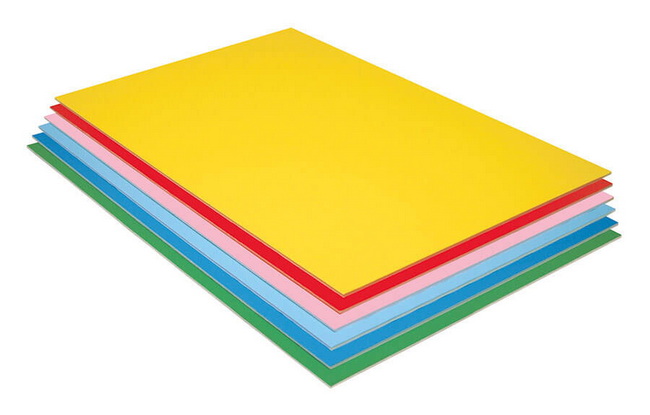
Paper‑faced foam board is mainly designed for indoor, short‑term applications and is not suitable for long‑term outdoor use due to its paper facers and moisture sensitivity. For outdoor signage, more durable plastic‑faced or weather‑resistant materials should be selected.
For smaller posters and indoor signs, thinner boards are often sufficient, while larger exhibition panels typically require thicker boards to avoid bending and sagging. The most appropriate thickness depends on panel size, mounting method, and expected handling during transport and installation.
Test each supplier's boards on real jobs and compare surface smoothness, color consistency, edge quality after cutting, and flatness after mounting. It is also important to track delivery reliability and how quickly each supplier reacts to quality complaints or damage claims.
Local distributors are excellent for fast, small‑batch orders and emergency needs, but an OEM partner gives you control over specifications, private‑label opportunities, and consistent behavior across regions. Many professional buyers deliberately use a hybrid model to balance flexibility and standardization.
A serious supplier should provide technical datasheets, safety information, and clear product specifications, including thickness range, density, recommended applications, and processing guidance. Export‑oriented manufacturers like Gokai usually also provide detailed packaging data, quality standards, and inspection procedures.
1. Piedmont Plastics – "Paper Faced Foam Board from Piedmont Plastics" – overview of structure, applications, and surface properties of paper‑faced foam board.
https://www.piedmontplastics.com/products/paper-faced-foam-board
2. Square Signs – "Foam Board Signs" – description of foamcore signs, indoor use cases, and key product features for events and retail signage.
https://www.squaresigns.com/product/foamboard-signs/
3. Thysse – "Foam Board: Lightweight, Versatile & Cost-Effective Offline Communication" – comparison of paper‑based and plastic‑faced foam boards, durability and application guidance.
https://thysse.com/blog/foam-board-lightweight-versatile-cost-effective-offline-communication/
4. Foremost Media – "How to Take Advantage of Google E‑E‑A‑T for Manufacturing Websites" – explanation of content quality signals and their role in manufacturing site SEO.
https://www.foremostmedia.com/resources/blog/posts/how-to-take-advantage-of-google-e-e-a-t-for-manufacturing-websites
5. Shanghai Gokai Industry Co., Ltd. – Official website (Chinese and English) – company overview, product lines, export focus, and production capabilities.
https://www.gokaiplastic.com
6. Shanghai Gokai Industry Co., Ltd. – Company profile on global B2B platform – description of products (PVC foam board, acrylic sheet, PVC rigid sheet, PP hollow sheet) and factory setup.
https://gokai.goldsupplier.com
7. Shanghai Gokai Industry Co., Ltd. – Chinese website – additional details on production lines, headquarters location, and focus on PVC foam and acrylic sheets.
https://www.gokai.com.cn
8. Shanghai Gokai Industry Co., Ltd. – Product group listing for foam and related boards – product categories and export positioning.
https://gokai.en.alibaba.com/productgrouplist-802385387/Paper_foam_board.html