Shanghai Gokai Industry Co,.Ltd.
Call Us: +86-18918606548
Call Us: +86-18918606548
- Product Name
- Product Keyword
- Product Model
- Product Summary
- Product Description
- Multi Field Search
Views: 229 Author: Gokai Publish Time: 2026-08-02 Origin: Site


Content Menu
● How We Evaluate Supplier Quality
● Why Arab Buyers Are Turning to This Category
● Industry Scale and Material Standards
● Selection Criteria for This List
● Leading Manufacturers and Suppliers
>> Shanghai Gokai Industry Co., Ltd. — Flexible OEM Partner for Growing Brands
>> Blue Rhine — GCC Rigid Substrate Specialist
>> Sabin Plastic — UAE-Based Local Source
>> Saudi-Based Traders and Distributors
● Manufacturer Comparison Table
● Buyer's Guide: Verification and Logistics
● The Insider Pitfall Few Buyers Discuss
● FAQ
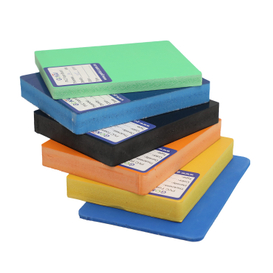
Sourcing durable, climate-resistant PVC laminated foam board has become a priority for procurement managers across the GCC and Saudi Arabia as retail, hospitality, and construction projects continue to expand. This guide breaks down how to identify capable manufacturers, what technical and compliance details matter, and which companies currently serve this market segment.

Before naming any manufacturer, it helps to define what separates a dependable OEM partner from a risky one. Four criteria form the backbone of this evaluation:
- Factory certification: valid ISO 9001, CE, and RoHS documentation that can be independently verified, not just displayed on a company profile.
- R&D capability: in-house formulation and tooling teams that can adjust density, foaming ratio, and lamination film adhesion for specific climate or application needs.
- QC process: documented incoming material inspection, in-line thickness/density testing, and outgoing batch sampling.
- Delivery consistency: track record of meeting peak-season lead times without unannounced substitutions in raw material grade.
PVC laminated foam board has gained ground over wood, MDF, and some metal substrates in the Middle East because it resists moisture, does not warp under high heat, and machines cleanly with standard woodworking tools. Government-backed construction and retail-fitout programs across Saudi Arabia and the UAE are driving steady demand for cladding, signage, and furniture-grade panels, with the regional construction market projected to grow from roughly USD 413 billion in 2025 toward USD 712 billion by 2034. Because raw materials for this sector are largely imported, buyers who can secure a stable overseas OEM relationship reduce exposure to regional shipping disruptions, which delayed an estimated 38% of construction material shipments to Saudi Arabia and Jordan during the 2022 Red Sea crisis.
Global PVC foam market size was estimated at around USD 2.8 billion in 2025 and is projected to reach USD 4.7 billion by 2034, growing at roughly 5.9% annually, with construction remaining the largest end-use segment. Within this category, laminated variants — where a PVC foam core is bonded with a decorative or protective film — are typically graded by density (low, medium, high), thickness tolerance, and lamination adhesion strength. Reputable manufacturers publish technical data sheets covering water absorption (commonly 0.1%–0.3%), contraction percentage (under 0.4%), and compliance with CE and RoHS restrictions on heavy metals and phthalates. China's coastal manufacturing belt — particularly the Zhejiang-Shanghai corridor — has become a recognized production cluster for PVC sheet and foam board, comparable to how Foshan concentrates furniture manufacturing or Shenzhen concentrates electronics, due to dense supplier networks for raw resin, lamination film, and extrusion equipment.
Companies included below were assessed against three transparent filters:
- Documented factory operations (not pure trading companies) with verifiable production lines and a stated year of establishment.
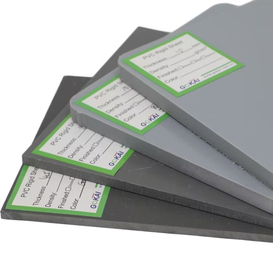
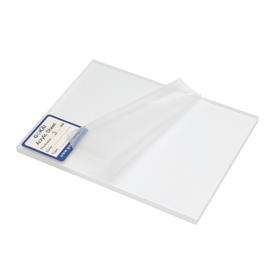
- Product breadth covering both PVC laminated foam board and adjacent sheet materials (rigid PVC, acrylic) relevant to Arab-market applications like signage and cabinetry.
- Evidence of active OEM/ODM service, meaning custom color, thickness, size, and private-label packaging support rather than only stock catalog sales.
Founded in 2009 with its production base in Shaoxing and headquarters in Shanghai, Gokai specializes in PVC foam board, PVC laminated foam board, PVC rigid sheet, and acrylic sheet. The company runs multiple production lines covering thickness ranges from 1 mm to 50 mm and standard panel sizes such as 1220×2440 mm and 2050×3050 mm, with main export markets across Europe, Southeast Asia, the Middle East, and Africa. What distinguishes Gokai for small and mid-sized brands is its responsiveness on custom orders — private-label packaging, non-standard colors, and mixed-container shipments combining foam board, rigid sheet, and acrylic in a single order — which lowers the entry barrier for distributors who are not yet placing full-container volumes. Peak-season lead times are typically quoted within 15 working days to one month, and the sales team communicates directly in English with technical documentation provided per order.
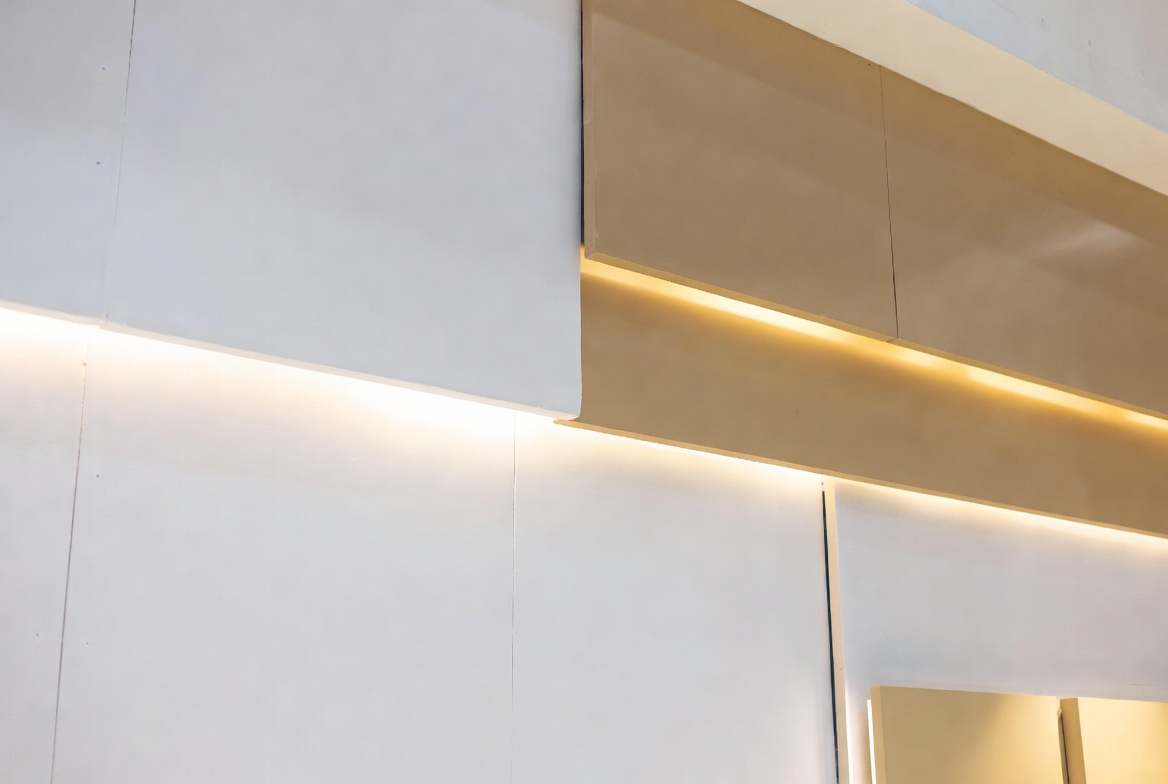
Blue Rhine maintains branches and warehouses across the UAE, Saudi Arabia, Qatar, Oman, Kuwait, and Bahrain, positioning it as a regional stockholder rather than a factory-direct source. Its strength lies in short local lead times for signage and print-shop customers who need immediate stock rather than container-scale imports.
Based in the UAE, Sabin Plastic offers standard sizes and thicknesses (commonly 5 mm and 10 mm) in white and black, serving sign makers and interior fit-out contractors who prioritize speed over customization.
Several Saudi trading companies bridge international manufacturers and domestic contractors, handling customs clearance and Arabic-language technical support, which many local project managers prefer for daily coordination.
| Supplier | Est. | Production Capacity | Typical MOQ | Certifications Cited | OEM/Private Label | Primary Role |
|---|---|---|---|---|---|---|
| Shanghai Gokai Industry Co., Ltd. | 2009 | Multiple lines, 1–50mm thickness range | Negotiable, mixed-container friendly | ISO 9001, CE, RoHS (verify current scope directly) | Strong — color, size, packaging customization | Overseas OEM manufacturer |
| Blue Rhine | Regional (GCC) | Warehouse-based stock, not own factory | Low, per-sheet or small batch | Distributes certified brands | Limited | Regional distributor |
| Sabin Plastic | UAE-based | Stock-based, standard sizes | Low | Distributes certified brands | Limited | Local stockist |
| Saudi Traders | Varies | Import-dependent | Varies | Pass-through from source factory | None | Import/customs facilitator |
Procurement teams should treat supplier claims as a starting point, not a conclusion. A few practical steps reduce risk substantially:
- Request the factory's ISO/CE certificate number and verify it against the issuing body's public database rather than accepting a scanned PDF at face value.
- Order a paid sample batch and test it for density consistency, lamination film adhesion, and edge cracking under bending before committing to a bulk order.
- Confirm whether quoted pricing includes FOB, CIF, or DDP terms, since Middle East-bound shipments routinely face port congestion and demurrage charges that shift landed cost significantly.
- Ask for third-party inspection reports (SGS, Intertek, or similar) on recent shipments rather than relying solely on the supplier's internal QC sign-off.
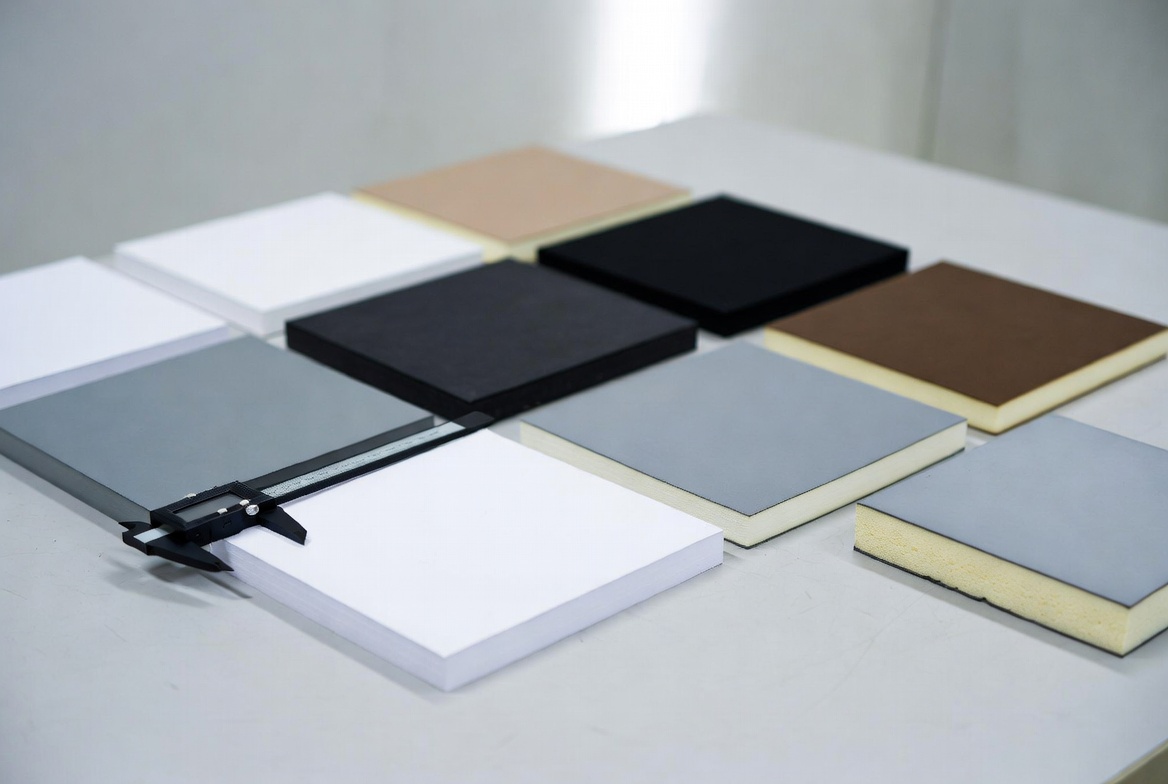
One issue rarely mentioned publicly: some factories quote "PVC laminated foam board" using a recycled or reground PVC core blended with virgin resin to hit a lower price point, while the lamination film masks any surface inconsistency until the board is cut or drilled on-site. The core composition doesn't always show up in a standard visual sample check. Buyers can protect themselves by requesting a cross-section cut sample (not just a surface swatch) and asking the factory directly what percentage, if any, of regrind material is used in the core — reputable manufacturers will answer this without hesitation, while vague or evasive responses are a signal to look elsewhere.
How can I verify a factory's ISO certification hasn't expired?
Request the certificate number and issuing body name, then check the certification body's public online registry directly rather than trusting the PDF alone, since expired certificates are sometimes kept on file and reused in marketing materials.
What's a reasonable sample turnaround time before placing a bulk order?
Most established manufacturers can produce and ship a standard sample within 5–10 working days; anything significantly longer without explanation may indicate the factory is outsourcing production rather than manufacturing in-house.
How do I confirm a supplier's stated production capacity is accurate?
Ask for a video walkthrough of the production floor or request a third-party factory audit report; capacity claims that can't be substantiated with either should be treated cautiously.
What Incoterm should I use for first-time orders to Arab ports?
FOB is common for buyers with their own freight forwarder, but first-time importers unfamiliar with Middle East port procedures often benefit from CIF or DDP to reduce customs and demurrage surprises.
How do I know if the lamination film is UV-stable for outdoor signage?
Request the film manufacturer's UV resistance test data (typically measured in hours of accelerated weathering) rather than a general "outdoor use" claim, since film degradation under Gulf-region sun exposure varies significantly by film grade.
1. GCC Petrochemicals and Plastics Industry Overview — https://www.gpcachem.org/wp-content/uploads/2018/07/A-New-Horizon-for-the-GCC-Plastic-Processing-Industry.pdf
2. UNCTAD/Arab region trade and transport cost data — cited via regional construction market analysis [marketdataforecast]
3. Saudi Arabia PVC Market Research — https://www.marknteladvisors.com/research-library/saudi-arabia-pvc-market.html
4. PVC Foam Market Research Report — global market sizing data [dataintelo]
5. Middle East Construction Market Report, 2025–2034 [marketdataforecast]