Shanghai Gokai Industry Co,.Ltd.
Call Us: +86-18918606548
Call Us: +86-18918606548
- Product Name
- Product Keyword
- Product Model
- Product Summary
- Product Description
- Multi Field Search


Content Menu
● Why Duct Bank Spacers Are Essential
>> Key Benefits of Using Duct Bank Spacers
>> HDPE and Composite Duct Bank Spacers
>> Interlocking and Snap‑Together Spacers
>> Multi‑Tier and Multi‑Cell Systems
>> Custom Duct Bank Spacer Designs
● Spacer Sizes, Configurations, and Layouts
>> Common Spacer Configurations
● Recommended Spacer Placement and Spacing Guidelines
>> Horizontal and Vertical Separation
>> Environmental and Structural Considerations
● Common Applications Across Industries
>> Power and Utility Distribution
>> Commercial and Industrial Facilities
>> Transportation Infrastructure
>> Telecommunications and Data Centers
● How to Choose the Right Duct Bank Spacer
>> Step 1: Define Project Requirements
>> Step 2: Evaluate Loads and Environment
>> Step 3: Match Material to Lifetime Expectations
>> Step 4: Optimize for Cost‑Efficiency
● Step‑by‑Step Installation of Duct Bank Spacers
>> 2. Prepare the Trench and Base
>> 3. Place the First Row of Spacers
>> 4. Install the First Tier of Conduits
>> 6. Verify Alignment and Dimensions
>> 7. Coordinate Reinforcement and Structural Steel
>> 9. Perform Final Inspection
● Design, Maintenance, and Digital Modeling Insights
>> Integrating Duct Bank Spacers into BIM and CADD
>> Inspection and Long‑Term Maintenance Best Practices
● Conclusion and Call to Action
● FAQs
>> Q1: Do I really need spacers in a concrete‑encased duct bank?
>> Q2: How far apart should duct bank spacers be?
>> Q3: What materials are duct bank spacers made from?
>> Q4: What conduit sizes can a duct bank spacer support?
>> Q5: Can I use the same spacer system for power and telecom conduits?
Duct bank spacers are nonmetallic supports that maintain uniform horizontal and vertical separation between conduits inside a concrete‑encased duct bank, locking each conduit in a fixed position during placement and curing. These components are critical for preventing conduit deformation, improving cable‑pulling performance, ensuring National Electrical Code (NEC) compliance, and boosting long‑term system reliability.
A duct bank spacer is a molded or routed plastic component used to separate, align, and support conduits in underground duct banks. These spacers sit inside the trench or concrete formwork, holding conduits at fixed center‑to‑center intervals and correct elevations so they do not float, bend, or crush under wet concrete and backfill.

Most modern spacer systems are non‑metallic, typically made from:
- PVC – lightweight, low‑cost, and corrosion‑resistant.
- HDPE or composite plastics – higher rigidity and stability for deep or heavily loaded banks.
- Fiberglass‑reinforced polymers – for specialty installations requiring elevated mechanical performance.
When properly sized and placed, duct bank spacers enable contractors to construct multi‑tier conduit banks that remain aligned from trench laying through final backfill and over decades of service.
Running power and data conduits underground always brings two hidden risks: misalignment during concrete pouring and long‑term mechanical‑thermal stress. Duct bank spacers address both by providing consistent separation, elevation control, and structural support.
- Prevent conduit deformation and floating
Spacers keep conduits round, straight, and in position, preventing them from bowing, floating, or being crushed by concrete or heavy backfill.
- Improve cable‑pulling performance
Uniform spacing reduces bends and friction, which lowers pull tension on power and fiber cables and makes future upgrades easier.
- Support NEC and authority‑having‑jurisdiction (AHJ) compliance
Standardized spacing and cover simplify permitting and inspections, reducing rework and schedule delays.
- Increase long‑term reliability and service life
Proper alignment minimizes hot spots, strain points, and abrasion, reducing insulation and jacket damage over time.
- Save labor and reduce rework
Modular spacers streamline layout, improve crew speed, and deliver repeatable, pre‑engineered conduit patterns across large corridors.
Duct bank spacers function as three‑dimensional jigs for conduit routing, placed at intervals along the trench to form a predictable array of holes or cells. This structure governs horizontal and vertical alignment from the bottom tier to the top tier.
- Maintain center‑to‑center spacing
Common 3‑inch center‑to‑center separation between conduits helps ensure adequate concrete flow, cover, and thermal distribution. Wider or closer spacing may be specified for high‑voltage or high‑density fiber runs.
- Enable multi‑tier bank construction
Many spacer systems are designed to stack vertically, forming multi‑cell banks that support four, six, nine, or twelve conduits or more across two or three tiers.
- Hold conduit elevation and alignment
Spacers keep conduits at consistent trench‑bottom elevation and alignment, reducing uneven concrete gradients and cover.
- Provide clearance for required concrete cover
By fixing conduit position, spacers simplify achieving minimum cover requirements over each raceway and between tiers, often governed by NEC and local codes.
The optimal spacer type depends on conduit diameter, load profile, environment, and construction method. Understanding each category helps you specify the best fit for your project.
PVC‑based spacers are the most widely used option for standard concrete‑encased duct banks:
- Lightweight and easy to handle, reducing manual labor on job sites.
- Corrosion‑resistant, making them compatible with aggressive soils and chemical‑laden backfills.
- Suitable for electrical distribution, telecom conduits, and mixed‑use utility corridors.
However, PVC can be more brittle at low temperatures, so colder climates may favor HDPE or composites.
High‑density polyethylene (HDPE) and composite‑polymer spacers deliver higher rigidity and dimensional stability than standard PVC:
- Better suited for deep trenches, heavy concrete overburden, and high‑traffic corridors such as airports and highways.
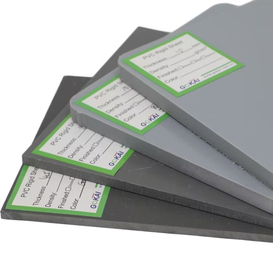
- Often fabricated from solid‑plastic sheets with precisely routed holes, ensuring consistent conduit positioning across long runs.
- Frequently chosen for industrial plants and mission‑critical facilities where decades of reliable performance are expected.
These modular designs allow on‑site adaptability without custom fabrication:
- Individual pieces interlock to form multi‑cell arrays, enabling variable layouts.
- Ideal for projects where conduit patterns change along a corridor or need frequent expansion.
Pre‑configured arrays support:
- Banks of 4, 6, 9, 12, or more conduits arranged in fixed horizontal and vertical grids.
- High‑capacity duct runs for data centers, campuses, substations, and telecom hubs.
Custom spacers address unique project constraints, including:
- Non‑standard conduit diameters or mixed‑size banks.
- Precisely dimensioned horizontal and vertical spacing to meet thermal or shielding requirements.
- Special‑purpose materials for extreme environments such as high‑temperature, high‑voltage, or corrosive soils.

Selecting the right size and configuration depends on conduit diameter, total number of conduits, trench width, and cover requirements. Standard products typically support 1‑inch to 6‑inch diameter conduits, with custom solutions available for larger or irregular layouts.
Use Case | Typical Configuration | Notes |
Small-scale utility runs | Single-tier 2–4 conduits | Simple power feeds in local streets. |
Medium commercial corridors | Single-tier 4–6 conduits | Mixed power and low-voltage feeds. |
High-capacity duct banks | Multi-tier 6–12+ conduits | Substations and data-center feeders. |
Mixed-size conduit banks | Custom-cell arrays | Telecom, power, and fiber mixed systems. |
For complex layouts, an engineering review should verify that cell spacing and vertical separation allow adequate concrete flow and minimum cover around each raceway.
Spacer placement must follow the engineer's drawings and local codes, but several practical guidelines are widely accepted across the industry.
- Standard interval: 4 to 7 feet along the trench.
- For larger conduits, deeper trenches, or unstable soils, install spacers closer together, sometimes every 3 to 4 feet.
This spacing balances structural integrity with material and labor efficiency, reducing float and misalignment during the concrete pour.
- Horizontal spacing commonly targets 3‑inch center‑to‑center conduits, but may vary according to thermal and electromagnetic requirements.
- Vertical spacing must allow enough concrete cover between tiers and match project‑specific load and thermal rules.
Designers often optimize spacer layouts to reduce overall concrete volume while still maintaining compliance, such as shaving small amounts of cover across a large bank to save concrete on long runs.
- Soft or disturbed soils demand more frequent spacer placement or more robust materials such as HDPE or composites to prevent settlement‑induced misalignment.
- Deep, heavily loaded duct banks benefit from rigid, dimensionally stable spacers that resist creep and deformation under sustained load.
Thermal loading, vehicle‑induced vibrations, and seismic conditions can also influence material and layout decisions, especially in critical infrastructure.
Duct bank spacers are engineered solutions tailored to different risk profiles and operational needs in modern underground infrastructure.
- Electric utility distribution and substation feeders
Duct banks protect multiple high‑voltage circuits, with spacers ensuring thermal and electromagnetic compatibility between conductors.
- Urban power corridors
Mixed‑tier banks in city streets accommodate growth and allow future expansions without reopening trenches.
- Large commercial buildings and industrial plants
Multiple feeds and control‑signal conduits share duct banks, with spacing tuned to minimize cross‑talk and heat buildup.
- Airports, light rail, highways, and rail systems
High‑traffic corridors place heavy wheel loads and vibration on underground duct banks, making rigid, durable spacers essential.
- Telecom and fiber backbone corridors
Spacers maintain consistent conduit geometry, which simplifies future fiber pulls and access to splice enclosures.
- Data centers and campus networks
Mission‑critical sites rely on thermally managed duct banks where spacing prevents localized overheating and supports redundancy concepts.
Choosing the optimal spacer is both a technical and economic decision. A systematic approach reduces risk and ensures that the duct bank performs as designed throughout its service life.
- Conduit diameters and total count per trench.
- Trench depth and cover required by code and project specifications.
- Single‑tier versus multi‑tier layout and total duct‑bank height.
- Determine whether the duct bank is shallow or deep and heavily loaded, and whether traffic loading is light or intense.
- Assess soils for corrosivity, chemical exposure, and water saturation, then select non‑metallic spacers that resist long‑term degradation.
Consider expected service life, maintenance tolerance, and inspection frequency. HDPE and composite‑plastic systems are often specified for very long design lives in critical and remote routes.
For shorter, low‑risk runs, standard PVC spacers often represent the most economical choice. For complex, high‑value corridors such as data‑center feeders or dense urban utilities, HDPE or custom‑engineered systems justify higher upfront costs with lower long‑term risk.
Clear installation sequencing reduces errors, improves quality assurance, and supports timely inspections. The following steps reflect widely adopted best practices from manufacturers and standards bodies.
Confirm:
- Conduit routes and elevations on the plans.
- Spacer interval recommendations, typically between 4 and 7 feet.
- NEC and project‑specific rules for clearance and cover.
- Excavate to the required bottom grade and slope.
- Compact and level the trench base, then install the specified bedding, often sand or granular fill.
- Set base spacers across the trench at prescribed intervals, ensuring level and straight alignment using strings or lasers.
- Verify that all spacers lie on the same plane to prevent vertical distortion of the bank.
- Snap or rest conduits into spacer cells, carefully verifying full seating.
- Remove burrs and debris from conduits and cells to protect cables during future pulls.
- Stack or install multi‑tier or intermediate spacers as required, aligning them directly above base elements.
- Insert remaining conduits, maintaining vertical and lateral alignment across the entire assembly.
- Use measuring tapes, gauges, and optical tools to confirm consistent center‑to‑center spacing.
- Check that conduit elevations and straightness meet design tolerances along the full length of the run.
- Place rebar and structural steel around the spacer system, respecting minimum clearances.
- Avoid tying rebar directly to spacers if it may induce stress or displacement during the pour.
- Anchor conduit ends and joints to prevent floating or shifting once concrete is placed.
- Use temporary blocks, straps, or fixtures at transitions and turn points where movement is more likely.
- Request approval from the engineer or inspector before pouring concrete.
- Document spacer patterns, intervals, materials, and any field adjustments for as‑built records.
Modern projects increasingly model duct banks in Building Information Modeling and CADD environments prior to construction. Early‑stage digital modeling of spacer layouts allows teams to:
- Optimize cell‑to‑cell spacing for thermal and electromagnetic compatibility.
- Pre‑verify concrete volumes and cover, reducing waste and avoiding under‑coverage.
Involving manufacturers early enables parametric spacer components to be embedded directly into project models, streamlining coordination with structural, MEP, and civil disciplines.
Non‑metallic spacers do not corrode like steel, but they can still be exposed to damage and environmental stresses over time. Best practices include:
- Marking duct‑bank alignment on the surface and using suitable locating methods to avoid accidental excavation damage.
- Conducting routine thermal imaging and load assessments on critical corridors to identify potential hotspots or settlement issues.
Maintaining accurate records of spacer type, layout, and installation conditions simplifies troubleshooting decades after the original project is completed.
Well‑designed duct bank spacer systems are essential for safe, code‑compliant, and long‑lasting underground conduit infrastructure. By choosing the right spacer material, configuration, and installation practices, you can reduce construction risks, simplify inspections, and protect high‑value power and data assets for decades.
If you are planning a new duct bank project or upgrading an existing corridor, now is the ideal time to refine your spacer strategy and specify materials that match your technical and budget expectations. Contact our engineering and sales team today to discuss your conduit layout, review drawings, and receive tailored duct bank spacer recommendations that help you deliver safer, more efficient underground installations.
Contact us to get more information!
Spacers are highly recommended in concrete‑encased duct banks. They maintain proper separation, prevent conduit movement during the pour, and help ensure code‑compliant cover and alignment. Omitting spacers raises the likelihood of misalignment, conduit damage, and costly rework or failures during operation.
Most projects place duct bank spacers every 4 to 7 feet along the trench. Larger conduits, deeper trenches, or unstable soils often require closer spacing, sometimes as tight as 3 to 4 feet. The final interval should always follow the project engineer's design and any applicable local standards.
Common spacer materials include PVC, HDPE, composites, and fiberglass‑reinforced plastics. PVC offers light weight and cost efficiency, while HDPE and composites provide greater rigidity and stability for deep, heavily loaded, or high‑traffic installations. Fiberglass‑reinforced options are used in specialty environments that demand higher mechanical performance.
Standard duct bank spacer systems are designed to accommodate a wide range of conduit sizes, typically from 1 inch to 6 inches in diameter. Custom solutions are available for larger sizes, mixed‑diameter banks, or unique layouts where standard spacers do not meet project requirements.
In many projects, the same spacer family can be used for both power and telecom conduits, but the layout must respect different separation, shielding, and routing rules for each system. It is best to confirm the required clearances with the project engineer and, when needed, select or customize spacers that meet both power and low‑voltage design criteria.
1. https://lairdplastics.com/resources/duct-bank-spacers-guide/
2. https://www.piedmontplastics.com/blog/duct-spacers-for-underground-conduit-systems
3. https://precisionplasticsinc.com/blogs/blog/duct-bank-spacers-installation
4. https://portplastics.com/categories/shop-all/duct-bank-spacers.html
5. https://championfiberglass.com/what-to-consider-for-underground-duct-bank-runs/
6. https://umaec.umich.edu/desguide/tech/26/DG260543.pdf
7. https://www.vinidex.com.au/resources/technical-resources/technical-notes/installation-of-conduits-in-multi-duct-banks-vx-tn-12g/