Shanghai Gokai Industry Co,.Ltd.
Call Us: +86-18918606548
Call Us: +86-18918606548
- Product Name
- Product Keyword
- Product Model
- Product Summary
- Product Description
- Multi Field Search
Views: 222 Author: Loretta Publish Time: 2026-01-31 Origin: Site


Content Menu
● What Is Aluminum Composite Material (ACM)?
● Key Properties of ACM Panels
>> Performance Comparison of ACM and Solid Aluminum
● PE Core vs FR Core: What's Inside Matters
>> Core Types and Typical Uses
● Fire Ratings, Codes, and Safety Considerations
>> Common Fire Classification Systems
>> Example ACM Fire Rating Ranges
● Where ACM Is Used in Modern Construction
● Recommended ACM Specifications by Application
>> ACM for Building Curtain Walls and Facades
>> ACM for Exterior Signage and Decorative Panels
● Practical Selection Framework: How to Choose the Right ACM
● Real-World Use Case: Upgrading a Retail Facade with ACM
● Installation and Fabrication Best Practices
● Emerging Trends in ACM for Modern Construction
● How a Specialized Plastics and Panel Partner Adds Value
● Start Your Next ACM Project with Expert Support
● Frequently Asked Questions (FAQ)
>> 1. Is PE-core ACM still allowed on new facades?
>> 2. What is the difference between A2 and B fire classes for ACM?
>> 3. How do I know if my wall assembly needs NFPA 285 testing?
>> 4. Can ACM be used in coastal environments?
>> 5. How long can ACM facades last in service?
Aluminum Composite Material (ACM) has become a cornerstone of modern facade and signage design because it combines a sleek appearance with low weight and strong structural performance. When paired with the right core type, coating, and installation system, ACM can meet demanding fire codes while delivering long-term durability for architects, builders, and brand owners.

ACM is a three-layer sandwich panel consisting of two thin aluminum skins bonded to a plastic or mineral-filled core. This structure offers a smooth, rigid sheet that is significantly lighter than solid aluminum plate of comparable stiffness.
- Typical aluminum skin thickness: about 0.2–0.5 mm per side.
- Typical overall panel thickness: around 3–4 mm or more, depending on the application.
- Common cores: polyethylene (PE) or mineral-filled fire-resistant (FR) formulations.
The top surface usually carries a weatherable coating such as polyester (PE) or PVDF fluoropolymer to deliver color stability and UV resistance in exterior environments.
ACM panels are engineered to balance structural performance, appearance, and ease of fabrication.
- Lightweight construction – density typically 3.5–5.5 lb/ft⊃2; (17–27 kg/m²), much lighter than solid aluminum plate.
- High stiffness-to-weight ratio – sandwich construction provides greater flexural rigidity than a single aluminum sheet of the same metal thickness.
- Excellent surface flatness – continuous lamination and tight tolerances produce very smooth surfaces for graphics and high-end finishes.
- Good impact resistance – the core absorbs energy while the aluminum skins help spread the load, improving dent resistance in everyday use.
- Weather and UV resistance – PVDF and high-grade polyesters help maintain gloss and color in outdoor exposure.
- Easy fabrication – panels can be cut, routed, folded, and roll-formed with common tools.
- Recyclable content – aluminum skins are recyclable, and some manufacturers support take-back programs for ACM offcuts.
For many facade and signage applications, ACM offers performance advantages versus monolithic aluminum sheet.
Feature | ACM Panel | Solid Aluminum Sheet |
Stiffness-to-weight ratio | Very high; sandwich structure maintains rigidity with low weight. | Lower; stiffness can be increased only by adding more metal (more weight). |
Panel weight | Lower for similar apparent thickness; easier handling and installation. | Heavier, increasing structural load and support requirements. |
Surface flatness | Excellent flatness on large formats due to composite construction. | More prone to oil-canning and visible distortion on large sheets. |
Finish options | Wide choice of colors, metallics, woodgrain, stone, and custom prints. | Good but typically fewer patterns and textures. |
Fabrication | Easy to cut, route, and fold; well suited for cassette and tray systems. | Often needs more forming force and heavier tooling. |
Cost profile | Strong performance-to-price balance at facade and signage scale. | Higher metal content can increase cost at comparable stiffness. |
The core is the biggest differentiator between standard PE-core ACM and FR-core ACM.
Feature | PE Core ACM | FR Core ACM |
Core composition | Polyethylene thermoplastic. | Mineral-filled core designed to reduce heat release and flame spread. |
Relative weight | Typically lighter. | Slightly heavier due to mineral loading. |
Fire performance | Combustible; generally restricted on many high-rise facades. | Designed to meet stricter facade regulations and full-system fire tests. |
Typical applications | Signage, low-rise cladding, interior features where codes allow. | Mid- and high-rise cladding, egress routes, higher-risk occupancies. |
Cost | Lower initial material cost. | Higher material cost, often required for compliance and risk reduction. |
When fire performance is part of the design brief, FR-core ACM is typically the default starting point because it is the only core type that consistently meets large-scale facade fire tests such as NFPA 285 or ULC S134.
Standard PE-core ACM is not inherently fire-resistant and can contribute fuel to a facade fire if used inappropriately. Fire-resistant ACM uses a mineral-filled core engineered to limit heat release, slow flame spread, and meet specific classification standards.
- EN 13501-1 (Euroclass) – classifies reaction to fire of products, including A2 (limited combustibility) and B classes.
- NFPA 285 – multi-story wall assembly test widely used in North America for facades with combustible components.
- ASTM E84 / Class A ratings – measure flame spread and smoke development in many markets.
Core Type | Typical Fire Class (Example) | Common Use Case |
Standard PE core | B2–B3 (combustible), depending on system and test method. | Low-rise signage, canopies, and permitted interior applications. |
FR (mineral-filled) core | Target A2 or B-class ratings in tested systems to EN 13501-1 or similar. | Mid-/high-rise facades, egress routes, higher-occupancy buildings. |
Recent code updates have tightened rules for exterior wall assemblies with combustible components, increasing the situations where NFPA 285–tested FR-core ACM is required on multi-story projects.
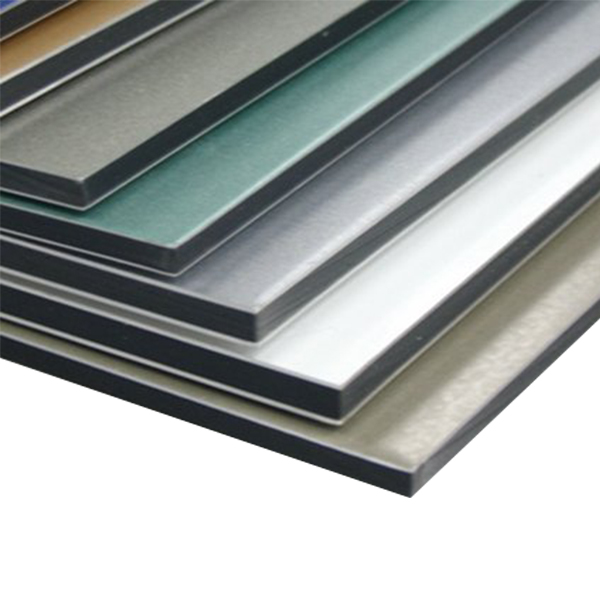
ACM's combination of light weight, rigidity, and finish flexibility makes it attractive across building and branding applications.
- Curtain walls and rainscreen cladding – sleek building envelopes on commercial, institutional, and retail projects.
- Retail and corporate signage – flat, smooth surfaces for printed graphics, channel letters, and logo panels.
- Canopies, soffits, and fascia – clean edges that conceal structure around entries and rooflines.
- Interior feature walls and columns – modern, easy-to-clean surfaces for lobbies and corridors.
- Transportation and specialty panels – lightweight cladding for kiosks, enclosures, and selected vehicle interiors.
Different environments and performance requirements drive different ACM constructions.
For exterior curtain walls and rainscreen cladding, panels commonly use aluminum skins of about 0.50 mm minimum with a total panel thickness around 4 mm or greater. Typical recommendations include:
- Aluminum alloy in the 3000 or 5000 series meeting relevant material standards.
- PVDF fluorocarbon coatings for long-term color and gloss retention in UV-exposed environments.
- FR core panels for mid-rise and high-rise buildings where required by code.
Interior-grade ACM can use thinner aluminum skins around 0.20 mm (minimum about 0.10 mm) with a total thickness near 3 mm. For these applications:
- Polyester or acrylic coatings are commonly used in non-UV-intensive environments.
- Typical uses include fixtures, kiosks, cabinets, and interior cladding panels.
For exterior advertising panels and decorative facades:
- Rust-resistant aluminum skins of at least 0.20 mm with total thickness around 4 mm are typical.
- Coatings are selected based on UV exposure, with PVDF for long-term color retention and polyester for lower-demand environments.
Selecting the right ACM system means aligning fire safety, design intent, and budget.
1. Check building code and fire rating requirements
- Determine whether PE-core is permitted for your building height and occupancy or whether FR-core is mandatory.
- Confirm if NFPA 285 or equivalent facade assembly testing is required.
2. Assess location, exposure, and environment
- High UV or coastal environments benefit from PVDF coatings and corrosion-resistant alloys.
- Consider wind loads and potential impact from traffic or maintenance equipment.
3. Define panel thickness and span
- Longer spans or higher wind pressures may require thicker panels or closer sub-framing.
- Coordinate structural calculations with your facade engineer.
4. Align finish with branding and design
- Evaluate solid colors, metallics, wood or stone patterns, and printability for signage.
- Confirm color tolerances and gloss levels early to avoid re-approvals.
5. Match fabrication method to capabilities
- Verify whether panels will be flat, folded, or cassette-style, and confirm compatibility with your fabricator's equipment.
- Check minimum bend radii and routing recommendations in the manufacturer's technical guides.
6. Review budget and life-cycle cost
- Compare lower up-front costs of PE-core against long-term risk and potential code constraints.
- Factor in cleaning cycles, potential repainting, and expected service life for each coating type.
A typical scenario involves a national retail chain that wants to refresh its storefronts with consistent branding and reduced structural load. The design team may specify FR-core ACM in a 4 mm panel for facades above local height thresholds, paired with PVDF finishes in corporate colors. For lower canopies and signage, PE-core ACM may be acceptable, using matching finishes to keep the brand appearance consistent across all elements.
This approach allows the owner to control cost while meeting fire code requirements and delivering a cohesive visual identity across multiple properties.
Correct fabrication and installation are essential to achieve the promised performance of ACM systems.
- Use manufacturer-approved routing and folding methods to avoid cracking skins or weakening the bond.
- Provide proper joint design and ventilation for rainscreen systems to manage moisture and pressure equalization.
- Specify compatible sub-framing and fasteners suitable for the project's wind, seismic, and corrosion environment.
- Follow tested system details for NFPA 285 or similar assemblies instead of mixing untested components.
Regulatory changes and sustainability goals are reshaping how ACM is specified.
- Stricter facade fire regulations are pushing broader adoption of FR and A2-grade cores, especially on taller buildings.
- Advanced mineral cores aim to deliver A2 performance with lower heat release and limited flame spread.
- Lifecycle and recyclability focus encourages use of higher recycled aluminum content and take-back programs for offcuts.
- Design-driven finishes such as high-fidelity wood and stone looks allow architects to mimic natural materials with lower maintenance and weight.
Working with a knowledgeable distributor or fabrication partner helps bridge the gap between design intent and buildable solutions. A qualified supplier can:
- Recommend ACM brands, core types, and thicknesses suited to your climate and code environment.
- Provide technical data sheets, color samples, and test reports for design and permitting teams.
- Coordinate with local fabricators familiar with cassette systems, routing techniques, and site logistics.
This support shortens design cycles, reduces rework, and improves the likelihood that the installed facade performs as specified over the long term.
If you are planning a new facade, signage program, or interior feature, now is the time to specify ACM with clarity and confidence. Reach out to an experienced ACM materials partner, share your drawings, performance requirements, and branding goals, and request tailored recommendations on core type, thickness, and finishes, along with connections to trusted fabricators who can deliver precise, on-time installations.
Contact us to get more information!

In many jurisdictions, PE-core ACM is restricted or prohibited on mid-rise and high-rise facades but may still be allowed on low-rise projects, canopies, and interior applications where codes permit. Local building departments and current codes should always be consulted before final specification.
A2-class cores are considered limited-combustible and exhibit very low heat release, while B-class cores have higher combustibility but still improved performance compared with fully combustible materials. Project risk level, building height, and local regulations help determine which class is appropriate.
If your exterior wall contains combustible components such as ACM, many building codes require that the complete assembly—cladding, insulation, and air or water barriers—demonstrate compliance through NFPA 285 or equivalent tests, particularly on taller buildings. Your facade engineer or code consultant can confirm the exact requirement.
Yes, ACM can perform well in coastal environments when specified with corrosion-resistant aluminum alloys, robust coil coatings such as PVDF, and appropriate sub-framing and fasteners. Regular inspection and cleaning help maintain both appearance and long-term durability.
With quality cores, durable coatings, and correct installation, ACM facades can maintain their appearance and structural performance for many years, often beyond typical repainting cycles of conventional painted sheet metal. Actual service life will depend on climate, maintenance practices, and specific system design.
1. https://lairdplastics.com/resources/aluminum-composite-material-acm-for-modern-construction/
2. https://aluwedo.com/what-is-acm-panel-guide-for-architects-and-builders/
3. https://www.piedmontplastics.com/blog/q-a-aluminum-composite-material-acm
4. https://www.cladders.ca/product/aluminum-composite-panel-acm-acp/
5. https://www.alucobond.com.sg/keyfeatures/fire-retardant/
6. https://alpolic-americas.com/blog/pe-vs-fr-whats-the-difference-and-what-core-is-right-for-your-next-project/
7. https://www.manaco.ca/fire-rated-aluminum-composite-panels-guide/