Shanghai Gokai Industry Co,.Ltd.
Call Us: +86-18918606548
Call Us: +86-18918606548
- Product Name
- Product Keyword
- Product Model
- Product Summary
- Product Description
- Multi Field Search
Views: 222 Author: Loretta Publish Time: 2026-01-31 Origin: Site


Content Menu
● Key Properties of ABS Plastic
>> Mechanical and Physical Properties
>> Chemical Resistance and Electrical Properties
● Why ABS Plastic Is So Popular
>> Advantages for Manufacturers
● Common Applications of ABS Plastic
>> Automotive and Industrial Components
>> 3D Printing and Prototyping
● How ABS Handles Heat and Cold
● Is ABS Plastic Recyclable and Sustainable?
● ABS vs Other Plastics: ABS, PVC, and Acrylic Sheets
● When to Choose ABS vs PVC vs Acrylic
● Practical Design and Processing Tips for ABS
● Partner With a Specialist OEM Supplier
>> 1. Is ABS plastic suitable for outdoor use?
>> 2. Can ABS replace metal in structural parts?
>> 3. Is ABS safe for food-contact applications?
>> 4. What is the difference between ABS sheet and ABS filament?
>> 5. How does ABS compare to polycarbonate?
ABS plastic is a versatile engineering material used in everything from LEGO bricks to automotive parts, and understanding its properties helps manufacturers choose between ABS, PVC, and acrylic sheet for different projects.
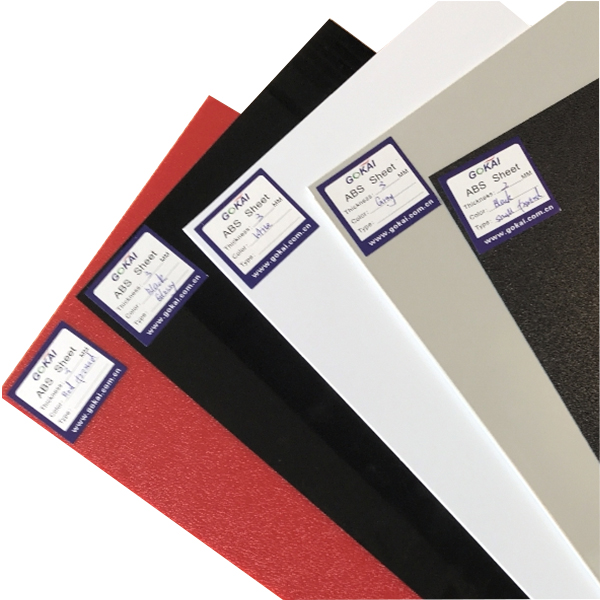
ABS (Acrylonitrile Butadiene Styrene) is an amorphous thermoplastic made by combining three monomers: acrylonitrile, butadiene, and styrene. Each component contributes different performance characteristics:
- Acrylonitrile: Improves chemical resistance and heat stability.
- Butadiene: Adds toughness and impact resistance, especially at low temperatures.
- Styrene: Provides rigidity, gloss, and a smooth surface finish.
Because ABS softens when heated and hardens when cooled without significant degradation, it can be melted and reshaped multiple times, making it suitable for injection molding, extrusion, and 3D printing.
ABS is often described as the “Swiss Army knife” of plastics because it offers a balanced combination of strength, processability, and cost.
- High impact resistance, even at low temperatures.
- Good rigidity and dimensional stability over time.
- Typical density: about 1.02–1.06 g/cm³, which is lighter than many PVC formulations.
- Flexural modulus generally supports structurally stable parts in demanding applications.
These properties make ABS suitable for components that must feel solid, resist drops, and maintain shape under everyday mechanical stress.
ABS has a moderate heat resistance, which is adequate for most indoor and light-duty technical applications.
- Heat distortion temperature is typically in the medium range among commodity and engineering plastics.
- ABS begins to soften slightly above normal service temperatures and is not intended for high-temperature environments like ovens or continuous high-heat exposure.
For applications requiring prolonged high-temperature use, higher-heat ABS grades or alternative materials may be needed.
- Good resistance to many acids, alkalis, and oils, though it can be attacked by some polar solvents.
- Useful electrical insulating properties, making ABS popular for housings of electrical and electronic equipment.
This combination of chemical and electrical performance supports its use in automotive interiors, electronics enclosures, and appliance casings.
Manufacturers choose ABS when they need a strong, attractive, and cost-effective plastic that is easy to process at scale.
- Excellent processability in injection molding, extrusion, blow molding, CNC machining, and thermoforming.
- Good surface quality with smooth, glossy surfaces that accept painting, printing, and plating.
- Colorability, because pigments can be added at the resin stage to reduce or eliminate secondary painting steps.
- Wide range of grades, including high-impact, flame-retardant, glass-filled, and high-flow ABS.
For OEM projects, this flexibility allows engineers to fine-tune performance and cost for each specific part.
From a user's perspective, ABS products usually feel solid and durable, with a reassuring weight and good tactile feel.
- Resist cracking and chipping in daily use.
- Maintain appearance with repeated handling and minor impacts.
- Suitable for both consumer goods and professional equipment where reliability matters.
ABS appears across many industries where balanced performance is more important than extreme specialization.
- Toys and games, including interlocking construction bricks.
- Household appliances such as vacuum cleaners, kitchen devices, and housings for small electronics.
- Power tool casings and protective housings.
These applications take advantage of ABS impact resistance, colorability, and ease of molding into ergonomic shapes.
- Automotive dashboards, interior trims, and structural clips where lightweight and impact performance are required.
- Safety-related parts such as bumpers, airbag housings, and protective covers, especially when high-impact or flame-retardant grades are used.
- Industrial housings, machine guards, and electrical enclosures.
Advanced ABS grades can deliver high fatigue resistance and predictable energy absorption under crash conditions, supporting safety-critical designs.
ABS is a staple filament in fused deposition modeling (FDM) 3D printing for functional prototypes.
- Produces strong, machinable parts that can be drilled, sanded, and painted.
- Suitable melting point and broad processing window for many FDM platforms.
- Requires proper ventilation due to fumes generated during printing.
Engineers and makers often prefer ABS over more brittle materials for working prototypes and low-volume functional parts.
In typical consumer and industrial uses, ABS is generally regarded as safe and non-toxic when correctly processed.
- Widely used in toys, automotive interiors, and electrical housings, which are subject to stringent product safety requirements.
- Suitable for certain medical devices and equipment housings when manufactured under appropriate standards.
- Not usually recommended for high-temperature food-contact applications unless specifically formulated and certified.
During 3D printing or high-temperature processing, users should ensure good ventilation and follow equipment safety guidelines to control emissions.
ABS provides stable performance in normal ambient conditions but has defined limits at temperature extremes.
- Performs reliably through typical indoor and many controlled outdoor temperature ranges.
- At high temperatures, ABS can soften and deform, so it is not suitable for continuous exposure near or above its heat distortion temperature.
- At very low temperatures, standard ABS grades may become more brittle, although high-impact formulations improve low-temperature toughness.
For demanding environments, such as under-hood automotive or deep-freeze logistics, designers often specify specialized high-heat or impact-modified ABS grades.
ABS is technically recyclable, and many industrial recyclers can reprocess it into secondary products.
- Often labeled under a general thermoplastics category in recycling streams, and not all municipal programs accept it.
- In manufacturing, clean ABS scrap can frequently be re-ground and blended back into production, improving material efficiency.
- Recycled ABS grades are increasingly used in applications where ultra-high aesthetics are not critical, such as internal components and non-visible structural parts.
For companies focused on sustainability, working with suppliers who can provide certified recycled ABS or closed-loop collection programs can significantly enhance environmental performance.
ABS and PLA are two of the most common FDM printing materials, each with distinct tradeoffs.
- ABS is stronger, tougher, and more heat-resistant, making it better suited for functional parts that must withstand impact or moderate heat.
- PLA is easier to print with lower warping and reduced odor, and is more biodegradable under industrial composting conditions, but it is generally more brittle and less heat-resistant.
For prototypes or parts that must survive real-world testing, ABS is often preferred, while PLA may be adequate for visual mockups or short-term fixtures.
When selecting sheet materials or plastic components, manufacturers often compare ABS with PVC and acrylic to balance strength, rigidity, appearance, and cost.
Material | Typical Strength & Rigidity | Heat Resistance | Key Advantages | Common Uses |
ABS | High impact strength and good rigidity. | Medium, suitable for most indoor applications. | Toughness, easy processing, good surface finish, broad grade selection. | Consumer goods, auto interiors, housings, 3D printing. |
PVC Sheet | Medium to high structural performance depending on formulation. | Service range from low to medium temperatures, with specific grades tuned for performance. | Excellent chemical resistance, good electrical insulation, good impact resistance in many formulations. | Signage, piping, cladding, industrial panels. |
Acrylic Sheet | Very high flexural strength and stiffness. | Generally better high-temperature performance than many standard PVC sheets. | Outstanding optical clarity, weatherability, and scratch resistance. | Displays, glazing, light boxes, premium signage. |
This comparison shows why ABS is often chosen for impact-resistant housings, while acrylic dominates in transparent, premium visual applications and PVC remains strong in cost-effective, chemically resistant sheet products.
Choosing between ABS, PVC, and acrylic sheet depends on the project's performance, aesthetics, and cost targets.
- You need high impact resistance with good surface quality for housings, covers, or structural components.
- Parts require machining, painting, or electroplating after molding.
- You are prototyping functional components via CNC or 3D printing that must endure mechanical stress.
- Chemical resistance and flame performance are key, such as for cladding, ducting, or industrial panels.
- You need a cost-effective, easily fabricated sheet material that can be cut, routed, and thermoformed.
- Recyclability and robust performance under repeated impact and abrasion are important for certain grades and applications.
- You need premium optical clarity and long-term outdoor weatherability, such as for signage, glazing, and displays.
- High stiffness and flexural strength are required to resist bending and maintain flatness.
- The part must look high-end, polished, and maintain its appearance over a long service life.
Optimizing ABS parts requires attention to design, tooling, and processing parameters.
- Use consistent wall thicknesses where possible to reduce warpage and sink marks.
- Add ribs, fillets, and gussets to increase stiffness without excessive material usage.
- Avoid sharp internal corners that concentrate stress; rounded transitions improve durability.
- Maintain appropriate melt and mold temperatures recommended by the resin supplier to balance flow and mechanical properties.
- Dry the material when necessary to reduce moisture-related defects such as splay or bubbles.
- For 3D printing, tune bed temperature, enclosure, and cooling settings to minimize warping and layer separation.
Working with experienced extruders and molders helps ensure that ABS parts meet their intended performance specifications over the full product life.
If you are evaluating ABS, PVC, or acrylic sheet for your next project, working with a specialized sheet and OEM partner ensures you get the right material, thickness, and processing route for your application. A professional manufacturer focused on PVC foam board and acrylic sheet can provide customized cutting, machining, and OEM branding services, helping you shorten development cycles and improve product reliability.
For global brands and project owners, specifying ABS, PVC, or acrylic sheet through an experienced OEM supplier allows you to align material selection with safety and regulatory requirements, optimize cost by matching performance grades to real-world loads, and consolidate sourcing of complementary materials in a single, integrated supply chain.
Contact our team today to discuss your ABS, PVC foam board, or acrylic sheet OEM requirements and receive tailored material recommendations and processing solutions for your next project.
Contact us to get more information!
ABS can be used outdoors in many controlled environments, but prolonged UV exposure may lead to discoloration and surface degradation unless UV-stabilized grades or protective coatings are used.
In many light-duty structural applications, ABS can replace metal to reduce weight and cost, but it cannot match metal's stiffness and high-temperature performance, so load, geometry, and environment must be carefully evaluated.
Standard ABS is generally not designed for hot food-contact uses; only specially formulated, certified grades should be considered when compliance with food-contact regulations is required.
ABS sheet is extruded into flat panels for machining or thermoforming, while ABS filament is produced in spools for 3D printing, but both share similar base resin characteristics tailored to their specific processes.
Polycarbonate typically offers higher impact strength and heat resistance than ABS but at a higher material cost, so ABS is often chosen where extreme impact or temperature performance is not essential.
1. https://lairdplastics.com/resources/abs-plastic-faq-properties
2. https://www.specialchem.com/plastics/guide/acrylonitrile-butadiene-styrene-abs-plastic
3. https://plasticweightcalculator.com/guides/abs-plastic-properties-applications
4. https://tirapid.com/abs-plastic
5. https://ud-machine.com/blog/acrylonitrile-butadiene-styrene
6. https://adrecoplastics.co.uk/abs-plastic-properties
7. https://www.china-abs-sheet.com/new_detail/Which-is-better-ABS-or-PVC-plastic-sheet.html
8. https://farcoplastics.com/resources/acrylic-or-pvc-sheeting
9. https://www.hs-plasticgroup.com/new_detail/The-difference-between-PVC-clear-sheet-and-acrylic.html
10. https://advancedplastiform.com/materials/abs/frequently-asked-questions