Shanghai Gokai Industry Co,.Ltd.
Call Us: +86-18918606548
Call Us: +86-18918606548
- Product Name
- Product Keyword
- Product Model
- Product Summary
- Product Description
- Multi Field Search
Views: 233 Author: Gokai Publish Time: 2026-08-04 Origin: Site


Content Menu
● Why Storm Panel Material Choice Matters
● Multiwall Polycarbonate: Strength Meets Visibility
● Aluminum Storm Panels: Built for Longevity
● Plywood: The Budget Fallback
● What the Data Shows: Cost Per Storm Cycle
● Installing Storm Panels: A Practical Checklist
● Choosing a Supplier for Multiwall Polycarbonate Panels
● Take the Next Step in Protecting Your Property
Choosing the right hurricane storm panels protects your home, your family, and your investment when severe weather strikes. This guide compares multiwall polycarbonate, aluminum, and plywood storm panels across strength, cost, installation, and long-term value to help you make an informed decision.
Every hurricane season brings a fresh reminder that window and door protection is not optional in storm-prone regions. Building codes now reference ASCE 7 wind-load standards, which require structures in high-risk zones to withstand design wind speeds ranging from 115 to 180 mph depending on location and risk category. Exterior glazing must also meet impact-resistance benchmarks such as ASTM E1996 and E1886, or be shielded by approved shutters. Against this backdrop, the material you choose for your storm panels directly affects your safety margin, your insurance eligibility, and your total cost of ownership.

| Feature | Multiwall Polycarbonate | Aluminum | Plywood |
|---|---|---|---|
| Best for | Strength + visibility | Strength + longevity | Affordability |
| Impact resistance | Up to 200x stronger than 1/2" plywood | 25% more strength than flat panels via corrugation | Penetrated below 27 mph in missile tests |
| Weight | 5x lighter than plywood | Lighter than plywood, heavier than polycarbonate | Heaviest, especially at 5/8" thickness |
| Reusability | Multi-season, reusable | Multi-season, reusable | Single-use; warps after exposure |
| Light transmission | Transparent, allows daylight | Opaque, blocks all light | Opaque, blocks all light |
| Cost per sq ft | 10 to 20 USD | 10 to 20 USD, often lower upfront | 2 to 6 USD |
| Insurance discount potential | Often eligible | Often eligible | Typically none |
Multiwall polycarbonate panels are built from multiple internal ribbed layers that trap air, adding both rigidity and thermal insulation. This hollow-core construction is why manufacturers like Gokai engineer polycarbonate hollow sheets specifically for OEM storm-panel applications worldwide.
Key performance data:
- Quarter-inch panels have withstood 9-pound 2x4 lumber missiles at speeds exceeding 60 mph, making them roughly 200 times more impact-resistant than half-inch plywood.
- Common hollow-sheet thicknesses range from 4mm to 16mm, with heavier profiles rated for wind resistance up to 180 mph (290 km/h).
- Multiwall sheets deliver thermal R-values between 2.5 and 4.5, keeping interiors cooler during and after a storm.
- Panels are five times lighter than plywood and can typically be installed in about 20 minutes per window.
Because the panels stay transparent, homeowners can install them days in advance of a storm without sacrificing curb appeal or natural light, and they remain usable if the power goes out.
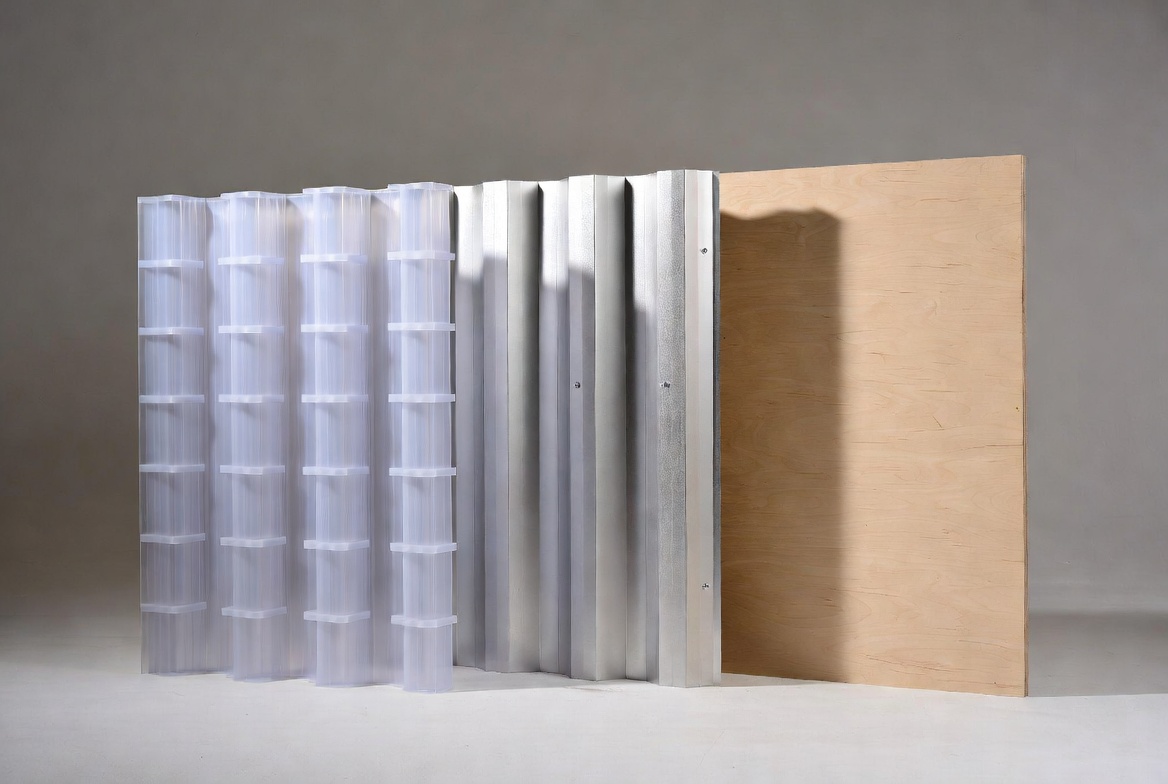
Aluminum shutters remain a popular choice because they are corrosion- and rust-resistant, durable, and reusable for many storm seasons. Their corrugated profile adds roughly 25% more resistance to flying debris compared with flat panels.
Where aluminum stands out:
- Lower upfront cost in many markets compared with polycarbonate, especially for homes with numerous window openings.
- Infinitely recyclable, with recycled content already making up about 80% of US aluminum production.
- Polished appearance, available in multiple colors including custom matches to a home's exterior.
The trade-off is that aluminum panels are solid and opaque, so they block all natural light and can make a sheltered home feel dark and confined during an extended storm. For households sheltering in place, this is a meaningful comfort consideration that pure cost comparisons often overlook.
Plywood remains the most recognizable and least expensive hurricane protection method. A minimum thickness of 5/8 inch is now recommended, though some homeowners double up half-inch boards to manage weight.
Limitations to weigh carefully:
- A half-inch plywood board can be penetrated by the standard 9-pound 2x4 missile test at impact speeds under 27 mph.
- Plywood warps after water exposure, meaning boards generally must be replaced after a single major storm.
- Improperly secured plywood can be torn loose by high winds, defeating its purpose entirely.
- Most insurance carriers do not offer discounts for plywood protection, unlike polycarbonate or aluminum systems.
Plywood still makes sense for homeowners in lower-wind-speed zones or those needing a one-time, low-cost solution.
A single-purchase price comparison understates the real cost of hurricane protection because plywood typically requires full replacement after each significant storm, while polycarbonate and aluminum panels are designed for repeated use across many seasons. When amortized over five to ten years, reusable materials frequently deliver a lower effective cost per protected opening despite a higher initial outlay, particularly when factoring in potential insurance premium reductions available for impact-rated systems.
1. Measure every opening precisely, including windows, sliding doors, and skylights, before ordering panels.
2. Confirm your local wind-speed and impact-test requirements, since coastal and inland zones can carry different code obligations under ASCE 7.
3. Choose a mounting system — track-mounted or direct-bolt — based on your building's wall construction.
4. Verify large-missile impact certification, such as Miami-Dade County approval, for any product you consider.
5. Store panels flat and protected between seasons to prevent scratching or warping.
6. Inspect anchoring hardware annually, since corrosion or loosened fasteners reduce protective performance over time.
For manufacturers, distributors, and construction firms sourcing at scale, panel quality depends heavily on raw material grade, wall thickness consistency, and UV-stabilization treatment. Gokai supplies multiwall polycarbonate hollow sheets engineered for storm-panel and construction applications, with OEM programs supporting custom thickness, width, and coating specifications for global buyers. Working directly with a manufacturer rather than a reseller typically shortens lead times and gives project teams tighter control over technical specifications and certification documentation.
Whether you manage residential properties, run a construction supply business, or manufacture protective building products, selecting the right storm panel material shapes both safety outcomes and long-term costs. Contact Gokai today to discuss OEM multiwall polycarbonate hollow sheet solutions tailored to your project specifications, certification needs, and order volume.
Is multiwall polycarbonate stronger than aluminum for hurricane protection?
Both materials perform well in impact testing, but polycarbonate's multiwall structure gives it exceptional resistance to large-missile impacts while remaining transparent, whereas aluminum relies on its corrugated shape and rigidity for comparable strength.
How long do multiwall polycarbonate storm panels last?
With proper storage and care, multiwall polycarbonate panels can be reused across many hurricane seasons, unlike plywood, which typically needs replacement after a single major storm exposure.
Do polycarbonate or aluminum panels qualify for insurance discounts?
Many insurers offer premium discounts for impact-rated polycarbonate or aluminum systems, while plywood generally does not qualify for such discounts.
Can I install hurricane storm panels myself?
Yes. Both polycarbonate and aluminum panels are designed for straightforward installation, often taking about 20 minutes per window using bolt or track mounting systems.
What thickness of multiwall polycarbonate is recommended for hurricane zones?
Thicknesses commonly range from 4mm to 16mm, with 16mm panels frequently used for direct-mount systems that meet large-missile impact certification requirements in high-wind regions.
Why do some polycarbonate panels cost more than aluminum?
Polycarbonate panels often carry a higher price point because they add value through light transmission, UV resistance, and thermal insulation properties that opaque aluminum panels do not provide.
1. Acme Plastics. "Hurricane Storm Panels: Multiwall Polycarbonate vs. Aluminum vs. Plywood." https://www.acmeplastics.com/content/hurricane-storm-panels-multiwall-polycarbonate-vs-aluminum-vs-plywood/
2. "What Are the Differences Between Aluminum and Polycarbonate Storm Panels?" https://stormpanels.com (industry comparison resource)
3. Everwin. "Polycarbonate Sheets as Hurricane Panels." https://everwinpc.com