Shanghai Gokai Industry Co,.Ltd.
Call Us: +86-18918606548
Call Us: +86-18918606548
- Product Name
- Product Keyword
- Product Model
- Product Summary
- Product Description
- Multi Field Search
Views: 212 Author: Gokai Publish Time: 2026-06-21 Origin: Site


Content Menu
● Core Structure of an Ambulance Body
>> Traditional Construction: Metal, Plywood, and Vinyl
● Why Performance Polymers Matter in Ambulance Design
>> From Heavy Metal to Lightweight, Hygienic Interiors
● Key Medical‑Grade Plastics in Ambulances
>> Polycarbonate, Polypropylene, and Polyethylene
● Role of ABS Sheet in Ambulance Interiors
>> ABS Sheet as a Workhorse Material
>> OEM Advantages of ABS for Global Ambulance Projects
● Aluminum Composite Panels (ACP) in Ambulance Applications
>> ACP for Exterior Cladding and Structural Panels
>> ACP Inside the Ambulance: Partitions and Ceilings
● Infection Control and Regulatory Compliance
>> Surfaces Built for Sterilization
>> Meeting Equipment and Layout Standards
● OEM Perspective: Designing Ambulance Interiors with ABS and ACP
>> Practical Design Considerations for Global OEM Projects
>> Future Trends: Smarter, Lighter, and More Sustainable
● How Gokai Supports OEM Ambulance Builders
>> ABS and ACP OEM Services for Global Clients
>> Partnering for Better Ambulance UX and Safety
● Call to Action: Build Ambulances with Smarter Materials
● FAQs About Ambulance Materials and OEM Design
An ambulance is only as safe and efficient as the materials behind its design, and today those materials are evolving fast—driven by stricter regulations, higher patient expectations, and new polymer technologies. For OEM suppliers like Gokai, specializing in ABS sheet and aluminum composite panel, this shift opens up clear opportunities to build lighter, more durable, and easier‑to‑clean ambulance interiors for global markets. [open.alberta]
Ambulances are no longer simple metal boxes with basic medical gear; they are highly engineered mobile treatment rooms that must balance safety, hygiene, ergonomics, and cost. From the cab and chassis to wall cladding, storage compartments, and work surfaces, material choices directly affect infection control, vehicle weight, and long‑term operating costs. As an OEM supplier and materials consultant, I've seen first‑hand how high‑performance polymers like ABS and ACP have become central to competitive ambulance manufacturing projects worldwide. [abronn]
A typical modern ambulance body still relies heavily on extruded aluminum for the outer shell, combined with plywood subfloors and interior wall panels clad in aluminum with vinyl or laminated plastic. Industrial‑grade vinyl is widely used for flooring because it offers seamless installation, chemical resistance, and easy cleaning—critical for dealing with blood, disinfectants, and other bodily fluids. Interior stainless‑steel grab rails, hinges, and hardware provide structural strength and corrosion resistance in high‑touch areas. [open.alberta]
This traditional configuration is largely driven by safety standards and regulatory requirements for emergency vehicles, which prioritize impact resistance, structural integrity, and maintainability. However, it also introduces challenges: metal‑heavy constructions add weight, plywood can swell with moisture, and complex surfaces can be harder to clean quickly between calls. [abronn]
Over the past decade, ambulance manufacturers have increasingly adopted performance polymers to reduce weight, noise, and vibration while improving cleanliness and ergonomics. Thermoplastic sheets and panels can form smooth, seamless surfaces that resist stains, withstand frequent sterilization, and minimize bacterial harborage points. They also support modular interior layouts, allowing OEM builders to customize cabinets, wall panels, and work surfaces for different medical systems and regional standards. [abronn]
Medical‑grade plastics used inside ambulances must meet strict OSHA and healthcare‑related requirements for biocompatibility, impact resistance, and chemical resistance to disinfectants. Because thermoplastics can be repeatedly heated and reshaped without irreversible degradation, they are ideal for both injection‑molded medical devices and sheet‑based interior components. This recyclability and process flexibility are important for OEMs seeking cost‑effective yet compliant solutions. [absmetals]
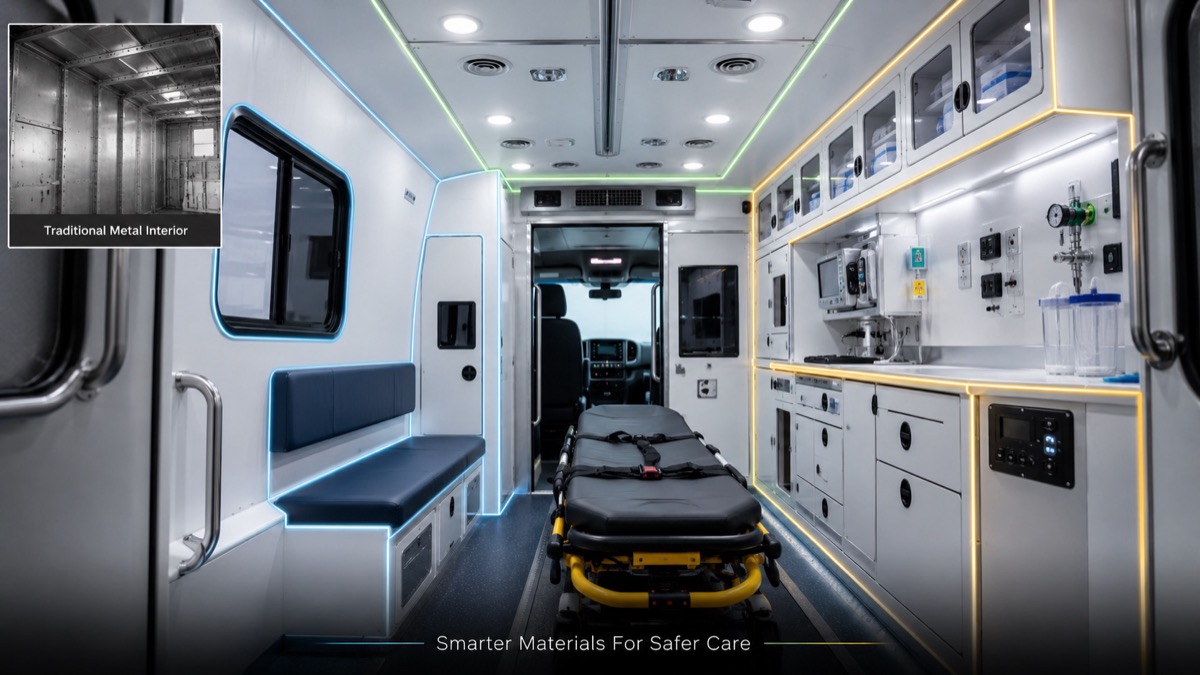
Medical plastics inside ambulances typically include polycarbonate, polypropylene, and polyethylene, each chosen for specific performance profiles. [open.alberta]
- Polycarbonate offers exceptional impact resistance and heat tolerance, making it suitable for medical device housings, protective covers, and transparent panels. Its ability to be cold‑formed without cracking is especially useful for quick prototyping and custom components. [abronn]
- Polypropylene combines durability with resistance to steam sterilization and is widely used in reusable instrument trays, structural medical components, and certain storage systems. [open.alberta]
- Polyethylene provides high impact resistance, chemical resistance, low moisture absorption, and good compatibility with harsh cleaning agents. It is biologically inert and often used in medical implants and rugged interior parts that must endure repeated disinfection cycles. [abronn]
These materials are produced under strict medical licensing protocols and are designed to withstand constant mechanical stress and thermal cycling in emergency use. For ambulance OEMs, the practical takeaway is clear: high‑quality polymers reduce lifecycle costs and support safer patient care environments. [abronn]
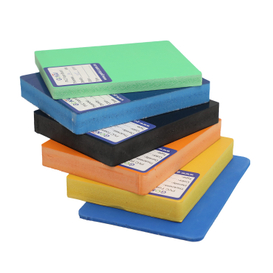
Among performance polymers, ABS sheet has emerged as a versatile, cost‑effective choice for ambulance interior panels, cabinetry, and protective casings. ABS combines good impact strength, dimensional stability, and ease of thermoforming, which allows OEM builders to create curved, ergonomic surfaces that fit tightly around equipment and structural elements. [fr.slideshare]
In practical ambulance projects, ABS sheet is often used for:
- Wall and ceiling liners with smooth, easy‑to‑clean surfaces. [absmetals]
- Cabinet fronts and drawer faces that resist chipping and cracking. [absmetals]
- Equipment housings, modesty panels, and privacy screens for patient comfort. [absmetals]
Because ABS can be produced in a range of colors and textures, it helps designers differentiate zones inside the vehicle—for example, patient care zones vs equipment storage zones—without sacrificing hygiene or durability. [fr.slideshare]
From an OEM supplier perspective, ABS sheet offers several practical advantages for international ambulance manufacturing programs:
- Consistent quality across large production runs, supporting fleet‑wide standardization. [absmetals]
- Compatibility with common fabrication methods such as cutting, routing, bonding, and thermoforming. [absmetals]
- Good balance of weight, stiffness, and cost vs many metal or composite alternatives. [absmetals]
For global customers, this means ABS‑based interior kits can be shipped as modular systems, then assembled and customized locally according to regional regulations and medical protocols. OEM providers like Gokai can offer tailored thicknesses, surface finishes, and pre‑cut panel designs to match specific chassis types and ambulance body layouts. [cn.gokai.com]
Aluminum composite panels (ACP)—consisting of two thin aluminum sheets bonded to a non‑aluminum core—are widely used in architectural and signage applications because they are lightweight, rigid, and highly weather‑resistant. Those same characteristics translate well into ambulance projects where weight reduction and exterior durability are crucial. [stp]
ACP offers:
- High strength‑to‑weight ratio and excellent flatness, ideal for exterior body panels and compartment doors. [fr.slideshare]
- Superior resistance to weather, corrosion, and pollutants, enabling long service life with low maintenance. [stp]
- Flexible color and coating options to meet branding, visibility, and regulatory requirements (e.g., reflective surfaces and high‑contrast markings). [stp]
When integrated into ambulance body design, ACP can help reduce vehicle weight compared with heavier steel solutions, which in turn improves fuel efficiency and responsiveness. For OEM builders, ACP modules can be pre‑engineered and delivered as panel kits ready for installation on different chassis platforms. [abronn]
Beyond exterior cladding, ACP can be effectively applied to interior partitions, false ceilings, and machine covers, borrowing from its established use in building interiors and commercial signage. In ambulance settings, this supports: [fr.slideshare]
- Smooth, sealed surfaces that minimize dust accumulation and simplify disinfection. [fr.slideshare]
- Integration of lighting, cable routing, and air‑conditioning ducting within ceiling and wall systems. [open.alberta]
- Robust partitions between driver and patient areas, improving noise control and thermal comfort. [stp]
ACP's combination of rigidity and light weight makes it particularly attractive for modular emergency vehicle interiors that must accommodate frequent updates and equipment upgrades over the life of the vehicle. [abronn]
Ambulance interiors are exposed to blood‑borne and airborne pathogens, and materials must comply with OSHA‑related safety standards and healthcare infection‑control guidelines. Industrial vinyl flooring, seamless polymer sheets on countertops, and shatter‑resistant plastic panels in storage compartments are all chosen to withstand frequent exposure to disinfectants and bodily fluids. [open.alberta]
ABS sheet and ACP can be specified with smooth, low‑porosity finishes that resist staining and support rapid cleaning protocols between calls. When paired with proper sealing, corner detailing, and joint treatments, these materials reduce the risk of harboring contaminants in cracks or exposed substrates. [abronn]
Ambulance regulations define not only what equipment must be carried—such as oxygen systems, splints, suction units, and monitoring devices—but also how that equipment should be stowed and accessed. Material choices for cabinets, brackets, and mounts therefore must support secure fastening, ergonomic access, and clear labeling. [casetext]
Lightweight yet robust polymers allow designers to create dedicated compartments with impact‑resistant doors and panels, ensuring that critical devices remain in place even under emergency driving conditions. OEM suppliers who understand these regulatory constraints can help customers design ABS and ACP solutions that align with international standards while still reflecting local practices. [casetext]
From an OEM supply standpoint, successful ambulance material solutions must balance:
- Vehicle weight and fuel efficiency.
- Structural strength and crash performance.
- Hygiene and ease of disinfection.
- Cost, availability, and global logistics.
ABS sheet, ACP, and other performance polymers provide a flexible design toolkit for OEMs producing ambulances for different markets, from dense urban environments to long‑distance rural transport routes. Advanced simulation and prototyping help manufacturers fine‑tune panel thicknesses, mounting systems, and joint designs before scaling production. [abronn]
Working closely with specialized materials partners enables ambulance builders to source pre‑certified polymer products that align with medical and industrial standards, reducing engineering risk and time‑to‑market. For global buyers, this collaboration translates into ambulances that feel modern, clean, and comfortable—even after years of heavy use. [abronn]
Looking ahead, material innovation in ambulances is likely to focus on:
- Further weight reduction through advanced composites and optimized panel geometry. [abronn]
- Integrated antimicrobial coatings and surface treatments for higher baseline hygiene. [abronn]
- Improved recyclability and circular‑economy practices for end‑of‑life vehicles and interior components. [open.alberta]
Performance polymers such as ABS and ACP are well‑positioned to support these trends thanks to their thermoformability, recyclability potential, and compatibility with emerging coatings and laminates. [fr.slideshare]
As a dedicated sheet material supplier, Gokai focuses on ABS sheet and aluminum composite panel solutions tailored for demanding applications such as ambulances, mobile medical units, and other special‑purpose vehicles. Leveraging OEM and ODM capabilities, Gokai can deliver customized thicknesses, colors, and surface finishes to match each customer's technical and branding requirements. [cn.gokai.com]
For ambulance builders, this includes:
- ABS interior kits for walls, ceilings, cabinets, and modesty panels.
- ACP exterior and partition panels engineered for specific chassis dimensions.
- Technical support on material selection, fabrication, and integration with existing body structures.
By combining materials expertise with flexible production and global logistics, Gokai helps OEM clients standardize their designs across regions while still allowing for local regulatory and functional customization. [cn.gokai.com]
From a user‑experience perspective, patients and medical crews benefit directly from clean, ergonomic, low‑noise interiors built with high‑performance polymers. Thoughtful material selection improves lighting quality, reduces sharp edges, and enables more intuitive storage layouts, all of which contribute to faster, safer care delivery. [abronn]
By collaborating early in the design process, Gokai can help OEM customers align their material choices with the realities of frontline emergency work—supporting surfaces that clean quickly, resist damage, and maintain a professional appearance over years of operation. [open.alberta]
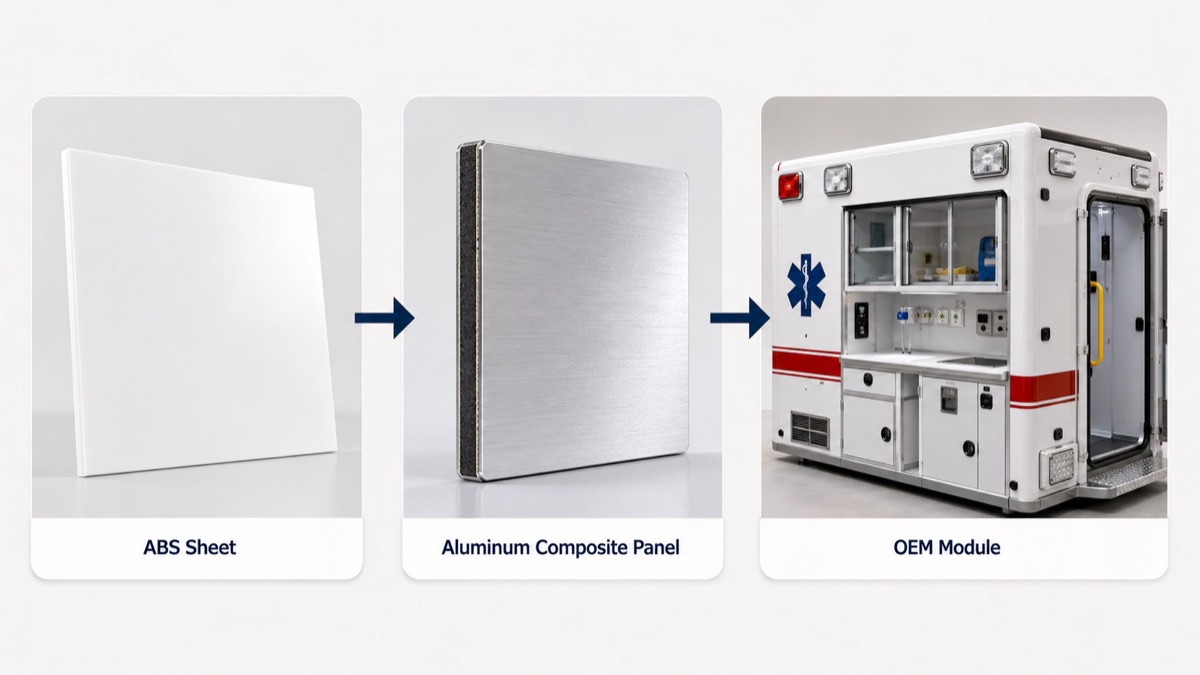
If you're planning a new ambulance program or upgrading an existing fleet, now is the time to reassess the materials in your vehicle design. Performance polymers such as ABS sheet and aluminum composite panel can significantly improve weight, hygiene, and long‑term durability compared with traditional solutions. [abronn]
To explore OEM ABS and ACP options for your ambulance or emergency vehicle project, contact your materials partner and request application‑specific recommendations, sample panels, and fabrication guidelines. By making informed material choices today, you can deliver safer, more efficient ambulances for tomorrow's emergency teams. [cn.gokai.com]

1. What are the main materials used in modern ambulance bodies?
Modern ambulances typically use extruded aluminum for the outer body, plywood for subfloors, and aluminum or laminated plastic for interior wall panels, combined with industrial vinyl flooring and performance polymer components. [open.alberta]
2. Why are performance polymers important in ambulance interiors?
Performance polymers reduce weight, enhance impact and chemical resistance, and provide smooth, easy‑to‑clean surfaces that improve infection control and long‑term durability in demanding emergency environments. [abronn]
3. How is ABS sheet used in ambulance construction?
ABS sheet is widely used for interior wall and ceiling liners, cabinet fronts, equipment housings, and modesty panels thanks to its impact strength, thermoformability, and ability to create ergonomic, hygienic surfaces. [cn.gokai.com]
4. What role do aluminum composite panels play in ambulance design?
Aluminum composite panels serve as lightweight, rigid exterior body panels and interior partitions or ceilings, offering excellent flatness, weather resistance, and flexible color and finish options. [stp]
5. How can an OEM supplier support global ambulance projects?
OEM suppliers like Gokai provide customized ABS and ACP solutions, technical guidance, and scalable production, helping ambulance manufacturers standardize designs while meeting regional regulations and operational requirements. [cn.gokai.com]
- Piedmont Plastics – "What Materials Are Used To Make An Ambulance?"
[https://www.piedmontplastics.com/blog/ambulance-material]
- Abronn – "Optimal Materials For Ambulance Construction"
[https://abronn.com/optimal-materials-for-ambulance-contrustion/]
- Abronn – "Ambulance Manufacturing Materials: What Works Best?"
[https://abronn.com/the-ambulance-manufacturing-materials-what-works-best/]
- ABS Metals – "Aluminum Composite Panels"
[https://www.absmetals.com/en/Products/Metals/Aluminum-Composite-Panel]
- Gokai – "Aluminum Composite Panels OEM Manufacturer"
[https://cn.gokai.com.cn/aluminum-composite-panels.html]
- Alberta Health – Standards of Ambulance Equipment and Supplies (PDF)
[https://open.alberta.ca/dataset/0ffcac87-2b9e-4902-b1be-d0b8df562857]