Shanghai Gokai Industry Co,.Ltd.
Call Us: +86-18918606548
Call Us: +86-18918606548
- Product Name
- Product Keyword
- Product Model
- Product Summary
- Product Description
- Multi Field Search
Views: 222 Author: Gokai Publish Time: 2026-06-15 Origin: Site


Content Menu
● What "Bulletproof" Really Means (And Why It Is Misleading)
● What Bullet Resistant Actually Means in Practice
● How Ballistic Standards Define Protection Levels
>> UL 752 Ballistic Levels for Glazing
● Polycarbonate vs Acrylic in Bullet Resistant Systems
>> Mechanical Performance and Impact Strength
>> Weight, Workability, and Surface Performance
● Bullet Resistant vs Bulletproof: Key Differences at a Glance
● How Polycarbonate Solid Sheet Enables Bullet Resistant Designs
>> Design Considerations for OEM Buyers
● Where Acrylic Sheet Fits into Bullet Resistant Applications
>> Strengths of Acrylic in Security Contexts
>> When to Choose Acrylic vs Polycarbonate
● Step‑by‑Step: How to Specify Bullet Resistant Glazing for Your Project
● Emerging Trends in Bullet Resistant Plastics for 2026 and Beyond
● Why Wording Matters: Legal, Safety, and UX Implications
● How Gokai Supports OEM and Global Buyers
● Clear Next Step: Talk About Your "Bulletproof" Project in the Right Language
When I started helping global security contractors and OEMs specify glazing for "bulletproof" projects, the first thing I had to explain was simple: there is no truly bulletproof material—only bullet resistant systems designed for a specific threat level. That difference between bullet resistant and bulletproof is not just semantics; it influences your material choice, your compliance with UL and NIJ standards, and ultimately, the real‑world safety of people behind the glass. [jcblarmouringsolutions]
In this guide, I will unpack the real meaning of bullet resistance, clarify why "bulletproof" is a marketing myth, and show how polycarbonate solid sheet and acrylic sheet can be engineered into practical ballistic solutions for banks, retail, control rooms, and OEM enclosures. As a sheet supplier (Gokai) providing OEM‑ready polycarbonate and acrylic panels for global customers, I will also share practical selection and design tips you can apply immediately to upcoming projects. [blog.newanglebeveling]

From a security marketing perspective, "bulletproof" sounds reassuring. From an engineering and risk‑management perspective, it is dangerously vague.
- "Bulletproof" implies total, unconditional protection against all bullets in all conditions. [usbulletproofing]
- In practice, industry bodies and manufacturers accept that no glazing will withstand every weapon, caliber, and repeated impact on the same spot indefinitely. [acmeplastics]
Some experts informally describe "bulletproof" only for extreme materials such as thick concrete or heavy lead shielding, but even those definitions exist outside mainstream architectural and OEM glazing standards. In the context of transparent security materials, "bulletproof" has become a popular but technically inaccurate shortcut for ballistic‑rated, bullet resistant systems. [jcblarmouringsolutions]
When I review design briefs, my rule is straightforward: whenever "bulletproof glass" appears, I translate it into "ballistic‑rated, bullet resistant glazing to Level X standard" and push the team to define the exact threat scenario. [usbulletproofing]
By contrast, bullet resistant is an engineering term anchored in testing standards and measurable performance. [usbulletproofing]
- Bullet resistant glazing is tested with specific ammunition types, velocities, and shot patterns, and must withstand a defined number of hits without penetration. [usbulletproofing]
- Performance is always linked to a threat level (for example, handgun vs rifle, single hit vs multiple impacts) rather than a vague notion of "stopping bullets." [acmeplastics]
The key idea is controlled resistance, not invincibility. Under the right conditions, bullet resistant systems slow, deform, and capture projectiles, limiting spall and preventing complete penetration until their rated performance envelope is exceeded. [usbulletproofing]
In real projects, that gives you something far more useful than the myth of "bulletproof": a transparent protection system that can be matched to risk, budget, and regulatory requirements. [alibaba]
To avoid guesswork, modern security projects rely on established ballistic standards. The most commonly referenced for glazing are:
- UL 752 (North America, architectural glazing)
- NIJ 0108.01 and related NIJ body armor standards (primarily for armor and shields, but often used for comparative threat language) [proceedings]
UL 752 classifies bullet resistant materials into Level 1 through Level 8, each associated with particular ammunition and test conditions. For example: [usbulletproofing]
- Level 1: Designed to resist several shots from common handgun rounds (such as 9 mm) at specified velocities. [usbulletproofing]
- Level 3: Provides protection from larger caliber handguns up to .44 Magnum and is frequently specified in high‑risk public buildings, schools, and government facilities. [usbulletproofing]
- Levels 4–8: Target rifle and automatic weapon threats, and are typically ordered for embassies, critical infrastructure, and military environments. [usbulletproofing]
NIJ standards classify ballistic resistant protective materials by armor type, ammunition, and impact performance, using categories like Type II, III‑A, III, and IV. While NIJ is more focused on body armor, designers often borrow its language when describing threat levels for vehicular or enclosure projects. [proceedings]
For you as a specifier or buyer, the takeaway is straightforward: never accept "bulletproof" as a specification. Demand a clearly stated UL or NIJ level so that your material, framing, and installation can be engineered and tested accordingly. [usbulletproofing]
Gokai's core products—polycarbonate solid sheet and acrylic sheet—are widely used as components in security and ballistic glazing systems around the world. Before we look at design strategies, it helps to understand how these materials behave. [lowes]
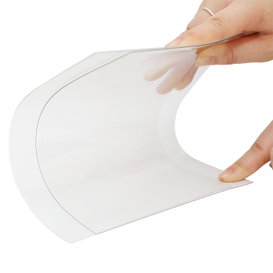
Both materials are often described as "plastic glass" because they offer glass‑like clarity with much lower weight. However, their impact performance is very different: [blog.newanglebeveling]
- Polycarbonate solid sheet can be up to roughly 250 times stronger than standard glass, making it the preferred choice where high impact and ballistic resistance are critical. [blog.newanglebeveling]
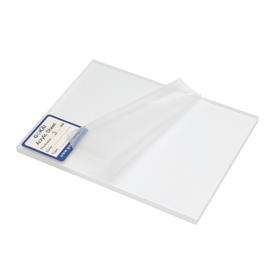
- Acrylic sheet typically offers impact strength on the order of around 17 times that of glass, providing improved safety but significantly less impact capacity than polycarbonate. [blog.newanglebeveling]
This is why multi‑layer polycarbonate systems dominate higher ballistic levels, while acrylic is more common in moderate‑risk, cost‑sensitive, or retrofit applications where clarity and surface finish are prioritized. [alibaba]
- Both acrylic and polycarbonate weigh about 50% less than traditional glass, which simplifies handling and reduces structural loads. [blog.newanglebeveling]
- Acrylic offers excellent surface gloss and scratch resistance, making it attractive for customer‑facing counters and storefronts where optical quality is a priority. [blog.newanglebeveling]
- Polycarbonate is tougher but softer at the surface, so it typically relies on hard‑coat and UV‑resistant coatings to maintain clarity and scratch resistance in demanding environments. [alibaba]
From an OEM and fabrication standpoint, both can be cut, machined, and cold‑formed, with polycarbonate generally offering greater flexibility for complex shapes and impact‑critical designs. [youtube]
| Aspect | "Bulletproof" (marketing term) | Bullet resistant (technical term) |
|---|---|---|
| Definition | Implies absolute protection against all bullets in all scenarios. (jcblarmouringsolutions) | Specifies resistance to defined threats under standardized tests. (usbulletproofing) |
| Standards | Not recognized by UL or NIJ. (usbulletproofing) | Governed by UL 752, NIJ 0108.01 and similar standards. (usbulletproofing) |
| Expectation | Often unrealistic; can mislead stakeholders. (jcblarmouringsolutions) | Manages expectations via clear threat levels and limits. (usbulletproofing) |
| Engineering use | Rarely accepted in serious specs. (usbulletproofing) | Required term in professional design documents. (usbulletproofing) |
| Material example | Informally used for extreme barriers (thick concrete, heavy lead). (usbulletproofing) | Multi‑layer polycarbonate, acrylic laminates, and glass composites tested for ballistic levels. (blog.newanglebeveling) |
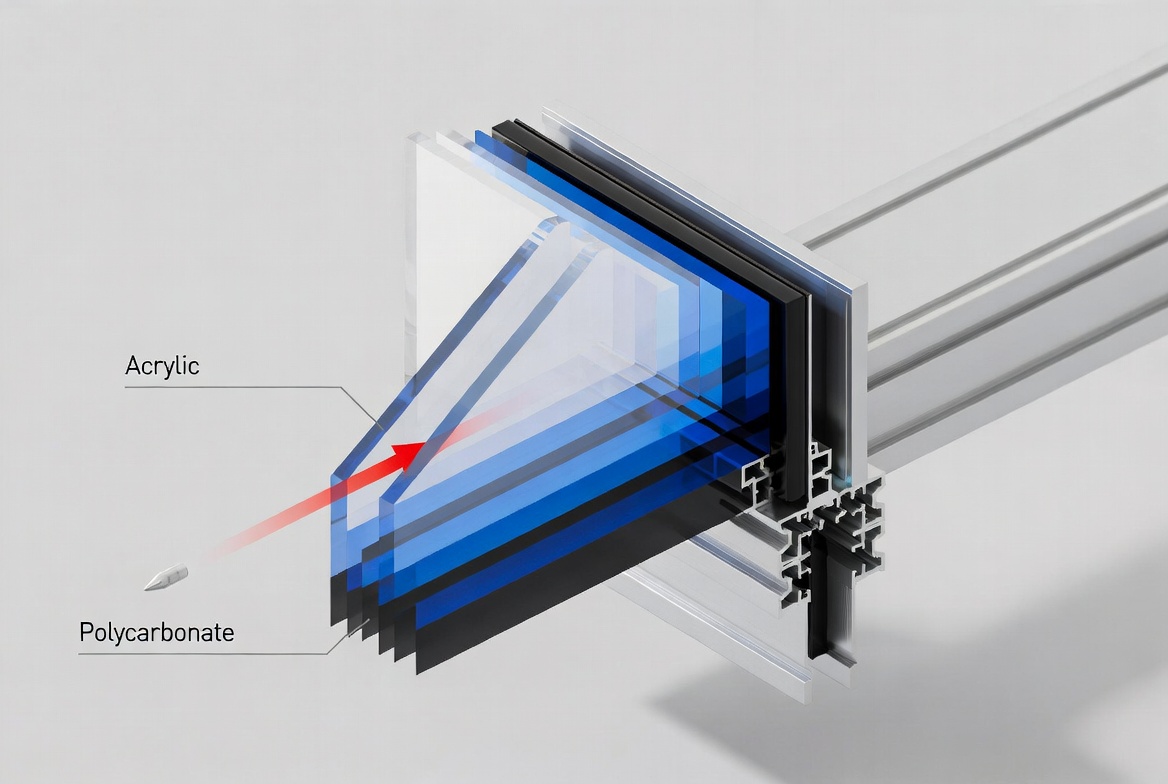
From my experience with banks, control rooms, and OEM enclosure projects, polycarbonate solid sheet is the backbone material for many modern bullet resistant glazing systems. [alibaba]
- Bank teller windows and transaction counters requiring UL 752 Level 1–3 protection.
- Security cabins and access control booths in industrial facilities and transport hubs.
- Machine guards and OEM panels where both impact safety and limited ballistic resistance are desired.
By combining polycarbonate core layers with hard‑coated surfaces and optional glass or acrylic facings, designers can achieve the right balance between impact absorption, scratch resistance, and optical clarity. [usbulletproofing]
When we support OEM customers under Gokai's global OEM service, the conversations quickly move from "bulletproof" to very specific engineering decisions:
- Target UL or NIJ level, including ammunition type and number of shots. [proceedings]
- Required sheet thickness and layering strategy to meet that level. [acmeplastics]
- Coatings: anti‑scratch, anti‑abrasion, UV‑resistant, or anti‑fog for outdoor or high‑humidity environments. [alibaba]
- Edge finishing, drilling, and mounting details to avoid stress points that can compromise ballistic performance.
Because polycarbonate is so impact‑tough, I often see customers over‑specify thickness. A more balanced approach is to start from the required standard level, then engineer thickness, layer count, and framing together instead of adding material blindly. [usbulletproofing]
Acrylic sheet does appear in bullet resistant glazing, but usually with a different value proposition.
- Outstanding clarity and surface gloss, ideal for retail counters, showcase windows, and branded environments where visual appearance is critical. [m.yakelipvc]
- Better surface scratch resistance than uncoated polycarbonate, which can reduce maintenance needs in moderate‑risk installations. [blog.newanglebeveling]
- Good outdoor weatherability, especially in UV‑stabilized grades, making it suitable for external partitions and shields. [m.yakelipvc]
In many architectural and commercial fit‑outs, thick acrylic panels (often over 1 inch) can deliver meaningful bullet resistance for lower threat scenarios, although still not at the level of multi‑layer polycarbonate or glass‑polycarbonate laminates. [acmeplastics]
- Choose polycarbonate solid sheet when human safety is paramount, threat levels are higher, or multi‑hit performance is critical (e.g., Level 2–3 and above). [alibaba]
- Choose acrylic sheet when clarity, scratch resistance, aesthetics, and cost are dominant, and the threat profile is lower or primarily focused on forced‑entry and vandalism, not repeated ballistic attack. [m.yakelipvc]
Hybrid approaches—such as polycarbonate‑acrylic laminates—can deliver intermediate solutions for schools, specialty retail, and SMB security upgrades. [alibaba]
To turn this theory into a practical decision process, here is the simple framework I use when advising project teams and OEM buyers.
1. Define the realistic threat scenario
- Handgun vs rifle, likely calibers, single incident vs repeated attack. [acmeplastics]
2. Select the appropriate standard and level
- For architectural glazing, align with UL 752 Level 1–3 for most commercial projects, and higher levels only when justified. [usbulletproofing]
3. Choose material architecture
- Start with polycarbonate solid sheet for higher ballistic demands and acrylic sheet or hybrid laminates for moderate threats and display‑critical areas. [usbulletproofing]
4. Optimize thickness and layering
- Work backward from the required UL or NIJ level and use multi‑layer constructions rather than a single massive sheet whenever possible. [acmeplastics]
5. Engineer the frame and fixings
- Ballistic performance is a system property; ensure frames, joints, and anchors are sized and tested to the same level as the glazing. [usbulletproofing]
6. Document everything clearly
- Replace "bulletproof glass" with "bullet resistant glazing to UL 752 Level X with polycarbonate solid sheet core" in all drawings, RFQs, and OEM specifications. [acmeplastics]
By following this process, you reduce the risk of overspending on unnecessary performance or, worse, under‑protecting critical areas because the word "bulletproof" was never challenged.
Recent market data and supplier guidance show several important trends that should shape your next specification:
- Multi‑layer polycarbonate systems with certified UL ratings are becoming the default for banks, critical infrastructure, and high‑risk public spaces. [alibaba]
- Buyers increasingly demand full documentation, batch testing, and traceability from sheet manufacturers to satisfy audits and insurance requirements. [usbulletproofing]
- In cost‑sensitive and retail projects, designers are looking at hybrid acrylic‑polycarbonate laminates and modular systems to balance performance with aesthetic and budget demands. [blog.newanglebeveling]
For a supplier like Gokai, this means investing heavily in OEM customization, cut‑to‑size service, and coating technologies, so that global customers can move quickly from concept to production while still meeting local standards and regulations. [lowes]
If there is one UX insight that always surprises non‑specialists, it is this: using "bulletproof" loosely in your documentation can create legal and expectation risks you do not want. [jcblarmouringsolutions]
- From a legal standpoint, over‑promising absolute protection can become a liability if an incident occurs and the installation performs within its rated level but not beyond it.
- From a safety standpoint, staff may behave differently if they believe they are behind "unbreakable" glass instead of a certified bullet resistant barrier with known limits.
- From a UX and communication standpoint, precise language—"UL 752 Level 3 bullet resistant glazing"—builds more trust with security professionals and procurement teams than vague claims.
As a content strategist and supplier, I actively encourage teams to educate end users in plain language about what bullet resistant systems can and cannot do, without leaning on the comforting but inaccurate shorthand of "bulletproof." [jcblarmouringsolutions]
As a specialized supplier of polycarbonate solid sheet and acrylic sheet, Gokai works closely with global OEMs, contractors, and distributors to turn high‑level security requirements into manufacturable, repeatable products. [lowes]
Typical ways we support customers include:
- Selecting material type, grade, and thickness aligned with your target UL or NIJ level. [usbulletproofing]
- Providing OEM services such as cut‑to‑size, drilling, bending, edge finishing, and protective film solutions tailored to specific enclosures or architectural modules. [lowes]
- Advising on coatings and treatments to balance scratch resistance, UV stability, and lifecycle cost for indoor and outdoor applications. [blog.newanglebeveling]
If you are planning a new security glazing project, bringing your threat profile, target standard, and installation conditions to the conversation from day one will dramatically speed up quoting and prototyping.
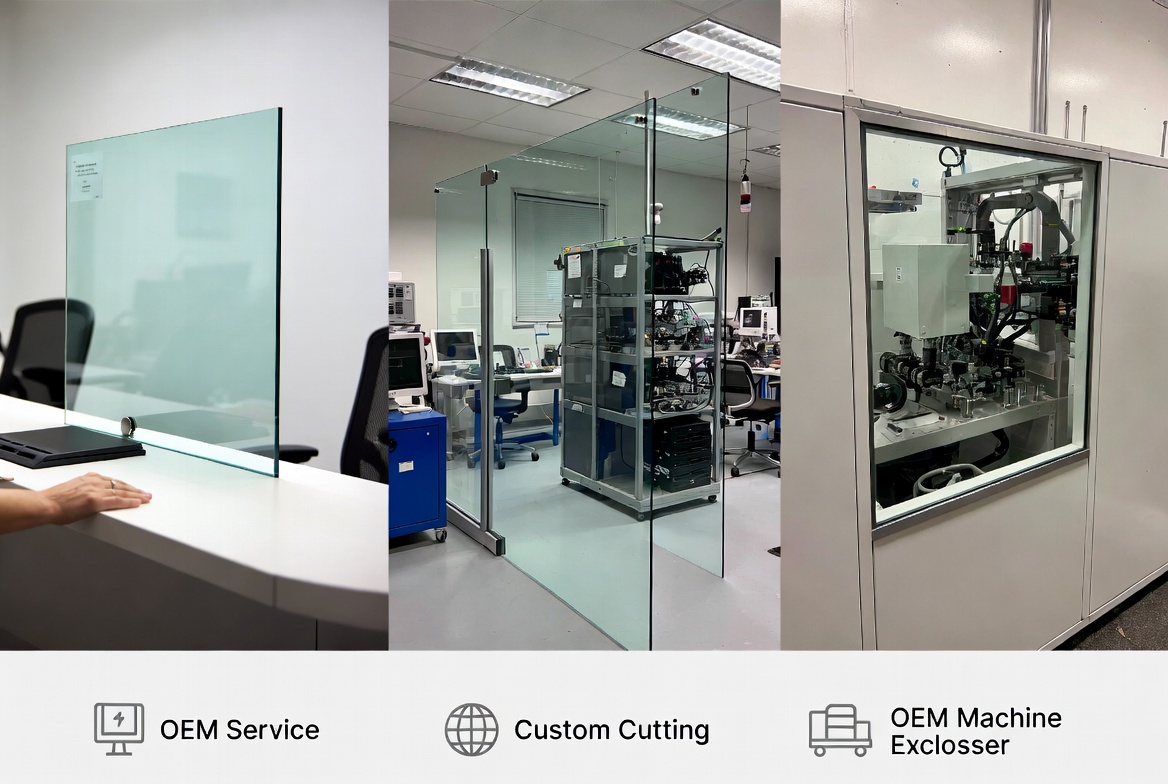
If you are currently working on a "bulletproof" window, partition, or OEM housing, the most productive step you can take today is to reframe that requirement into a specific bullet resistant target.
Share your expected UL or NIJ level, typical weapon threats, installation environment, and budget constraints, and then work with a materials partner like Gokai to select the right blend of polycarbonate solid sheet, acrylic sheet, and lamination strategy for your use case. That approach gives you real, testable safety instead of a comforting but misleading label. [alibaba]
1. Is there any glazing that is truly bulletproof?
No. In industry practice, all transparent security materials are considered bullet resistant, not absolutely bulletproof, because their performance is limited by weapon type, ammunition, and repeated impact. [jcblarmouringsolutions]
2. What does UL 752 Level 3 protection mean for a window?
UL 752 Level 3 indicates that the glazing system has been tested to resist multiple shots from larger caliber handguns (such as .44 Magnum) under defined conditions, and is widely used in schools, government buildings, and high‑risk public facilities. [usbulletproofing]
3. Can thick acrylic sheet be used as bullet resistant glazing?
Yes, thick acrylic panels can offer meaningful bullet resistance for lower‑threat scenarios, especially when oversized thickness and proper framing are used, but they typically do not match the multi‑hit performance of polycarbonate‑based systems at higher levels. [acmeplastics]
4. Why is polycarbonate preferred over acrylic for higher ballistic levels?
Polycarbonate offers far higher impact strength—up to about 250 times that of glass versus around 17 times for acrylic—making it better suited for absorbing and dissipating ballistic energy, especially in multi‑layer laminates. [blog.newanglebeveling]
5. Do I only need to specify the glazing, or also the frame?
You must treat ballistic protection as a complete system. Frames, fixings, and surrounding walls must be engineered and, ideally, tested to the same ballistic level as the glazing, otherwise the system may fail at its weakest point. [usbulletproofing]
1. JCBL Armouring Solutions – “Bulletproof Vs. Bullet-resistant: Busting the Myths!” https://jcblarmouringsolutions.com/blog/bulletproof-vs-bullet-resistant-busting-the-myths
2. New Angle Beveling – “7 Key Factors to Consider When Choosing Polycarbonate vs. Acrylic” https://blog.newanglebeveling.com/polycarbonate-vs.-acrylic-7-key-factors-to-consider
3. US Bullet Proofing – “UL 752 Ballistic Ratings Guide & Protection Levels” https://www.usbulletproofing.com/standards/ballistics/
4. Alibaba.com – “Choosing the Ideal Bulletproof Sheet for 2026 Security Projects” https://www.alibaba.com/product-comparison/bullet-proof-plastic-sheets.html
5. US Bullet Proofing – “Bulletproof vs. Bullet Resistant: What Is The Difference?” https://www.usbulletproofing.com/bulletproof-vs-bullet-resistant-difference/
6. Acme Plastics – “Bullet-Resistant vs. Bulletproof: What's the Difference?” https://www.acmeplastics.com/content/bullet-resistant-vs-bulletproof-whats-the-difference/
7. NIJ / Proceedings – “NIJ Standards for Ballistic Resistance of Body Armor and Protective Materials” https://www.proceedings.com/content/080/080042-0036open.pdf
8. 亚克力板与防弹玻璃差异分析 http://m.yakelipvc.com/m/news_view.aspx?Fid=t2%3A4%3A2&Id=545&IsActiveTarget=True&typefid=4&TypeId=4
9. Lowe's – “Polycarbonate & Acrylic Sheets for Projects” https://www.lowes.com/pl/glass-acrylic/polycarbonate-acrylic-sheets/186605902