Shanghai Gokai Industry Co,.Ltd.
Call Us: +86-18918606548
Call Us: +86-18918606548
- Product Name
- Product Keyword
- Product Model
- Product Summary
- Product Description
- Multi Field Search
Views: 222 Author: Gokai Publish Time: 2026-06-13 Origin: Site


Content Menu
● Understanding Your Water Environment First
>> Saltwater, Freshwater, Brackish: Why It Matters
>> Key Environmental Stress Factors
● Core Criteria for Choosing Marine Plastics
● Quick Comparison of Common Marine Plastics
● Best Plastics for Freshwater Applications
>> Freshwater Tanks, Ponds and Aquaculture
>> Where PETG Sheet Makes Sense in Freshwater
● Best Plastics for Brackish Water
>> Structural and Mechanical Components
>> How ABS Sheet Fits in Brackish Environments
● Best Plastics for Saltwater (Marine) Environments
>> Heavy‑Duty Structural and Floating Components
>> Transparent and Equipment Components Near Saltwater
● Where PETG and ABS Sheets Excel (And Where They Do Not)
>> Strengths of PETG Sheet in Wet Environments
>> Strengths of ABS Sheet Near Marine Environments
● Practical 6‑Step Checklist for Selecting the Right Plastic
● How an OEM Sheet Supplier Like Gokai Adds Value
● Example Use Case: Upgrading a Brackish Water Pump Station
● Actionable Recommendations by Scenario
● FAQs
If you choose the wrong plastic for a marine environment, corrosion, warping, and cracking can quietly destroy your structure long before its planned service life. As an OEM sheet supplier working with global distributors, I have seen projects fail simply because the material selection did not match the real water conditions on site. [gokai.com]
This guide explains how to choose the best plastics for saltwater, freshwater, and brackish water across real-world applications such as docks, tanks, boat components and industrial systems. I will also highlight where PETG sheet and ABS sheet fit in, and when you should prioritize marine‑grade materials like HDPE and PVC instead. [ultimaker]

Before talking about plastics, you need a clear picture of the water the material will face every day. In many failed projects I have reviewed, the "water type" was described vaguely, which led to over‑ or under‑engineering. [gokai.com]
- Freshwater
Lakes, rivers and many reservoirs with low dissolved salts. Plastics mainly face UV, impact, and general chemical exposure rather than aggressive chloride attack. [gokai.com]
- Brackish water
Transitional water where rivers meet the sea, with moderate salinity and often high organic load. It is more corrosive than freshwater and often more unpredictable than open ocean, due to fluctuating pH, temperature and pollutants. [gokai.com]
- Saltwater (marine)
Open sea or coastal environments with high salinity, strong UV, and constant wet–dry cycles. This is where material failures are most expensive and hardest to repair. [gokai.com]
When selecting plastic, you should always quantify at least these stress factors: [ultimaker]
- UV exposure (full sun, partial shade, indoor)
- Temperature range (freeze–thaw cycles vs high heat)
- Mechanical load (foot traffic, impact, vibration)
- Chemical exposure (cleaning agents, fuels, disinfectants, biofouling control chemicals)
- Immersion pattern (fully submerged, splash zone, intermittent contact)
A dock float sitting in full sun with wave impact has a very different profile from a freshwater fish tank in a controlled factory. [gokai.com]
From an OEM and engineering perspective, the "best" plastic is not a single material but the best fit for a given combination of stresses. I usually evaluate candidates against these criteria: [ultimaker]
- Water and chemical resistance
- Impact resistance and toughness
- UV and weatherability
- Heat resistance and dimensional stability
- Fabrication and maintenance costs
- Availability in the right sheet size, thickness and color
Even when two materials survive the environment, the winning choice is often the one that processes and installs efficiently at scale. [gokai.goldsupplier]
The table below summarizes how key plastics typically used around water perform on the most important criteria. [ultimaker]
| Plastic | Water resistance (fresh/brackish/salt) (gokai.com) | Impact & toughness (ultimaker) | UV/weather performance (gokai.com) | Typical marine‑related uses (gokai.com) |
|---|---|---|---|---|
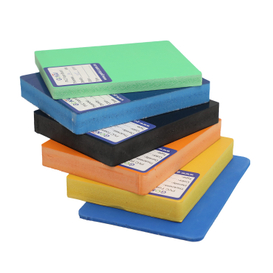
| HDPE sheet | Excellent in all water types | High impact, good toughness | Very good with stabilizers | Dock floats, marine piles, fenders, cutting boards |
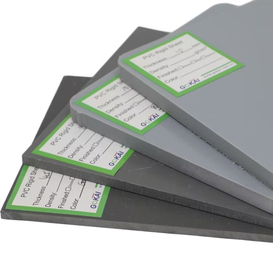
| PVC sheet | Excellent water resistance | Medium–high, rigid | Good outdoors with stabilizers | Tanks, pipe, cladding, pool systems |
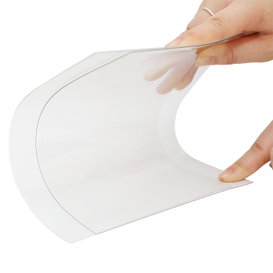
| PETG sheet | Good water resistance, low swelling | Medium impact, good toughness (ultimaker) | Moderate UV, better indoors or shielded (ultimaker) | Transparent guards, covers, machine enclosures |
| ABS sheet | Good water resistance | High impact, good toughness (ultimaker) | Moderate UV, needs protection (ultimaker) | Housings, panels, interior boat parts |
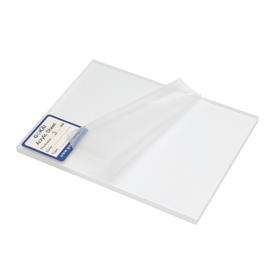
| Acrylic (PMMA) | Excellent water resistance | Lower impact, brittle vs PETG/ABS (ultimaker) | Very good optical clarity, decent UV | Windows, glazing, displays |
| Polycarbonate | Excellent water resistance | Very high impact | Needs UV‑grade for outdoor | Canopies, guards, windshields |
Freshwater is more forgiving than saltwater, but design mistakes still happen when impact, thermal expansion or chemical exposure are underestimated. [gokai.com]
For tanks, raceways and pond equipment, I usually look at: [gokai.com]
- PVC sheet for chemical resistance and easy fabrication
- HDPE sheet where impact, abrasion or toughness is critical
- PETG or acrylic sheet if you need clear viewing windows
PVC sheet stands out for industrial freshwater systems: it resists many disinfectants, handles moderate temperature, and can be welded into complex tank forms. Where frequent impact or scraper contact is expected (for example, in fish farming or sediment handling), HDPE sheet offers better long‑term toughness. [gokai.com]
As a supplier, I recommend PETG sheet in freshwater when you need a balance of: [ultimaker]
- High optical clarity
- Better impact resistance than acrylic
- Easier thermoforming and fabrication
Typical examples include inspection windows on filtration systems, machine guards around pumps, and clear covers for dosing equipment. PETG offers solid chemical and water resistance, but for fully outdoor, UV‑intense exposure, it benefits from shading or protective design. [ultimaker]
Brackish water is often underestimated. In practice, it combines salt, organic contamination, and fluctuating chemistry, which can accelerate material aging. [gokai.com]
For structures in estuaries, marinas or mangrove areas, I typically prioritize: [gokai.com]
- HDPE for dock floats, fender systems and pile wrapping
- PVC for pipework, cable protection and paneling
- ABS for robust housings and interior components protected from direct UV
HDPE sheet with UV stabilization remains one of the most reliable options for components in constant contact with brackish water, especially in splash zones. PVC sheet works well for vertical cladding, valve boxes and electrical enclosures that see occasional splashing or flooding. [gokai.com]
ABS sheet gives you high impact strength and good machinability, which makes it attractive for: [ultimaker]
- Instrument housings on piers
- Protective covers for electronics (inside cabinets)
- Control panels in sheltered areas
However, ABS is not naturally UV‑resistant, so in my OEM projects we either keep it sheltered, over‑mold it, or coat it when used near brackish shorelines. [ultimaker]
Saltwater is the harshest condition for plastics due to chloride ions, UV, mechanical impact and biofouling. When a client asks me about "best plastic for the sea," I always insist on clarifying whether the part is fully submerged or in the splash/sun zone. [gokai.com]
For critical marine structures, HDPE dominates: [gokai.com]
- Marine‑grade HDPE sheet and profiles are widely used in docks, floats, fenders and sea cages. [gokai.com]
- The material resists salt, waves, and impact, and with the right UV stabilizers it can handle years of outdoor exposure. [gokai.com]
PVC sheet remains valuable for water treatment skids, offshore utility pipework and protective paneling that may see salt spray but not continuous mechanical impact. [gokai.com]
If you need transparent protection near saltwater, I consider: [ultimaker]
- Acrylic sheet for long‑term clarity where impact risk is moderate
- Polycarbonate where impact resistance is critical, with UV‑grade formulations
- PETG sheet where you need easier forming and machining in semi‑protected zones
PETG has strong impact resistance and chemical resistance, but in long‑term direct marine UV exposure I either specify UV‑optimized grades or design shading/replaceable panels. For high‑end boats and offshore enclosures, we often mix materials: PETG for shaped interior shields and UV‑stabilized polycarbonate or acrylic for exterior windows. [ultimaker]
Because you specialize in PETG sheet and ABS sheet, it is important to position these materials correctly against marine expectations. [gokai.goldsupplier]
From practical OEM experience and material data: [eureka.patsnap]
- Good water and chemical resistance, including many cleaning agents
- Higher impact resistance than many clear plastics such as standard acrylic
- Excellent thermoformability, ideal for complex covers and guards
- Good dimensional stability in indoor or semi‑protected environments
Best‑fit use cases near water include: [ultimaker]
- Clear pump and valve guards in water treatment plants
- Machine covers around freshwater or brackish processing lines
- View windows in equipment enclosures at marinas or fish farms (under canopies)
ABS sheet is a very practical choice for rugged, non‑transparent components. [ultimaker]
- High impact strength, useful for housings and protective shells
- Good machinability, easy to CNC, drill and thermoform
- Stable mechanical performance across a broad temperature range
I typically recommend ABS for: [ultimaker]
- Instrument panels protected inside cabins or kiosks
- Electrical box faces and covers under canopies
- Handles, knobs and trim parts on equipment around water
In harsh UV and directly exposed offshore structures, I still prefer HDPE or specially formulated UV‑grade materials, while using ABS inside protected spaces. [ultimaker]
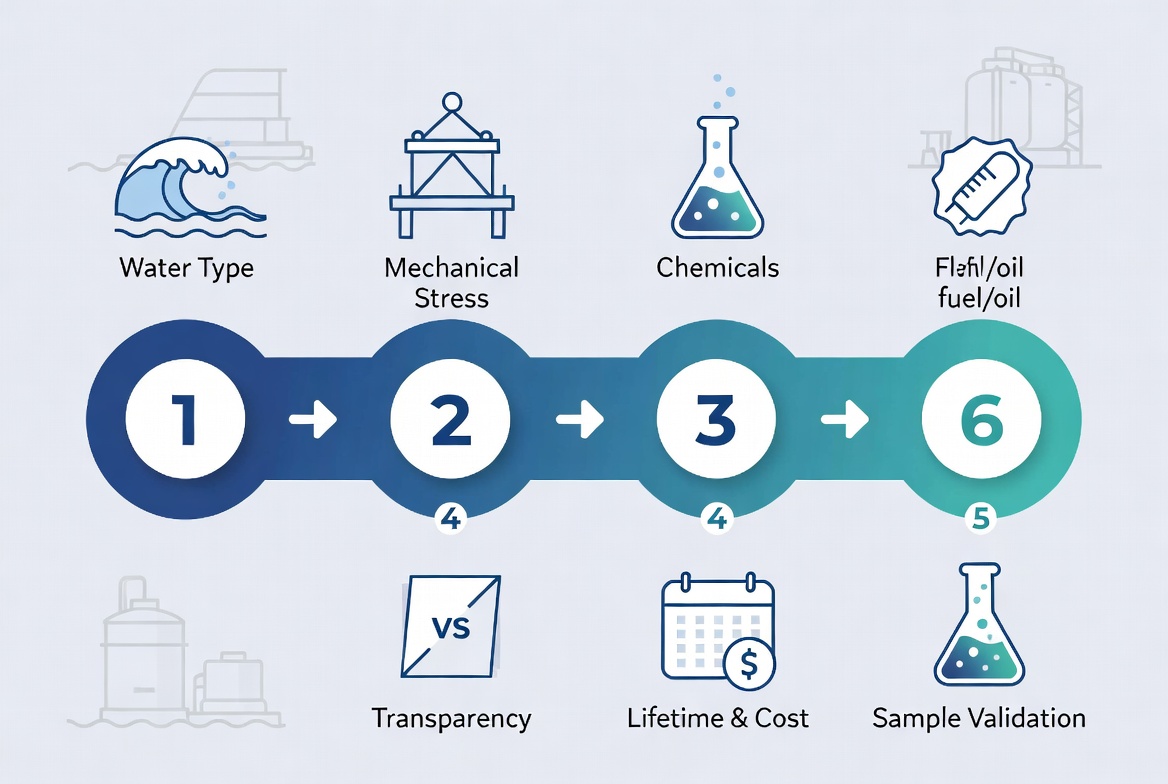
Over the years, I have distilled material selection for water environments into a simple 6‑step process that procurement and engineering teams can apply consistently. [gokai.com]
1. Define exact water type and exposure
Document whether the plastic will be in freshwater, brackish or saltwater, and how long per day it is wet vs dry. [gokai.com]
2. Identify mechanical stresses
Clarify if the part will face heavy impact, foot traffic, loading from boats, or just static pressure. [ultimaker]
3. Map chemical and cleaning agents
List disinfectants, fuels, lubricants or anti‑fouling treatments that may contact the plastic. [gokai.com]
4. Clarify transparency and aesthetics needs
Decide early whether the component must be clear, translucent or opaque, because this strongly narrows your options. [ultimaker]
5. Rank lifetime and cost targets
Agree whether you are designing for 3, 5 or 10+ years of service life, and how much premium you can justify for longer life. [gokai.com]
6. Match to candidate materials and validate with samples
Shortlist 2–3 plastics, then request sample sheets, data sheets and if possible a small field test to confirm performance in your actual environment. [gokai.com]
This straightforward process has helped many distributors and OEM buyers avoid expensive redesigns and warranty issues. [gokai.com]
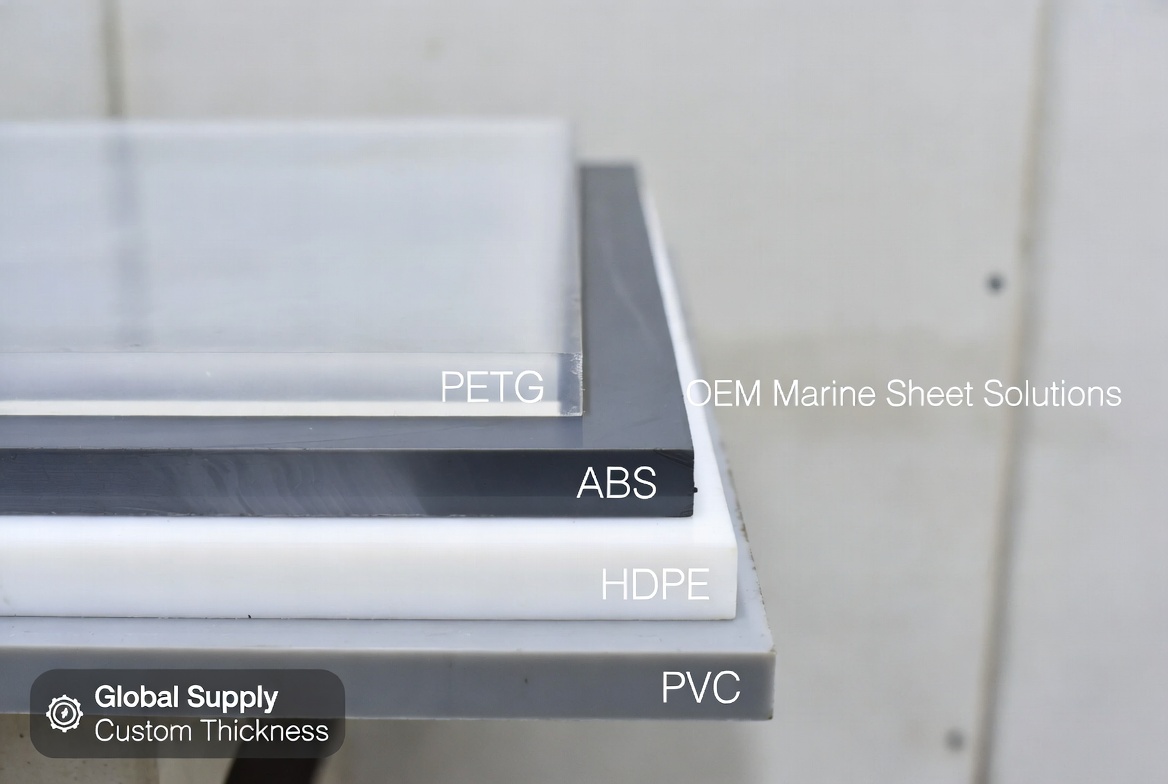
As an OEM plastic sheet supplier, Gokai does more than just ship sheets; we support engineering decisions and branding for global partners. [gokai.com]
Key ways an OEM partner adds real value in marine and water‑adjacent projects: [gokai.com]
- Material selection support
Reviewing your drawings and environment conditions to guide whether PETG, ABS, PVC, acrylic, or HDPE is the smarter base material.
- Custom thickness, color and finish
Matching your brand or project aesthetic with specific colors, textures and gloss levels, while ensuring performance requirements are still met.
- Fabrication‑ready formats
Delivering sheets cut‑to‑size, film‑masked, and palletized for CNC and thermoforming lines to reduce your in‑house preparation time.
- Consistent batch quality for global rollouts
For distributors and brands with multi‑country installations, consistent sheet performance is critical to avoid regional failure patterns. [gokai.com]
In my experience, involving the OEM sheet supplier early in your design process often reveals cost‑saving material substitutions and manufacturability improvements you might otherwise miss. [gokai.com]
A recent distributor project involved upgrading a pump station in a brackish coastal zone where the original metal housings suffered severe corrosion within three years. [gokai.com]
- We replaced exterior metal cladding with PVC sheet panels and used ABS sheet for internal control panel faces. [ultimaker]
- Transparent inspection windows on dosing units were converted from brittle acrylic to PETG sheet, improving impact resistance while keeping clear visibility. [ultimaker]
- The result was reduced corrosion‑related downtime and easier field maintenance, with no visible yellowing or cracking reported after the first season. [gokai.com]
Cases like this illustrate that a smart mix of plastics across the same installation often delivers the best balance of durability and cost. [gokai.com]
To help you move from theory to specification, here are quick recommendations for typical situations I see in saltwater, freshwater and brackish projects. [ultimaker]
- Freshwater fish tanks and process lines
Use PVC or HDPE for tanks and piping; add PETG windows for inspection ports and safety guards.
- Brackish marina infrastructure (piers, walkways, rails)
Favor HDPE for structural elements and splash‑zone components; use ABS only for sheltered housings and panels.
- Saltwater docks and offshore structures
Prioritize marine‑grade HDPE for floats and fenders; combine UV‑grade acrylic or polycarbonate for exposed clear parts.
- Indoor or semi‑indoor water treatment skids
Combine PVC and ABS for cabinets and structure, with PETG sheet for clear, impact‑resistant access doors and covers.
Whenever you face a borderline case, request samples and perform a small on‑site exposure test before committing to large‑volume deployment. [gokai.com]
1. Is PETG sheet suitable for long‑term outdoor use near the sea?
PETG has good impact and chemical resistance, but for long‑term UV and salt exposure I either specify UV‑stabilized grades or recommend shading design. For fully exposed offshore structures, marine‑grade HDPE or UV‑optimized polycarbonate and acrylic are safer primary materials. [ultimaker]
2. When should I choose ABS sheet over PVC sheet near water?
Choose ABS when you need higher impact strength and robust mechanical performance, for example for housings, panels and handles in sheltered environments. PVC remains a better choice for chemical‑resistant tanks and pipework that may see aggressive disinfectants or process chemicals. [ultimaker]
3. What is the best plastic for floating dock systems?
For modern dock floats and fender systems, HDPE sheet and molded HDPE components are widely used because they combine excellent water resistance, impact toughness and UV stability. Other plastics are usually reserved for accessories rather than the main floating structure. [gokai.com]
4. Can I mix different plastics in the same marine project?
Yes, mixing plastics is often optimal: for example, HDPE for structural floats, PVC for utility panels, PETG for viewing windows and ABS for internal control panels. The key is to design joints and fasteners carefully to account for different thermal expansion and stiffness. [ultimaker]
5. How can an OEM like Gokai support my next water‑related project?
An OEM sheet supplier can help you select the right plastic, customize thickness, color and finish, and deliver fabrication‑ready sheets for your manufacturing lines. By sharing your drawings and environment data early, you can reduce rework and speed up time‑to‑market on marine and water‑adjacent products. [gokai.goldsupplier]
1. Acme Plastics – Best Plastics for Saltwater, Freshwater & Brackish Water (original topic inspiration). https://www.acmeplastics.com/content/best-plastics-for-saltwater-freshwater-brackish-water/
2. Ultimaker – PETG vs PLA vs ABS: 3D Printing Strength Comparison (mechanical property data for PETG and ABS). https://ultimaker.com/learn/petg-vs-pla-vs-abs-3d-printing-strength-comparison/
3. Patsnap Eureka – PETG vs. ABS: Which 3D Printing Material is Right for You? (tensile strength range and flexibility of PETG). https://eureka.patsnap.com/blog/material-tech-resources/petg-vs-abs-3d-printing/
4. Shanghai Gokai Industry Co., Ltd. – Company Profile (OEM supplier background). https://gokai.goldsupplier.com/about.html
5. Gokai – How Gokai Helped Global Distributors Achieve Stable Supply and Market Growth (OEM marine plastics positioning). https://www.gokai.com.cn/how-gokai-helped-global-distributors-achieve-stable-supply-and-market-growth.html
6. Gokai – The Best Plastic for Outdoor Furniture That Truly Lasts: Expert 2026 Guide (OEM expertise tone and positioning). https://www.gokai.com.cn/the-best-plastic-for-outdoor-furniture-that-truly-lasts-expert-2026-guide.html