Shanghai Gokai Industry Co,.Ltd.
Call Us: +86-18918606548
Call Us: +86-18918606548
- Product Name
- Product Keyword
- Product Model
- Product Summary
- Product Description
- Multi Field Search
Views: 222 Author: Gokai Publish Time: 2026-06-14 Origin: Site


Content Menu
● Why Polycarbonate Hollow Sheet Is Changing Greenhouse Design
● Key Benefits of Polycarbonate Hollow Sheets for Greenhouses
>> 1. Optimized Light Transmission for Healthier Plants
>> 2. Better Heat Retention and Energy Efficiency
>> 3. Lightweight, Easy to Fabricate, and Installer‑Friendly
>> 4. Maximum Durability and Weather Resistance
● Practical Maintenance for Long‑Life Polycarbonate Greenhouses
● Where Traditional Articles Fall Short (And How to Go Deeper)
● Choosing the Right Polycarbonate Hollow Sheet: A Step‑by‑Step Framework
>> Step 1: Define Your Climate and Growing Goals
>> Step 2: Select Appropriate Thickness and Structure
>> Step 3: Match Panel Types to Roof, Walls, and Doors
● Polycarbonate Hollow Sheet vs Other Greenhouse Glazing Options
>> Key Greenhouse Glazing Options
● OEM and Project Buyers: Why Work with a Specialized Polycarbonate Supplier
● Real‑World Lessons from Growers and Builders
● Expert Tips for Designing a High‑Performance Polycarbonate Greenhouse
>> Design for Ventilation and Condensation Management
>> Pay Attention to Orientation and Shading
● Why Work with Gokai for Polycarbonate Hollow Sheet OEM Solutions
● How to Move from Idea to Completed Greenhouse: A Simple Action Plan
● Call to Action: Build Your Next Greenhouse with Polycarbonate Hollow Sheets
● Frequently Asked Questions (FAQ)
Designing a greenhouse today is no longer just about "putting up a structure"—it is about choosing materials that deliver predictable growing results, long service life, and a realistic total cost of ownership. As a supplier specializing in polycarbonate hollow sheets (also called twin-wall or multi-wall polycarbonate panels) and global OEM services, Gokai has worked with growers, contractors, and industrial buyers who need a greenhouse envelope that is lightweight, highly durable, and engineered for year‑round performance. [clearambershop]
In this guide, I take a hands‑on, expert perspective on why polycarbonate hollow sheets have become the go‑to solution for modern hobby and commercial greenhouses—and how you can plan and build a structure that actually supports your plants and your business, not just your budget. [acmeplastics]

Polycarbonate has evolved from a "plastic alternative to glass" into a recognized engineering material in greenhouse construction, balancing light transmission, insulation, and impact resistance far better than single‑pane glass or basic corrugated plastics. [clearambershop]
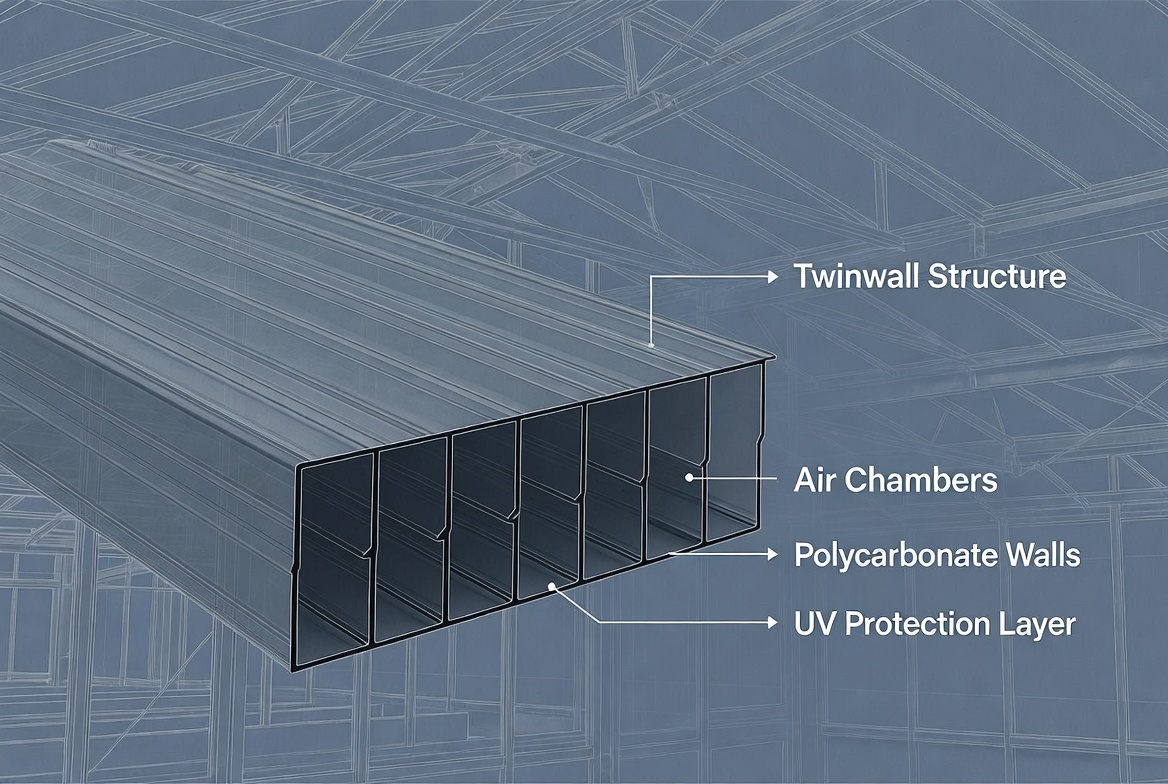
Modern polycarbonate hollow sheets are manufactured with internal air chambers (twin‑wall, triple‑wall, or more), delivering a combination of high light transmission (often around 80–88%) and improved thermal insulation compared with similar thicknesses of glass. At the same time, they are designed with UV‑protected surfaces to prevent yellowing and brittleness, which extends usable life in outdoor climates. [alibaba]
From an engineering and grower's standpoint, four core benefits explain why polycarbonate hollow sheets have become the default choice for many greenhouse projects. [acmeplastics]
High‑quality polycarbonate panels offer light transmission close to that of glass, but with far greater toughness. Twin‑wall and multi‑wall designs help diffuse harsh direct sunlight, reducing hot spots and plant scorching, while still letting in enough PAR (photosynthetically active radiation) for strong growth at multiple stages. [clearambershop]
Because polycarbonate can be produced in clear, opal (milky), or lightly tinted options, growers can fine‑tune light diffusion and shading to match their climate and crop type. For example, a grower in a high‑irradiance region may prefer opal or bronze panels to reduce glare while maintaining adequate brightness for leaf crops. [alibaba]
A greenhouse is only as good as its ability to trap and retain heat. Compared to single‑pane glass or thin corrugated plastics, twin‑wall polycarbonate hollow sheets create an insulating "air layer" that reduces heat loss, particularly at night or during shoulder seasons. [acmeplastics]
The result is a more stable internal temperature, which can translate directly into lower heating costs and fewer stress events for your plants. For commercial growers, this improved insulation often becomes a major line item in ROI calculations, especially in colder climates where fuel and electricity costs are high. [cngreenhouses]
From a practical build perspective, polycarbonate hollow sheets are much lighter than glass yet significantly stronger than many low‑cost plastics, making them easier for small teams or DIY builders to handle. Panels can be cut to size with standard tools (such as a fine‑tooth handsaw or circular saw with appropriate blade), and they can be cold‑bent to follow gentle curves when required by the design. [clearambershop]
Because of their reduced weight, polycarbonate panels can be paired with aluminum, galvanized steel, or even timber frames without requiring the same structural reinforcement you would need for glass. This simplifies both logistics and on‑site assembly, especially for exported OEM greenhouse kits shipped as flat‑pack systems. [marketveep]
Well‑specified hollow sheets are engineered to withstand impacts from hail, wind‑borne debris, and snow loads that would crack or shatter traditional glass panes. Many suppliers design their panels for multi‑year outdoor use, with warranty periods often ranging from 10 to 15 years under normal exposure. [cngreenhouses]
The combination of impact resistance and UV‑stabilized coatings means that maintenance requirements are relatively low—usually limited to cleaning and periodic checks of seals and fasteners. For greenhouse operators in storm‑prone regions, this durability translates into less downtime and lower replacement costs over the lifetime of the structure. [cngreenhouses]
Even the best material needs basic care. Fortunately, polycarbonate hollow sheets are simple to maintain when compared with glass or acrylic.
- Most panels only require cleaning a few times per year to maintain light transmission, using mild soapy water and a soft cloth or sponge.
- Abrasive cleaners and rough pads should be avoided to prevent surface scratching and potential UV‑layer damage.
- Regular inspections of seals, edge closures, and fasteners help keep moisture, dust, and algae out of the hollow channels, preserving optical clarity and insulation performance. [alibaba]
For large greenhouse complexes, some operators incorporate annual maintenance windows in their cropping schedules, during which they clean, inspect, and replace any heavily worn components. [blog.saleslayer]
Many existing online articles on greenhouse polycarbonate panels cover benefits like light transmission and durability but stop short of offering detailed, actionable guidance for buyers or builders. Common gaps include: [stellarcontent]
- Limited discussion of panel thickness, cell structure, and design selection for different climates and wind/snow loads. [alibaba]
- Little or no coverage of OEM and customization options for industrial buyers or greenhouse kit manufacturers. [marketveep]
- Outdated or vague references to energy performance, without referencing current industry best practices in insulation and envelope design. [blog.saleslayer]
The following sections address these gaps by adding more technical depth, practical selection steps, and a stronger OEM‑friendly perspective.
Selecting the wrong panel type or thickness can lead to overheating, condensation issues, or structural problems later on. Use this step‑by‑step framework to match your material choices to your greenhouse's real‑world requirements. [alibaba]
Start by mapping the conditions you're designing for:
- Climate zone: Is your site predominantly cold, temperate, or hot? Are strong winds, heavy snow, or hail events common? [cngreenhouses]
- Primary crops: Leafy greens, fruiting vegetables, seedlings, ornamentals, or specialty plants all have different light and temperature needs. [acmeplastics]
- Usage pattern: Will the greenhouse operate year‑round, seasonally, or only as a shoulder‑season extension? [blog.saleslayer]
Growers in colder regions often prioritize insulation and snow load resistance, while those in hotter climates prioritize ventilation and light diffusion to prevent heat stress. [cngreenhouses]
Typical polycarbonate hollow sheets for greenhouses range from 4 mm to 16 mm or more, with twin‑wall, triple‑wall, and multi‑wall configurations. [clearambershop]
- 4–6 mm twin‑wall: Common for hobby greenhouses in mild climates; good balance of cost and performance. [clearambershop]
- 8–10 mm twin‑wall or triple‑wall: Enhanced insulation for cooler climates or more demanding commercial applications. [cngreenhouses]
- 12–16 mm multi‑wall: Higher structural strength and insulation for heavy snow regions or large commercial spans. [cngreenhouses]
Thicker, multi‑wall panels reduce heat loss but may slightly reduce light transmission compared with thinner sheets. Many professional growers treat this as a system‑level trade‑off, combining insulated glazing with well‑designed supplemental lighting when needed. [blog.saleslayer]
Different parts of the greenhouse envelope may need different optical and structural properties. [cngreenhouses]
- Roof panels: Often use clear or lightly diffused hollow sheets to maximize top‑down light while ensuring adequate snow and wind resistance. [cngreenhouses]
- Sidewalls: May incorporate more diffused or tinted panels to reduce lateral glare, especially in hot climates. [alibaba]
- End walls and doors: Sometimes use solid polycarbonate sheets or reinforced frames to integrate doors, vents, or large openings. [clearambershop]
By mixing and matching, you can fine‑tune energy performance and user comfort without over‑specifying every surface. [blog.saleslayer]
To make a smart material decision, it helps to compare polycarbonate hollow sheets with other common glazing choices.
| Glazing type | Light & diffusion | Insulation & energy use | Durability & maintenance | Typical use case |
|---|---|---|---|---|
| Polycarbonate hollow sheet | High light, good diffusion (clearambershop) | Strong insulation, reduced heat loss (acmeplastics) | High impact resistance, low breakage (clearambershop) | Hobby and commercial greenhouses (acmeplastics) |
| Single‑pane glass | Very high clarity, low diffusion | Poor insulation, higher heating costs (cngreenhouses) | Fragile, higher risk of breakage (cngreenhouses) | Traditional or display greenhouses (cngreenhouses) |
| Corrugated plastic (low‑cost) | Moderate light, uneven diffusion (clearambershop) | Limited insulation, thinner sections (clearambershop) | Moderate durability, may yellow faster (alibaba) | Budget builds, small sheds (alibaba) |
| Film (polyethylene) | Good light, depends on grade (alibaba) | Requires inflation/double film for R‑value (alibaba) | Shorter lifespan, periodic replacement (alibaba) | Large commercial houses with film systems (alibaba) |
For many buyers, polycarbonate hollow sheet provides the best balance between performance and long‑term ownership cost, especially when labor, energy, and maintenance are factored in. [acmeplastics]
If you are an OEM greenhouse manufacturer, project integrator, or distributor, your priorities extend beyond a single structure—you think in terms of repeatable quality, logistics, and brand reputation. [marketveep]
An experienced polycarbonate hollow sheet supplier can support you in several ways:
- Consistent specification and quality control: Ensuring that panel thickness, UV protection, and optical properties stay within tight tolerances from batch to batch. [alibaba]
- Cut‑to‑size and pre‑configured kits: Reducing on‑site labor and error risk, especially for flat‑pack greenhouse kits shipped globally. [marketveep]
- Customized colors, coatings, and profiles: Supporting differentiated product lines, from standard clear twin‑wall to specialty diffused or colored panels. [alibaba]
- Documentation and certifications: Providing test reports and data sheets that help you meet regional building codes and customer expectations. [blog.saleslayer]
For global buyers, OEM partners who understand international logistics, packaging standards, and localization requirements can significantly shorten your time‑to‑market and reduce after‑sales issues. [marketveep]
Feedback from greenhouse owners and builders often centers on three recurring themes: thermal comfort, structural robustness, and long‑term clarity. [clearambershop]
- Many users report that polycarbonate hollow sheet greenhouses warm up quickly in spring and retain enough heat to extend the growing season without excessive supplemental heating. [acmeplastics]
- In high‑altitude or storm‑prone areas, growers frequently highlight the resilience of polycarbonate panels to hail and high winds, especially compared with older glass structures. [clearambershop]
- Over multi‑year periods, users who choose panels with proper UV‑coatings and good cleaning/mounting practices generally see less yellowing and clouding than with low‑grade plastic sheeting. [alibaba]
These experiences reinforce a key principle: material quality and installation practice are just as important as panel type in determining how your greenhouse performs over time. [stellarcontent]
Drawing on industry practice and project experience, here are several expert recommendations to help you get more from your polycarbonate hollow sheet greenhouse.
Polycarbonate hollow sheets are excellent insulators, but they can trap heat and moisture if the structure is not ventilated properly. [cngreenhouses]
- Include ridge vents, side vents, or operable windows sized according to greenhouse volume and local climate. [cngreenhouses]
- Use proper sealing tapes, aluminum profiles, and drainage paths at panel ends to prevent condensation buildup inside the hollow channels. [alibaba]
- Consider automated vent openers or integrated climate control systems for commercial operations. [blog.saleslayer]
Even with diffused panels, sun path and orientation matter for crop performance. [acmeplastics]
- In temperate regions, orienting the greenhouse east–west can help balance morning and afternoon sun, while in some high‑latitude climates, a north–south orientation may be preferred. [cngreenhouses]
- Combine polycarbonate glazing with internal shade cloths or external shade structures when growing sensitive crops or operating in very bright climates. [alibaba]
As a supplier focused on polycarbonate hollow sheets and related panel products, Gokai supports both individual growers and global OEM clients with customizable, project‑driven solutions. [marketveep]
From an OEM and professional buyer perspective, working with a specialized provider like Gokai means:
- Access to tailored thicknesses, colors, and profiles that align with your greenhouse designs and regional performance requirements. [alibaba]
- The ability to integrate cut‑to‑size panels, labeled kits, and detailed installation guidance into your own branded product lines. [marketveep]
- Support from a team that understands industrial supply chains, export documentation, and long‑term collaboration, not just one‑off orders. [marketveep]
For serious growers and project developers, this combination of material expertise and OEM capability can make the difference between a greenhouse that simply stands and a greenhouse that consistently delivers yields, energy efficiency, and customer satisfaction. [blog.saleslayer]

If you are planning a new greenhouse or upgrading an existing structure, you can follow this concise action plan:
1. Clarify your goals
Define whether your priority is season extension, year‑round production, or hobby‑level experimentation. [blog.saleslayer]
2. Assess site conditions
Document your climate, wind and snow loads, available space, and utilities. [cngreenhouses]
3. Specify panel requirements
Choose polycarbonate hollow sheet thickness, structure, and color based on your climate and crop needs. [clearambershop]
4. Select a trusted supplier or OEM partner
Verify product data sheets, warranty terms, and project support capabilities before committing. [marketveep]
5. Plan installation and long‑term maintenance
Ensure you have the right framing, fasteners, sealing systems, and maintenance schedule in place. [cngreenhouses]
When you are ready, you can collaborate with a supplier like Gokai to develop either a one‑off solution or a repeatable OEM kit tailored to your projects and markets. [marketveep]
If you are serious about building a greenhouse that combines professional performance, durability, and cost‑effective ownership, polycarbonate hollow sheets deserve to be at the top of your material shortlist. [acmeplastics]
Whether you are a home grower planning your first structure, a contractor delivering multiple installations each season, or an OEM brand expanding your greenhouse product line, Gokai can help you select, customize, and supply polycarbonate hollow sheets that match your technical and commercial requirements.
To move your project forward, prepare a brief outline of your climate, greenhouse size, and usage goals—then reach out to discuss tailored panel configurations, OEM options, and logistics solutions that will turn your greenhouse concept into a resilient, productive reality. [marketveep]
1. How long do polycarbonate hollow sheets typically last in a greenhouse?
With proper UV‑stabilized coatings and normal maintenance, many polycarbonate hollow sheet systems are designed for service lives in the 10–15 year range or longer, depending on climate and exposure. [alibaba]
2. Are polycarbonate hollow sheets safe for food production environments?
High‑quality panels from reputable suppliers are generally manufactured from BPA‑free or food‑contact‑appropriate grades where required and are widely used in greenhouses producing vegetables, fruits, and herbs. Always confirm compliance with local regulations and supplier documentation. [clearambershop]
3. Will polycarbonate hollow sheets turn yellow over time?
Low‑grade plastics can yellow quickly, but modern greenhouse‑grade polycarbonate includes UV‑protective layers that significantly reduce yellowing and loss of clarity over their rated lifespan. Routine cleaning and avoiding harsh chemicals also help preserve appearance. [alibaba]
4. Can I replace glass panels with polycarbonate hollow sheets on an existing greenhouse?
In many cases, yes. Polycarbonate hollow sheets can be retrofitted into existing frames, provided the structure can accommodate differences in thickness, weight, and mounting hardware. It is important to review structural loads and sealing details before proceeding. [cngreenhouses]
5. What thickness of polycarbonate hollow sheet should I choose for a windy or snowy site?
Sites with high wind or snow loads often benefit from 8–10 mm or thicker multi‑wall panels, paired with robust framing and appropriate fastening systems. A project‑specific structural assessment is recommended for large spans or commercial facilities. [blog.saleslayer]
1. Acme Plastics. “Building Your Dream Greenhouse with Polycarbonate Panels.” https://www.acmeplastics.com/content/building-your-dream-greenhouse-with-polycarbonate-panels/
2. Clear Amber. “Best Greenhouse Polycarbonate Sheets | Solid versus Twinwall.” https://clearambershop.com/blogs/trade-and-diy-blog/best-greenhouse-polycarbonate-sheets
3. CN Greenhouse. “Polycarbonate Greenhouse Advantages.” https://cngreenhouses.com/Commercial-greenhouse/PC_Greenhouse/259.html
4. Acme Plastics. “Why Twinwall Polycarbonate Greenhouse Panels Deliver More Predictable Growing Results.” https://www.acmeplastics.com/content/why-twinwall-polycarbonate-greenhouse-panels-deliver-more-predictable-growing-results/
5. Alibaba. “Greenhouse Agriculture Polycarbonate Hollow Sheet.” https://www.alibaba.com/showroom/greenhouse-agriculture-polycarbonate-hollow-sheet.html
6. Sales Layer. “SEO for Manufacturing Companies: The 2026 Strategy Guide.” https://blog.saleslayer.com/seo-for-manufacturing-companies
7. Market Veep. “Essential Steps to Build a Winning OEM Marketing Strategy.” https://www.marketveep.com/blog/essential-steps-to-build-a-winning-oem-marketing-strategy
8. Stellar Content. “The Complete Guide to Google E‑E‑A‑T: How to Improve SEO.” https://www.stellarcontent.com/blog/seo/the-complete-guide-to-google-e-a-t-what-is-it-why-is-it-and-how-do-you-create-it/
9. Lumar. “The New ‘E’ in Google’s E‑E‑A‑T: Why Experience Matters for Website Content.” https://www.lumar.io/blog/industry-news/the-new-e-in-eeat-why-experience-matters-in-website-content/