Shanghai Gokai Industry Co,.Ltd.
Call Us: +86-18918606548
Call Us: +86-18918606548
- Product Name
- Product Keyword
- Product Model
- Product Summary
- Product Description
- Multi Field Search
Views: 222 Author: Gokai Publish Time: 2026-06-10 Origin: Site


Content Menu
● What Is Marine Plastic and Why It Matters
● Step 1 – Define Your Marine Project Requirements
>> Mechanical and performance requirements
● Step 2 – Overview of Common Marine Plastics
>> Rigid PVC sheet and PVC foam board
>> Acrylic (PMMA) for marine glazing
>> Other engineering plastics (ASA, PP, etc.)
● Step 3 – Key Factors When Selecting Marine Plastic
>> Durability, impact resistance, and fatigue
>> Water and chemical resistance
>> Weight and structural efficiency
>> Fabrication, installation, and lifecycle cost
● When to Use PVC Foam Board vs. Solid Plastics
● Practical 6-Step Workflow for Selecting Marine Plastics
● Acrylic Sheet for Marine Glazing and OEM Projects
● Sustainability, Recycling, and Long-Term Responsibility
● Marine Plastic Options at a Glance
● Expert Tips: From Samples to Standards
>> Verify certifications and standards
>> Plan edges, fasteners, and repairs
● Why Partner With an OEM‑Focused Marine Plastic Supplier (Gokai)
● Call to Action: Start Your Next Marine Project With a Validated Material Plan
● Frequently Asked Questions (FAQ)
When you are specifying marine plastic for a boat, dock, or offshore structure, the wrong material choice can turn into cracking panels, yellowed windows, or costly downtime a few seasons later. From my experience working with OEM builders and marine fabricators, the most successful projects start with a clear framework: understand the environment, define performance requirements, and then match them to the right plastic—HDPE, PVC foam, acrylic, ABS and more—rather than picking based only on price. In this guide, we will walk through a practical, expert-level process for selecting the best marine plastic, with a special focus on acrylic sheet solutions and OEM support from Gokai for global projects. [blog.marketmuse]
Marine plastics are engineered polymers designed to withstand UV radiation, saltwater, mechanical stress, and temperature cycling in coastal and offshore environments. Compared with metals and wood, marine-grade plastics offer lower weight, excellent corrosion resistance, and easier fabrication, which is why they are now core materials in modern boatbuilding, marina infrastructure, and offshore equipment. [ttplasticland]
Common marine plastics include HDPE marine board, rigid PVC sheet, PVC foam board cores, acrylic (PMMA) for glazing, ABS, polypropylene, and specialty blends like PC+ABS and ASA. The right choice depends on how you balance strength, stiffness, weight, optical clarity, impact resistance, and lifecycle cost—not just the initial material price. [plaskolite]

Before you open a datasheet, define where and how each part will be used. This avoids both over-engineering (too heavy and expensive) and under-engineering (premature failures and callbacks). [ttplasticland]
Ask yourself these questions for every component: [ttplasticland]
- Will it sit in full sun, partial shade, or a protected cabin?
- Will it work in seawater, brackish water, or freshwater?
- Does it see continuous immersion, splash zones, or only occasional wetting?
- How large are the daily and seasonal temperature swings?
Typical stress factors include UV radiation, saltwater exposure, and repeated thermal cycling, all of which can drive embrittlement, warpage, loss of strength, and discoloration if the material is not properly stabilized. [plaskolite]
Define what the part must actually do: [ttplasticland]
- Load-bearing: Does it support people, equipment, or structural loads (decks, bulkheads, superstructures)?
- Impact resistance: Will it be hit by hulls, fenders, gear, or waves (docks, fender boards, bumpers)?
- Flexibility vs. rigidity: Do you need slight flex or high stiffness under shear and compression?
- Weight sensitivity: Does every kilogram matter for speed, fuel efficiency, and stability?
Also map expected chemical exposure from fuels, lubricants, cleaning agents, and antifouling chemicals, which can attack some polymers over time if you choose the wrong grade. [plaskolite]
HDPE marine board is a workhorse for structural and semi-structural components in harsh environments. It offers high impact strength, low water absorption, and good chemical resistance, making it ideal for heavy-duty marine applications. [piedmontplastics]
Typical uses: [ttplasticland]
- Cabinets, countertops, doors, and hatches
- Steps, ladders, trims, mouldings, and railings
- Deck hardware backing plates and seat bases
- Dock components, fenders, and rub rails
Its main trade-offs are lower stiffness than metals and potential creep under sustained high load, which must be managed in structural design. [plaskolite]
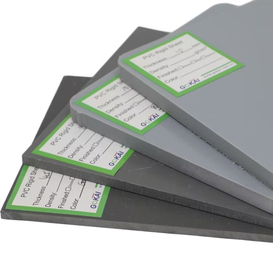
Rigid PVC sheet is widely used where chemical resistance, dimensional stability, and cost-effectiveness matter more than extreme impact strength. You will see it in piping, cable trays, interior panels, and topside components. [plaskolite]
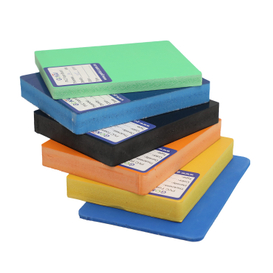
PVC foam board is a closed-cell structural core used in composite hulls, decks, bulkheads, and superstructures. It delivers a high stiffness-to-weight ratio, very low water absorption, and excellent compatibility with fiberglass or carbon skins. [ttplasticland]
Key advantages of PVC foam board: [ttplasticland]
- Very low water uptake, preventing swelling or rot
- High shear and compression strength for sandwich panels
- Thermoformable and CNC‑machinable for complex curves
- Good dimensional stability across temperature and moisture changes
This makes PVC foam cores a mainstream choice in yachts, fishing boats, motorboats, and offshore platforms aiming for weight reduction and improved fuel efficiency. [plaskolite]
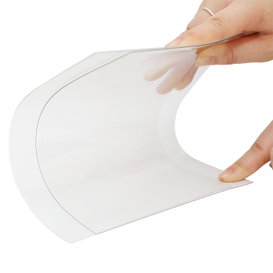
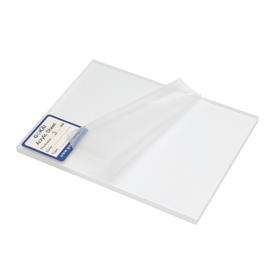
Acrylic sheet is the go-to material for marine windows, windshields, hatches, and skylights where optical clarity is critical. It is lighter and more impact-resistant than glass, offers very good UV resistance, and maintains clarity over time when you use proper marine grades and finishing. [blog.marketmuse]
Typical applications include:
- Curved boat windshields and flybridge screens
- Clear hatches, skylights, and portlights
- Instrument covers and protective guards
The main limitations are higher scratch sensitivity than glass and the need for correct cleaning practices and edge finishing to avoid stress cracking. [plaskolite]
ABS is a tough, impact-resistant plastic for consoles, housings, covers, and interior trim where vibration and occasional shock are expected. For outdoor use, you typically specify UV‑stabilized grades or protective coatings to prevent chalking and color loss. [ttplasticland]
PC+ABS blends combine polycarbonate's toughness with ABS's processability and surface quality, delivering strong, attractive enclosures and control panels. They perform best in covered or partially exposed areas, again with UV-stable grades in marine environments. [ttplasticland]
Engineering plastics such as ASA and polypropylene copolymers fill specific niches: [ttplasticland]
- ASA: excellent UV stability and color retention for exterior trims and covers
- PP copolymer: low density and chemical resistance, used for floats, containers, and buoys
These materials can help when you need long-term outdoor aesthetics or ultra-light non-structural components. [plaskolite]
Once you have mapped environment and loads, evaluate each candidate material against five critical factors. [ttplasticland]
Marine projects face continuous impacts, abrasion, and vibration, particularly on hulls, docks, and working decks. HDPE and UHMWPE deliver outstanding toughness and can tolerate repeated impact without cracking, while high‑shear PVC foam cores help composite decks and hulls resist fatigue and delamination. [plaskolite]
Closed-cell PVC foam and marine HDPE are naturally hydrophobic and show very low water absorption, which supports long-term buoyancy and dimensional stability under immersion. Many marine-grade boards are engineered to withstand oils, fuels, and cleaning chemicals with minimal property loss. [plaskolite]
Coastal and offshore projects are exposed to intense UV and weather extremes, so UV‑stabilized grades and additives are not optional. ASA, marine HDPE, and marine‑rated acrylic are formulated to keep both color and mechanical strength over years of sun exposure. [plaskolite]
Every kilogram saved contributes to better speed, fuel economy, and stability in hulls and decks. PVC foam cores in sandwich structures offer high stiffness and strength at a fraction of the weight of solid laminates or wood cores, while HDPE and PP deliver favorable strength-to-weight ratios relative to metal once you include corrosion protection. [ttplasticland]
Ease of cutting, machining, bonding, and thermoforming significantly influences project cost and schedule. PVC foam and HDPE sheets can be CNC‑machined and thermoformed into complex geometries, reducing manual labor and improving repeatability, while lifecycle cost must factor in maintenance, downtime, and replacement, not just purchase price. [orbitmedia]
A frequent design question is when to choose PVC foam core instead of solid HDPE or solid PVC sheet. The answer depends on whether the component must act as a load‑bearing panel or as a solid, impact‑focused part. [ttplasticland]
Use PVC foam board when: [ttplasticland]
- Building hulls, decks, bulkheads, or superstructures using sandwich construction
- Weight reduction and stiffness are more important than through‑thickness impact resistance
- You need cores shaped into complex 3D geometries by CNC or thermoforming
Use solid plastics (HDPE, rigid PVC, ABS) when: [ttplasticland]
- Parts are exposed to direct, repeated impacts (docks, fenders, rub rails, steps)
- You require solid sections for fasteners and hardware mounting
- Components will be frequently drilled, tapped, or modified over their life
In many boats, optimal performance comes from combining a PVC foam core in large structural panels with solid HDPE or PVC inserts and edges in high‑impact zones. [plaskolite]
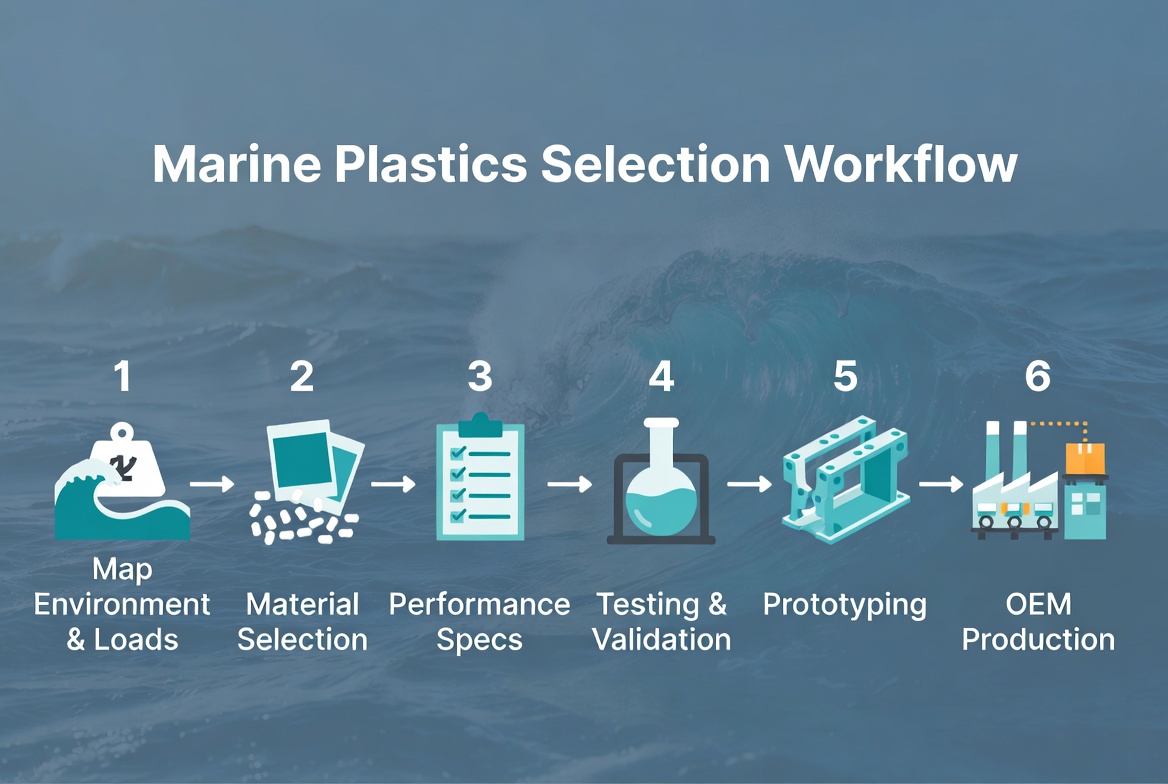
For OEMs and professional builders, a repeatable selection workflow is essential. A practical six‑step process looks like this: [ttplasticland]
1. Map the environment: Document UV exposure, water type, immersion level, and temperature range for each part. [ttplasticland]
2. Define loads and safety factors: Estimate static and dynamic loads, impact events, vibration, and relevant class or regulatory requirements. [ttplasticland]
3. Shortlist materials: Start with marine‑grade HDPE, PVC or PVC foam, and acrylic; add ASA, PP, or ABS as needed. [ttplasticland]
4. Compare property data: Review density, tensile and shear strength, impact strength, water absorption, and recommended operating temperatures in technical datasheets. [plaskolite]
5. Prototype and test: Fabricate sample parts or panels and evaluate fit, finish, and performance under realistic UV and salt spray conditions. [ttplasticland]
6. Optimize for production: Choose materials and thicknesses that balance performance, fabrication complexity, and lifecycle cost at your target volume. [slickplan]
This structured approach reduces the risk of redesigns, warranty claims, and in‑service failures. [wgcontent]
For glazing, canopies, and transparent guards, acrylic sheet remains one of the most efficient solutions for marine OEMs. Compared with glass, acrylic offers lower weight, better impact resistance, and easier thermoforming into curved profiles common in modern boat design. [piedmontplastics]
From an OEM perspective, you should pay particular attention to:
- Grade selection: Marine‑grade or UV‑stabilized cast acrylic for long‑term clarity in sun and salt exposure
- Thickness optimization: Balancing impact resistance and deflection with weight and cost for windows and windshields
- Edge finishing: Proper machining and polishing to reduce stress concentrations and potential crazing
- Cleaning and maintenance: Recommending non‑abrasive cleaners and soft cloths to end users to preserve clarity
Suppliers such as Gokai can combine acrylic glazing with complementary PVC foam and HDPE components, giving OEMs a complete panel, window, and deck solution manufactured under one quality system. [piedmontplastics]
Marine plastics are under increasing scrutiny for their environmental footprint, especially around microplastics and end‑of‑life disposal. Research shows that uncontrolled plastic waste in marine environments can fragment under UV and mechanical stress, generating microplastics with long-term ecological impact. [ttplasticland]
For responsible design, you should:
- Favor durable materials that resist premature cracking and fragmentation
- Plan maintenance and inspection intervals to extend service life
- Work with suppliers who can document material origins and provide recycling or take‑back guidance
Single‑polymer products such as HDPE boards and some PVC materials can enter existing recycling streams when properly sorted and cleaned, while composites with foam cores may require specialized routes or repurposing strategies. [ttplasticland]
| Material | Key properties | Typical marine uses |
|---|---|---|
| HDPE marine board | High impact strength, low water absorption, good chemical resistance, UV‑stabilized grades | Cabinets, doors, steps, rails, backing plates, dock components, fenders (ttplasticland) |
| Rigid PVC sheet | Chemical resistance, dimensional stability, cost‑effective, moderate impact strength | Piping, cable trays, interior panels, seats, topside covers (ttplasticland) |
| PVC foam board | Closed‑cell core, high strength‑to‑weight, low water absorption, thermoformable, CNC‑machinable | Composite hulls, decks, bulkheads, superstructures, buoyancy modules (ttplasticland) |
| Acrylic (PMMA) | High optical clarity, UV and weather resistance, lighter and tougher than glass | Windows, windshields, hatches, skylights, instrument covers (ttplasticland) |
| ABS / PC+ABS | Tough, impact‑resistant, good aesthetics; needs UV‑stable grades outdoors | Consoles, housings, covers, interior trim, control panels (ttplasticland) |
| ASA / PP copolymer | ASA: strong UV stability; PP: low density, chemical resistance | Exterior trims, floats, containers, buoys, non‑structural parts (ttplasticland) |
Even with a strong design framework, details make the difference between a good and an excellent marine installation. [ttplasticland]
Always test physical samples of HDPE sheets, PVC foam cores, and acrylic glazing before finalizing specifications. Evaluate stiffness, weight, machinability, surface finish, and conduct small-scale UV and saltwater tests for critical applications. [plaskolite]
For professional and regulated marine projects, look for compliance with standards and tests such as DNV, ASTM, or ISO for water absorption, compression strength, and long‑term buoyancy. Documenting these certifications in your design files supports classification approvals and reassures customers. [plaskolite]
Edges, joints, and fastener zones often see the highest stress. For PVC foam sandwich panels, design in solid inserts or high‑density core around hinges and fasteners, and confirm that your chosen materials can be welded, bonded, or laminated for repair using established procedures. [plaskolite]
For global OEMs, the real value is not only in the material, but in a partner that understands marine environments, fabrication processes, and export requirements. A supplier like Gokai, focused on PVC foam board, acrylic sheet, and related plastics, can support design teams with material selection, thickness optimization, and CNC or fabrication services tailored to volume production. [ttplasticland]
Typical advantages of an OEM‑oriented partner include:
- Consistent, traceable quality across PVC foam, acrylic, and HDPE lines
- Support for prototypes through to mass production, including custom sizing and machining
- Guidance on packaging, logistics, and documentation for international shipping
For builders and OEM buyers, this combination of material expertise and production capability can significantly reduce time‑to‑market and lifecycle risk. [gokai.com]

If you are planning a new boat model, dock system, or marine equipment line, now is the moment to lock in a validated material strategy rather than leaving plastic selection to the last minute. Map your environment and loads, follow the six‑step workflow in this guide, and then work with a specialist supplier like Gokai to refine material grades, thicknesses, and fabrication details. [ttplasticland]
You can share your drawings, target performance, and volume requirements, request acrylic, PVC foam, and HDPE samples, and run small‑scale prototypes before you commit to full production. Taking this approach helps you launch lighter, stronger, and more durable marine products that perform reliably for years in demanding conditions. [wgcontent]
1. What is the best plastic for boat decks?
For many boat decks, marine‑grade HDPE and composite panels using PVC foam cores are top choices because they combine slip resistance, impact strength, and low water absorption. The final decision depends on whether you need a solid walking surface or a lightweight sandwich deck for maximum stiffness. [ttplasticland]
2. Is PVC foam board strong enough for structural marine use?
Yes, closed‑cell PVC foam board is engineered as a structural core with high shear and compression strength for hulls, decks, bulkheads, and even deep‑sea buoyancy modules when properly designed and laminated. Correct density, thickness, and skin material selection is critical for safe performance. [ttplasticland]
3. How do I protect marine plastics from UV damage?
Choose UV‑stabilized grades of HDPE, PVC, ABS, and PC+ABS, or specify inherently UV‑resistant materials such as ASA and marine‑rated acrylic for exposed parts. In high‑UV regions, coatings, paints, or shading can further reduce surface degradation and color fading over time. [plaskolite]
4. Are marine plastics recyclable at the end of their life?
Many single‑polymer components, like HDPE boards and certain PVC products, can enter established recycling streams when properly identified and cleaned. Composite parts using foam cores and fiber‑reinforced skins are more complex to recycle but can sometimes be repurposed or handled by specialized recycling providers. [ttplasticland]
5. How do I compare different marine plastics for a specific project?
Start by mapping your environment and mechanical requirements, then shortlist proven marine materials such as HDPE, PVC foam, and acrylic. Compare datasheet properties, request samples, build prototypes for critical parts, and only then freeze your material specification for production. [plaskolite]
1. Acme Plastics – "A Guide to Choosing the Right Marine Plastic for Your Project" – [https://www.acmeplastics.com/content/a-guide-to-choosing-the-right-marine-plastic-for-your-project/] [blog.marketmuse]
2. Gokai – "A Complete Guide to Choosing the Right Marine Plastic for Your Project" – [https://www.gokai.com.cn/amp/a-complete-guide-to-choosing-the-right-marine-plastic-for-your-project.html] [gokai.com]
3. Plaskolite – "OPTIX Acrylic Sheet Fabrication Guide" – [https://plaskolite.com/docs/default-source/fab/fab004_opx_extruded.pdf] [plaskolite]
4. Piedmont Plastics – Cast Acrylic Product Information – [https://www.piedmontplastics.com/products/cast-acrylic] [piedmontplastics]
5. Orbit Media – "SEO Best Practices: On‑Page SEO Checklist" – [https://www.orbitmedia.com/blog/seo-best-practices/] [orbitmedia]
6. WG Content – "E‑E‑A‑T for Content Quality" – [https://wgcontent.com/blog/eeat-content-quality-seo-geo/] [wgcontent]
7. ScienceDirect – Marine plastic pollution and recycling studies – [https://www.sciencedirect.com/science/article/pii/S0025326X25007465]
8. ScienceDirect – Plastic waste management and recycling – [https://www.sciencedirect.com/science/article/pii/S0956053X25006324]
9. Slickplan – "SEO Content Strategy 2026: 6‑Step Framework + Template" – [https://slickplan.com/blog/seo-content-strategy] [slickplan]