Shanghai Gokai Industry Co,.Ltd.
Call Us: +86-18918606548
Call Us: +86-18918606548
- Product Name
- Product Keyword
- Product Model
- Product Summary
- Product Description
- Multi Field Search
Views: 222 Author: Gokai Publish Time: 2026-06-12 Origin: Site


Content Menu
● What Is Acetal Plastic (POM)?
● Key Types: Copolymer vs. Homopolymer Acetal
>> Homopolymer Acetal (POM‑H / Delrin)
● Core Properties That Matter to Engineers
● Practical Benefits in OEM and Industrial Design
● Typical Applications of Acetal Plastic
>> Medical, Food, and Consumer Goods
● Acetal vs. Metal and Other Plastics (Engineer's View)
● Expert Tips: Design and Machining Best Practices
● Where Acetal ESD Makes Sense
● How to Choose the Right Acetal for Your Application
● Why Partner with a Specialized Plastics Supplier
● Call to Action: Plan Your Next Acetal Project
● Frequently Asked Questions About Acetal Plastic
Acetal plastic (also known as POM or polyoxymethylene) is a go‑to engineering thermoplastic when you need metal‑like strength, low friction, and tight dimensional tolerances in demanding industrial applications. As a materials specialist working with OEM customers, I often recommend acetal when teams want to reduce weight, simplify machining, and improve wear resistance without sacrificing performance or reliability. [beeplastic]

Acetal plastic, or Polyoxymethylene (POM), is a semi‑crystalline engineering thermoplastic known for high strength, stiffness, low friction, and excellent dimensional stability. It is widely used as a metal replacement in precision parts where tight tolerances, repetitive motion, and long service life are critical. [hoorenwell]
From an engineering point of view, acetal sits in the same "workhorse" category as nylon and UHMW‑PE, but it offers better dimensional stability, lower moisture absorption, and cleaner machining than many alternatives. That is why it is popular across automotive, electronics, food processing, medical devices, and precision mechanical assemblies. [allplastics.com]
Not all acetal is the same. In practice, most OEM engineers choose between copolymer acetal (POM‑C) and homopolymer acetal (POM‑H, often known by the trade name Delrin). [delrin]
Copolymer acetal is engineered to minimize centerline porosity, the internal voids that can form during manufacturing. This gives it: [blog.saleslayer]
- Lower coefficient of friction in wet environments. [blog.saleslayer]
- Better impact and wear properties in wet or chemically aggressive applications. [hoorenwell]
- Good food compatibility and resistance to common cleaning agents. [beeplastic]
Because it does not trap fluids as easily as porous materials, POM‑C is a frequent choice for food processing pumps, beverage machinery components, and fluid‑handling parts. [beeplastic]
Homopolymer acetal, often branded as Delrin, offers:
- Higher stiffness. [delrin]
- Slightly better tensile and impact strength. [blog.saleslayer]
- Lower friction in many dry applications. [delrin]
However, Delrin typically has centerline porosity, which can allow liquid and gas leakage and promote bacterial growth under certain conditions. For this reason, it is not normally recommended for food or medical processing equipment, but it excels in precision gears, bearings, and structural components in dry or lubricated environments. [delrin]
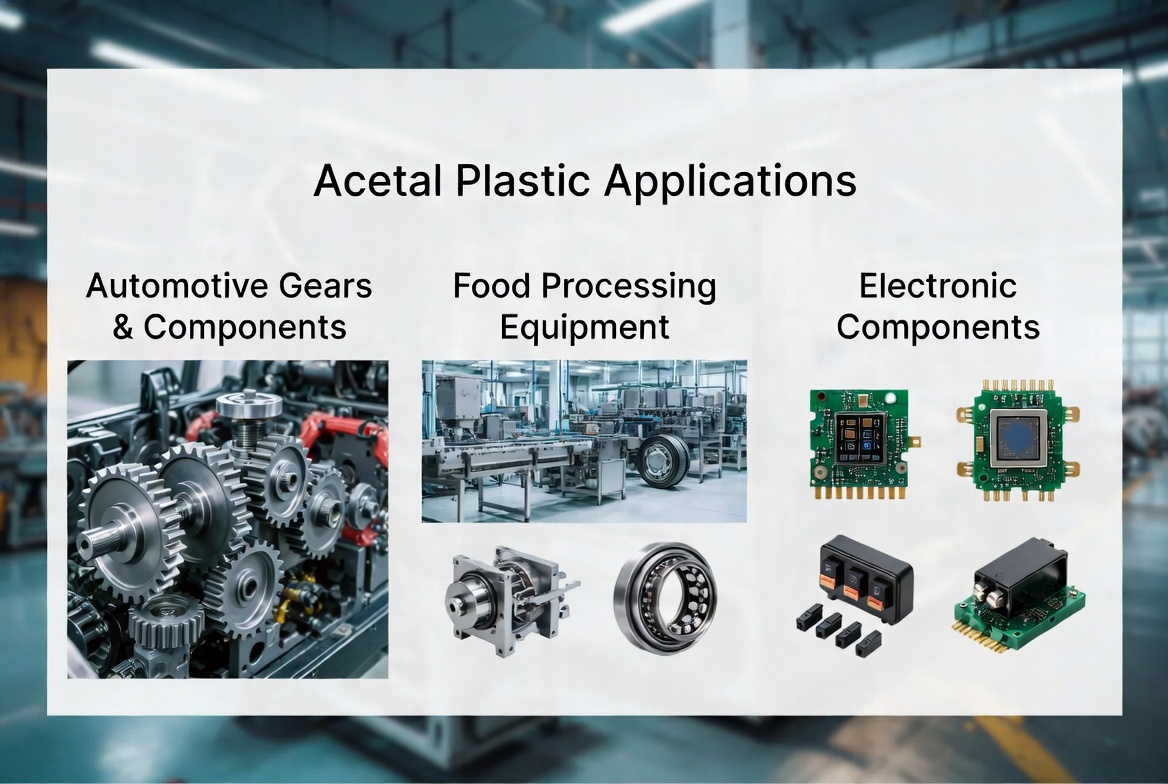
When evaluating acetal for real projects, engineers focus on a handful of material properties that do the heavy lifting in design decisions. [beeplastic]
Shared mechanical properties of acetal plastics include: [hoorenwell]
- High strength, hardness, and rigidity.
- Excellent resistance to many chemicals and solvents.
- Strong stress‑cracking resistance.
- Outstanding creep resistance and dimensional stability.
- Low permeability and minimal water absorption.
Together, these properties make acetal a stable, predictable material for components that must maintain tight tolerances over time, even under cyclical loads and varying humidity. [blog.saleslayer]
From a practical design and production standpoint, acetal offers several advantages that directly impact manufacturing cost, cycle time, and field performance. [athenaswc]
Acetal is easy to machine, making it ideal for precision parts requiring high stiffness, low friction, and tight tolerances. It can be: [allplastics.com]
- Turned, milled, drilled, and tapped with conventional metal‑working equipment. [allplastics.com]
- "Free‑cut" using tools with a sharp clearance angle to get clean edges. [blog.saleslayer]
- Cut as sheets on a laser cutter for profiles and intricate shapes. [blog.saleslayer]
For OEM teams used to CNC machining metals, switching to acetal often reduces tool wear, cycle time, and scrap while still achieving the required precision. [pragmaticinstitute]
Standard acetal is naturally opaque white due to its crystalline structure, but it can be dyed in a variety of colors for visual coding, branding, or safety marking. Many suppliers offer rods and sheets in natural and black as standard, with other colors on request. [allplastics.com]
For electronics and hazardous environments, Acetal ESD grades provide electrostatic dissipation (ESD) to reduce static build‑up and protect sensitive components or flammable liquids. Note that acetal is not inherently ESD‑safe—you must specifically select a grade that carries an ESD designation. [delrin]
In real‑world projects, acetal is chosen when you need low friction, high wear resistance, and reliable mechanical performance in a compact form factor. [beeplastic]
- Insulators and bobbins in electrical engineering where dimensional stability and dielectric strength are important. [beeplastic]
- Connectors and component housings in consumer electronics such as televisions and phones. [beeplastic]
- Fuel sender unit components and other fuel system parts requiring chemical resistance. [delrin]
- Door lock systems and articulated shells where low friction and durability are critical. [blog.saleslayer]
- Gears, bushings, and cams in industrial equipment and automation systems. [allplastics.com]
- Sliding and rotating elements that must maintain performance over thousands or millions of cycles. [delrin]
- Medical devices such as insulin pens and metered dose inhalers that demand precise, repeatable motion. [beeplastic]
- Food industry components including milk pumps, automatic coffee brewers, and knife handles where POM‑C grades offer food compatibility. [blog.saleslayer]
- Musical instruments and accessories like bagpipes, Irish flutes, practice chanters, guitar picks, and drumstick tips. [blog.saleslayer]
- Furniture fittings and fashion hardware such as locks, handles, hinges, curtain rollers, zippers, and eyeglass frames. [beeplastic]
When advising OEMs, a common question is: "Why choose acetal over aluminum, brass, or nylon?" The answer usually comes down to cost, performance, and long‑term stability. [hoorenwell]
| Aspect | Acetal (POM) Advantage | Compared To |
|---|---|---|
| Weight | Much lighter, helps reduce system weight and inertia. (hoorenwell) | Metals (steel, brass, aluminum) |
| Machining & tooling | Easier to machine, less tool wear. (blog.saleslayer) | Metals, fiber‑filled plastics |
| Moisture absorption | Lower moisture uptake; better dimensional stability. (hoorenwell) | Nylon and some polyesters |
| Friction & wear | Intrinsically low friction, great wear resistance. (blog.saleslayer) | Many commodity plastics |
| Chemical resistance | Good resistance to fuels, oils, many solvents. (hoorenwell) | Metals prone to corrosion |
| Food/medical suitability | POM‑C grades can be food‑compatible. (blog.saleslayer) | Delrin (POM‑H) and porous materials |
| Cost & manufacturability | Lower total cost in many machined‑part scenarios. (beeplastic) | Precision‑machined metal parts |
In short, acetal often provides the "sweet spot" between performance and cost in moving parts and precision components where full metal construction is not strictly required. [delrin]
Based on common OEM projects and supplier recommendations, several best practices help you get reliable results when designing with acetal. [pragmaticinstitute]
1. Specify the right grade early
Decide up front whether you need POM‑C or POM‑H, and whether any ESD or food‑grade compliance is required. This prevents costly redesigns later. [delrin]
2. Design for acetal's stiffness and creep behavior
While acetal is stiff, it is still a plastic; avoid overly thin sections in high‑load areas and consider creep over the life of the component. [hoorenwell]
3. Use sharp tools and appropriate feeds
Tools with sharp clearance angles and optimized feeds/speeds yield cleaner surfaces, tighter tolerances, and longer tool life. [allplastics.com]
4. Account for thermal expansion
Acetal expands more than metals with temperature changes, so sliding fits and tolerance stacks should allow for thermal movement. [hoorenwell]
5. Verify compatibility with chemicals and cleaning agents
For food, medical, and industrial environments, always confirm that the chosen acetal grade withstands specific detergents, disinfectants, or process chemicals. [hoorenwell]
Static control is critical wherever electronic components, magnetic media, or flammable liquids are present. In those environments, conventional acetal may not be enough. [delrin]
Acetal ESD grades are formulated to:
- Dissipate built‑up static charge safely.
- Reduce the risk of electronic component damage.
- Lower the chance of static‑induced sparks around flammable or explosive media. [blog.saleslayer]
As an OEM or equipment builder, you should explicitly request acetal with an ESD designation if your application includes PCB handling, electronic assembly, fuel vapor, or solvent‑rich atmospheres. [delrin]
When selecting acetal for a new design—or optimizing an existing one—use a simple, systematic approach. [athenaswc]
Step 1: Define your critical requirements
- Load, stress, and expected service life.
- Operating temperature range.
- Exposure to moisture, chemicals, or cleaning agents.
- Regulatory needs (e.g., food contact, medical, or ESD). [hoorenwell]
Step 2: Select grade and form
- Choose POM‑C for wet, chemically aggressive, or food‑processing applications. [beeplastic]
- Choose POM‑H / Delrin when maximum stiffness and impact strength are the priority in dry conditions. [blog.saleslayer]
- Decide on rods or sheets depending on whether you are machining turned parts, flat plates, or laser‑cut profiles. [allplastics.com]
Step 3: Optimize for manufacturability
- Confirm stock dimensions to minimize waste.
- Align part geometry with standard rod and sheet sizes to reduce cost and lead time. [returnlogic]
Step 4: Validate with prototypes
- Machine a small batch and test for fit, friction, wear, and chemical resistance in real operating conditions before committing to large‑scale production. [beeplastic]
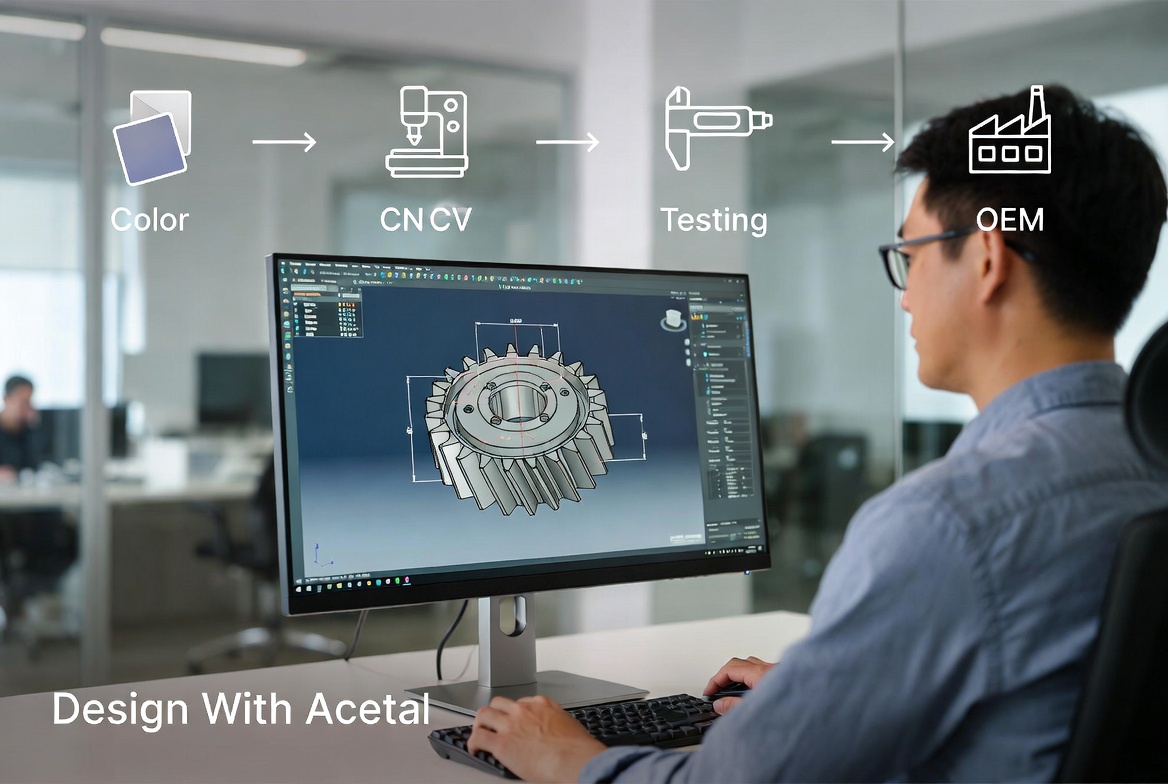
For OEM buyers, engineers, and project managers, the difference between a generic material provider and a specialized engineering plastics supplier shows up in design support, material traceability, and global logistics. [athenaswc]
A strong supplier can help you:
- Match the right acetal grade to each component instead of relying on trial‑and‑error. [delrin]
- Consolidate your material portfolio (for example, combining acetal with acrylic sheet, polycarbonate, and other technical plastics) to streamline purchasing. [attractandengage.co]
- Configure OEM‑specific formats, such as custom‑cut sheets, machined blanks, or color‑coded parts for assembly lines. [returnlogic]
If your business serves global markets, look for partners who are comfortable with international shipping, OEM privacy, and long‑term supply agreements, so your material strategy scales with your product roadmap. [athenaswc]
If you are evaluating metal‑to‑plastic conversion, optimizing a high‑wear component, or designing a new precision assembly, acetal plastic deserves a serious look as one of your core materials. By combining the right grade selection, smart part design, and an experienced plastics supplier, you can lower cost, reduce weight, and improve reliability across many industrial applications. [athenaswc]
Start by listing your top three components that suffer from wear, corrosion, or machining cost today, and explore whether an acetal solution could extend life and simplify production. [beeplastic]
1. Is acetal plastic safe for food contact?
Many copolymer acetal (POM‑C) grades are suitable for food contact and resist common cleaning agents, making them a strong candidate for pumps, beverage equipment, and food handling components. Always verify specific regulatory approvals with your supplier. [blog.saleslayer]
2. Can acetal replace metal parts in my design?
Yes, acetal often replaces metal in gears, bushings, and structural components where loads are moderate and where you want lower weight, reduced friction, and easier machining. However, very high‑temperature or high‑load environments may still require metal or higher‑performance polymers. [delrin]
3. What is the difference between acetal and Delrin?
"Acetal" is the generic name for Polyoxymethylene (POM), while Delrin is a well‑known trade name for homopolymer acetal (POM‑H) that offers higher stiffness and slightly better mechanical strength but may have centerline porosity and limited suitability for food and medical uses. [blog.saleslayer]
4. Does acetal absorb water like nylon?
No. One of acetal's key advantages is low water absorption and excellent dimensional stability, especially compared with nylon, which can absorb moisture and change dimensions in humid environments. [hoorenwell]
5. When should I specify Acetal ESD?
You should specify Acetal ESD when your parts operate near sensitive electronics, magnetic media, or flammable liquids and you must control electrostatic discharge to avoid damage or sparks. Standard acetal is not ESD‑safe unless the grade is explicitly formulated and labeled as such. [delrin]
1. Acme Plastics. "All You Need to Know About Acetal Plastic."
<https://www.acmeplastics.com/content/all-you-need-to-know-about-acetal-plastic/> [blog.saleslayer]
2. BeePlastic. "What Is Acetal Used For? Essential Guide to Acetal Sheet Applications."
<https://www.beeplastic.com/blogs/plastic-insights/what-is-acetal-used-for-essential-guide-to-acetal-sheet-applications> [beeplastic]
3. Delrin. "What is Acetal? Delrin Acetal Homopolymer."
<https://www.delrin.com/white-paper-let-delrin-acetal-homopolymer-optimize-your-next-design/> [delrin]
4. Hoorenwell. "Acetal是什么塑料材料."
<https://www.hoorenwell.com/news/114-cn.html> [hoorenwell]
5. Allplastics Engineering Plastics – Acetal Product Information.
<https://www.allplastics.com.au/engineering-plastics/acetal> [allplastics.com]
6. Athena SWC. "SEO for Plastics Manufacturing: Keys to Success."
<https://www.athenaswc.com/resources/blog/seo-for-plastics-manufacturing-keys-to-success/> [athenaswc]
7. Sales Layer. "SEO for Manufacturing Companies: The 2026 Strategy Guide."
<https://blog.saleslayer.com/seo-for-manufacturing-companies> [blog.saleslayer]
8. Pragmatic Institute. "How to Write a Product Data Sheet."
<https://www.pragmaticinstitute.com/resources/articles/product/how-to-write-a-kick-butt-product-datasheet/> [pragmaticinstitute]
9. ReturnLogic. "7 Practices for Better Product Data."
<https://www.returnlogic.com/blog/7-practices-for-better-product-data/> [returnlogic]