Shanghai Gokai Industry Co,.Ltd.
Call Us: +86-18918606548
Call Us: +86-18918606548
- Product Name
- Product Keyword
- Product Model
- Product Summary
- Product Description
- Multi Field Search
Views: 222 Author: Gokai Publish Time: 2026-06-06 Origin: Site


Content Menu
● Why Acrylic Needs Special Care
● Understanding Acrylic Sheet Types Before Cleaning
>> Common Acrylic Sheet Types and Cleaning Sensitivity
● Which Cleaners Are Safe for Acrylic Sheets?
>> Recommended Cleaning Solutions
>> Cleaners to Avoid Completely
● Tools & Materials: What to Use (and What to Avoid)
>> Safe Tools for Acrylic Cleaning
● Step-by-Step: How to Clean Light Dirt and Smudges
>> Step 1: Remove Loose Dust and Debris
>> Step 2: Prepare a Mild Soap Solution
>> Step 3: Wipe Gently with a Microfiber Cloth
● Special Care for Non-Glare and Coated Acrylic
● Tackling Scratches and Surface Damage: Professional Techniques
>> Controlled Scraping for Edge Cleaning
>> Sanding to Remove Deep Scratches
>> Buffing and Polishing for a Clear Finish
>> Flame Polishing for High-End Edges
● Static, Dust, and Long-Term Maintenance Strategy
● Real-World OEM Scenario: From Cloudy to Clear
● OEM Checklist: Do's and Don'ts for Acrylic Maintenance
>> Quick Do's
● Choosing the Right Acrylic Sheet to Simplify Maintenance
● Gokai's OEM Perspective: Why Maintenance Matters for Global Projects
● Call to Action: Partner with Gokai for OEM Acrylic Projects
● Frequently Asked Questions (FAQ)
Keeping acrylic sheets (also known as plexiglass) crystal clear is not just about appearance—it directly impacts safety, branding, and product lifespan in real-world applications. As an OEM acrylic sheet supplier, Gokai has seen how proper cleaning and maintenance can extend the service life of displays, glazing, and protective panels across retail, industrial, and architectural projects worldwide. [margacipta]

Although acrylic is more impact-resistant and lighter than glass, its softer surface makes it more prone to scratches, clouding, and chemical damage if cleaned incorrectly. Many issues arise not from the material itself, but from using everyday glass cleaners, rough cloths, or aggressive solvents designed for other surfaces. [acrylite]
In our OEM work with international customers, we frequently see three recurring problems:
- Hairline scratches caused by dry wiping or paper towels. [hk.acrylictop]
- Hazy or cloudy surfaces after repeated use of ammonia-based glass cleaners. [margacipta]
- Damaged coatings when non-glare or special-finish acrylic is treated like standard glass. [yoast]
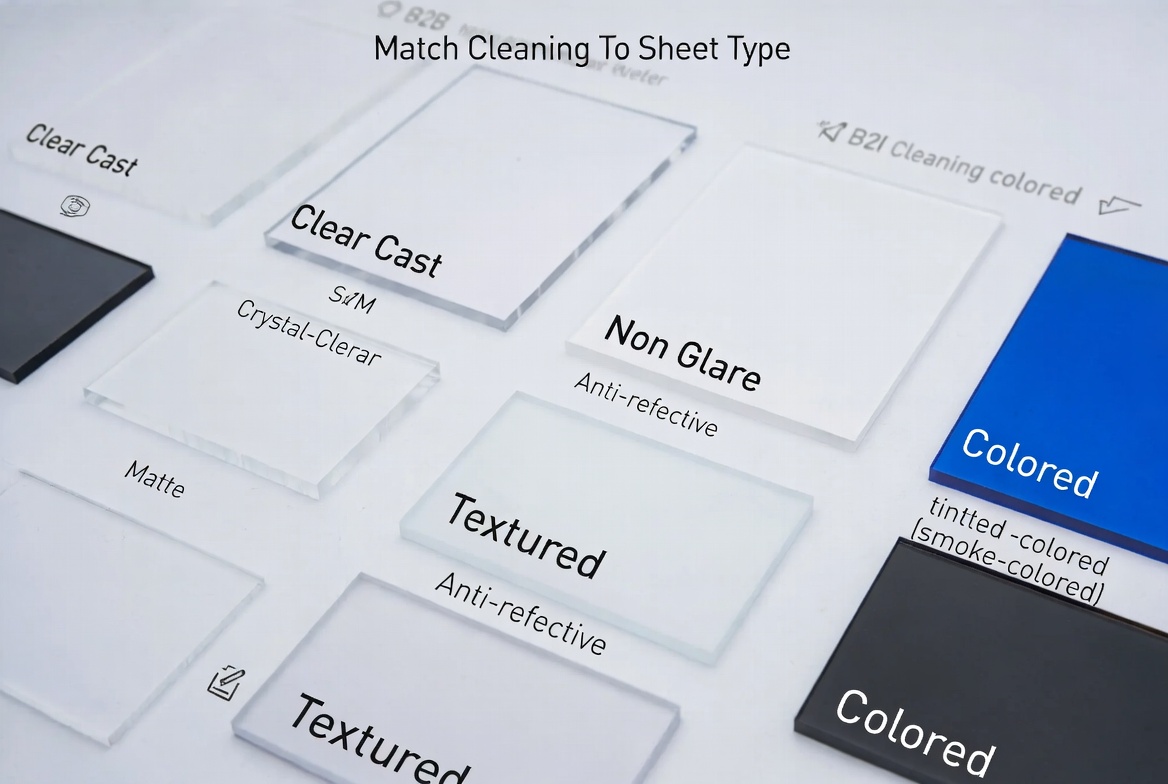
Not all acrylic sheets are the same; your cleaning strategy should match the specific sheet type and finish. Using the wrong method can void warranties, damage coatings, or shorten product life. [acrylite]
Below is a quick reference table for typical acrylic sheet types you might be cleaning.
| Acrylic Type | Typical Use Cases | Cleaning Sensitivity Notes |
|---|---|---|
| Clear cast acrylic sheet | Retail displays, glazing, sign panels | Tolerates standard acrylic-safe cleaners; avoid ammonia and abrasives. (yoast) |
| Extruded acrylic sheet | Economy glazing, protective barriers | Slightly softer; more prone to scratching; gentle handling essential. (acrylite) |
| Non-glare / P99 acrylic | Framing, museum displays, lighting diffusers | Do not use abrasive polishes; aggressive polishing can remove the coating. (yoast) |
| Colored / tinted acrylic | Branding panels, POP displays, interior décor | Avoid harsh solvents to prevent color fading or surface whitening. (hk.acrylictop) |
| Textured or frosted acrylic | Privacy panels, partitions | Dirt can lodge in texture; requires more thorough rinsing with mild detergents. (hk.acrylictop) |
Choosing the right cleaner is the single most important factor in maintaining acrylic clarity. [hk.acrylictop]
Use only acrylic-safe or neutral-pH cleaners:
- Mild soap or detergent with lukewarm water
- Example: a few drops of dishwashing liquid in a bucket of lukewarm water. [delviesplastics]
- Dedicated acrylic cleaning products
- Some manufacturers recommend specialty polishes and cleaners formulated for acrylic surfaces, designed to reduce static and improve clarity. [yoast]
- Acrylic-safe anti-static cleaners
- Useful in dusty environments where static attracts airborne particles. [hk.acrylictop]
To protect your acrylic sheets, never use:
- Glass cleaners containing ammonia or alcohol (common household brands fall into this category). [margacipta]
- Strong solvents such as acetone, lacquer thinner, gasoline, or aggressive degreasers, which can soften or melt acrylic surfaces. [hk.acrylictop]
- Abrasive pastes or powders designed for metal or ceramic cleaning. [margacipta]
These products can cause crazing (fine surface cracks), cloudiness, or permanent streaks that are almost impossible to correct once damage has occurred. [delviesplastics]
Beyond the chemical cleaner itself, the cloth or tool you use can make or break your acrylic surface. [delviesplastics]
Use:
- Soft microfiber cloths or 100% cotton cloths (no blends). [margacipta]
- Clean, non-abrasive sponges designed for plastic care. [hk.acrylictop]
- Canned air or gentle air blowers to remove loose dust before wiping. [yoast]
Avoid:
- Paper towels (contain wood fibers that can cause fine scratches over time). [margacipta]
- Scouring pads or scrub sponges. [hk.acrylictop]
- Hard-bristle brushes or any rough cleaning tool. [pmma]
Pro tip from OEM projects:
Always keep a separate set of microfiber cloths only for acrylic surfaces to prevent cross-contamination with grit from other cleaning tasks. [delviesplastics]
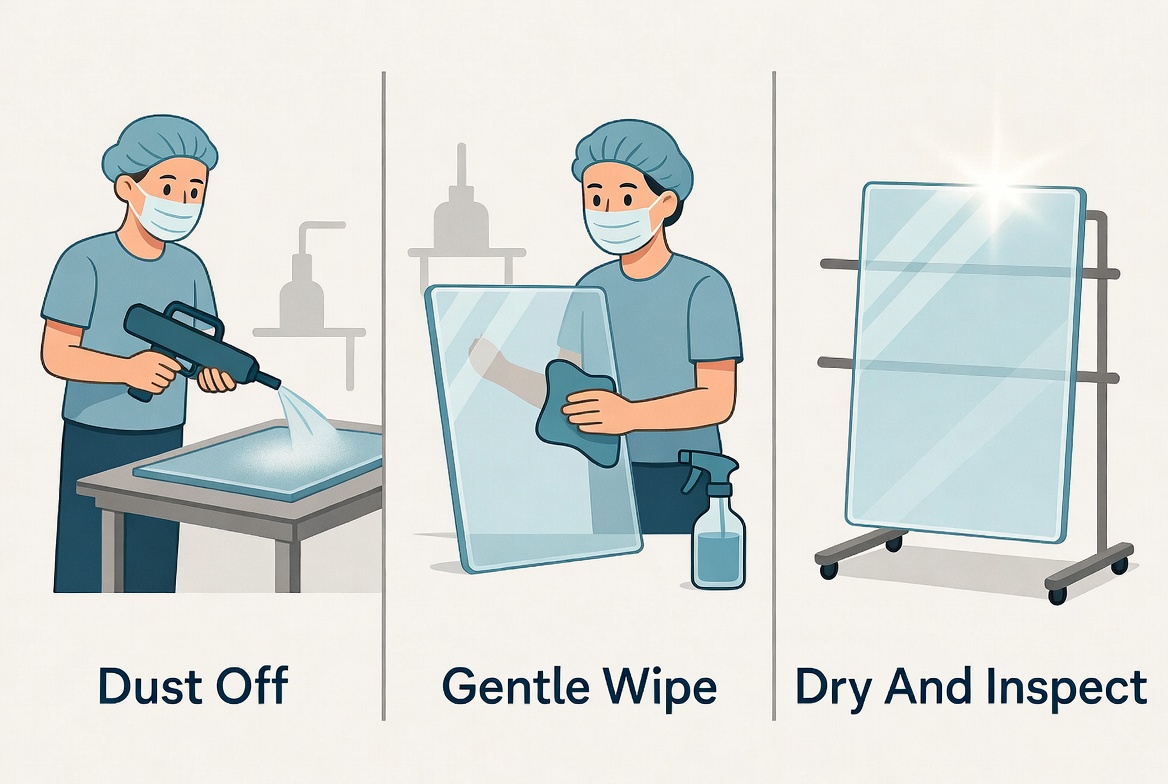
For everyday maintenance of acrylic barriers, display cases, and panels, follow this simple, repeatable workflow. [acrylite]
1. Blow off dust using canned air or a clean air blower to prevent particles from acting like sandpaper. [yoast]
2. If compressed air isn't available, gently rinse the surface with clean, lukewarm water to float off loose dirt. [acrylite]
1. Fill a bucket with lukewarm water (not hot).
2. Add a small amount of mild detergent and mix until evenly dispersed. [acrylite]
1. Dampen a soft microfiber cloth in the soap solution. [margacipta]
2. Wring out excess water to avoid over-saturating edges or sealed joints. [acrylite]
3. Wipe in light, overlapping strokes, avoiding heavy pressure to reduce the risk of scratches. [delviesplastics]
1. Rinse the acrylic surface thoroughly with clean water to remove soap residue. [acrylite]
2. Dry with a fresh, soft cloth, or allow the panel to air dry vertically to minimize water spots. [hk.acrylictop]
Important: Never clean acrylic "dry." Always ensure the surface is at least slightly damp before wiping to provide a lubrication layer between the cloth and the acrylic. [margacipta]
Non-glare acrylic (often labeled P99 or similar) has a micro-textured or coated surface designed to diffuse light and reduce reflections. This surface is more sensitive to aggressive cleaning and polishing. [yoast]
- Use only mild, acrylic-safe cleaners and soft cloths. [yoast]
- Avoid using abrasive polishes or coarse compounds, as they can remove or alter the non-glare coating. [yoast]
- For stubborn smudges, apply cleaner to the cloth first, not directly onto the panel, to control coverage and reduce risk of streaking. [hk.acrylictop]
From a museum and framing perspective, maintaining the integrity of non-glare coatings is critical for optical performance and long-term display quality. [mci.si]
For OEMs, fabricators, and experienced installers, advanced finishing techniques can restore or enhance acrylic edges and surfaces when simple cleaning is not enough. [delviesplastics]
> Note: These methods are best performed by trained personnel with appropriate safety measures. For end users, consult your acrylic supplier before attempting them.
- Use a sharp razor blade or scraper to remove excess acrylic or minor burrs along edges. [yoast]
- Maintain a consistent angle and light pressure to avoid digging into the material. [yoast]
- This method is particularly useful for shaping uneven edges after cutting. [yoast]
- Any standard sander can be used, but light pressure and constant motion are essential to avoid creating flat spots or heat marks. [delviesplastics]
- Sand progressively with finer grits, similar to woodworking, to remove machining marks and deep scratches. [delviesplastics]
- Sanding produces a matte finish that must be followed by buffing or polishing to restore clarity. [delviesplastics]
- Use polishing wheels with appropriate compounds to bring sanded acrylic back to a glossy, transparent finish. [yoast]
- Secure the panel or sheet firmly in place to prevent movement during buffing. [yoast]
- Medium compounds provide a standard glossy finish, while fast cutting compounds can achieve a brilliant, high-gloss edge. [yoast]
- Flame polishing uses a hydrogen-oxygen torch to lightly reflow the outer surface of acrylic edges. [yoast]
- The torch is moved in steady, swift motions, avoiding prolonged heat on any single area. [yoast]
- When done correctly, this creates clean, clear, glass-like edges often demanded in premium displays and architectural features. [yoast]
These techniques are commonly applied in OEM production for store fixtures, furniture components, and branded displays where edge aesthetics matter as much as structural performance. [gokai.com]
Acrylic's tendency to build up static charge means it can attract dust and fine particles more readily than glass. Over time, this can lead to more frequent cleaning and higher risk of micro-scratches if not managed correctly. [hk.acrylictop]
To build a long-term maintenance plan:
- Use anti-static acrylic cleaners where possible to reduce dust attraction. [hk.acrylictop]
- Implement a regular cleaning schedule tailored to the environment (e.g., weekly for retail counters, monthly for indoor partitions). [hk.acrylictop]
- Consider applying protective films during fabrication and installation to protect surfaces until final handover. [delviesplastics]
In industrial and commercial settings, a documented maintenance routine helps facilities teams maintain consistent clarity, reduce replacement costs, and protect warranties. [gokaiplastic]
In one OEM retail display project, a customer reported cloudy, scratched panels just months after installation because staff used standard glass spray and paper towels for daily cleaning. After we switched them to a mild soap solution, microfiber cloths, and an acrylic-safe polish, plus trained staff on proper wiping techniques, replacement frequency dropped and the displays retained their clarity much longer. [margacipta]
This kind of simple maintenance correction can have measurable cost savings over the lifecycle of large retail or industrial installations using acrylic. [gokaiplastic]
- Do blow off or rinse loose dust before wiping. [margacipta]
- Do use lukewarm water with mild detergent. [acrylite]
- Do clean with soft microfiber or 100% cotton cloths only. [margacipta]
- Do follow manufacturer guidelines for coated or specialty acrylic. [acrylite]
- Do train staff and end users on proper cleaning procedures. [gokaiplastic]
- Don't use ammonia- or alcohol-based glass cleaners. [margacipta]
- Don't wipe acrylic dry or use rough cloths and paper towels. [hk.acrylictop]
- Don't use strong solvents or abrasive powders. [hk.acrylictop]
- Don't apply aggressive polishing compounds on non-glare or coated acrylic. [hk.acrylictop]
- Don't flame polish or machine-finish acrylic without training and safety measures. [yoast]
Another often overlooked strategy is choosing the correct grade and finish of acrylic at the start of a project, which can make cleaning and maintenance easier over the product's lifetime. [gokai.com]
When you work with an OEM supplier like Gokai:
- You can select cast or extruded sheets based on the expected cleaning frequency and mechanical demands. [gokai.com]
- You can specify non-glare, UV-stable, or impact-modified grades for environments such as outdoor signage, industrial enclosures, or high-traffic retail zones. [gokai.com]
- You can get guidance on protective films, edge finishing, and installation methods that reduce long-term wear and maintenance complexity. [gokaiplastic]
By aligning material selection with maintenance requirements, you avoid many of the costly issues that arise from mis-specified materials in demanding environments. [gokai.com]
As a manufacturer and OEM acrylic sheet supplier serving global clients, Gokai views cleaning and maintenance as part of the product lifecycle, not an afterthought. [gokaiplastic]
From our experience with export projects and custom OEM components:
- Clean, well-maintained acrylic improves brand perception in retail and showroom environments. [gokai.com]
- Consistent maintenance helps protect structural integrity, especially in barriers, guards, and enclosures. [gokaiplastic]
- Standardized care instructions reduce warranty claims, replacements, and field complaints from end users. [gokaiplastic]
This is why we often provide maintenance guides, staff training recommendations, and care labels alongside OEM shipments of acrylic components. [gokaiplastic]
If you're planning a new project involving acrylic sheets—whether it's protective barriers, retail fixtures, signage, or industrial components—partnering with an OEM supplier who understands both material performance and real-world maintenance can save you time and cost over the long term. [gokai.com]
Contact Gokai's OEM team to:
- Discuss the right acrylic grade and finish for your application and cleaning environment. [gokai.com]
- Get custom-cut acrylic sheets, CNC fabrication, and edge finishing tailored to your design. [gokai.com]
- Receive maintenance-ready solutions, including protective films, finishing options, and care guidelines designed for your end users. [gokaiplastic]
By integrating material selection, fabrication, and maintenance planning, Gokai helps you deliver acrylic installations that stay clear, safe, and visually impressive for years.
1. Can I use household glass cleaner on my acrylic sheet?
No. Most household glass cleaners contain ammonia or alcohol, which can cause haze, surface cracks, or long-term damage to acrylic. Use mild soap with water or acrylic-safe cleaners instead. [acrylite]
2. How often should I clean acrylic panels in a high-traffic area?
In busy environments like retail counters or public barriers, weekly cleaning with mild detergent and microfiber cloths is usually sufficient. Extremely dusty or oily environments may require more frequent cleaning, but always follow the same gentle process. [delviesplastics]
3. What is the safest way to remove minor scratches from acrylic?
For light surface scratches, use a specialized acrylic polish and a soft cloth, working in controlled motions until the scratch appears minimized. Deeper scratches may require sanding and buffing by experienced technicians. [delviesplastics]
4. Is flame polishing suitable for all acrylic edges?
Flame polishing is best suited for clear, uncoated acrylic edges and should be carried out by trained professionals using proper equipment. Coated, textured, or non-glare surfaces typically require different finishing methods. [hk.acrylictop]
5. Why does my acrylic attract so much dust after cleaning?
Acrylic tends to build static charge, especially when wiped with dry or inappropriate cloths. Using anti-static acrylic cleaners and soft microfiber cloths, and avoiding dry wiping, helps reduce dust attraction. [delviesplastics]
1. Acme Plastics – "How to Clean and Maintain Plexiglass Acrylic"
<https://www.acmeplastics.com/content/acrylic-cleaning-maintenance-tips/> [yoast]
2. Margacipta – "Do's and Don'ts: Cleaning Acrylic Sheet the Right Way"
<https://www.margacipta.com/User/News/detail/Dos-and-Donts-Cleaning-Acrylic-Sheet-the-Right-Way> [margacipta]
3. ACRYLITE – "Care & Maintenance"
<https://www.acrylite.co/resources/knowledge-base/article/what-recommendations-do-you-have-for-the-caring-and-cleaning-of-acrylic> [acrylite]
4. Delvies Plastics – "The Complete Guide to Maintaining and Protecting Acrylic / Plexiglass Sheets"
<https://delviesplastics.com/blogs/tips-and-tricks/the-complete-guide-to-maintaining-and-protecting-acrylic-plexiglass-sheets> [delviesplastics]
5. AcrylicTop / Organic Glass Maintenance Tips – "保持有機玻璃清晰耐用的保養技巧"
<https://hk.acrylictop.com/news/plexiglass-maintenance-tips-to-keep-it-clear-and-durable.html> [hk.acrylictop]
6. Smithsonian MCI – "Caring for Acrylic Paintings" (preventive care context)
<https://mci.si.edu/caring-acrylic-paintings> [mci.si]
7. Gokai – "PVC Foam Board, Acrylic Sheet, Clear Acrylic Sheet"
<https://www.gokaiplastic.com> [gokaiplastic]
8. Gokai – "Custom Cut Acrylic Shapes: A Practical Guide from an OEM Acrylic Sheet Supplier"
<https://www.gokai.com.cn/custom-cut-acrylic-shapes-a-practical-guide-from-an-oem-acrylic-sheet-supplier.html> [gokai.com]